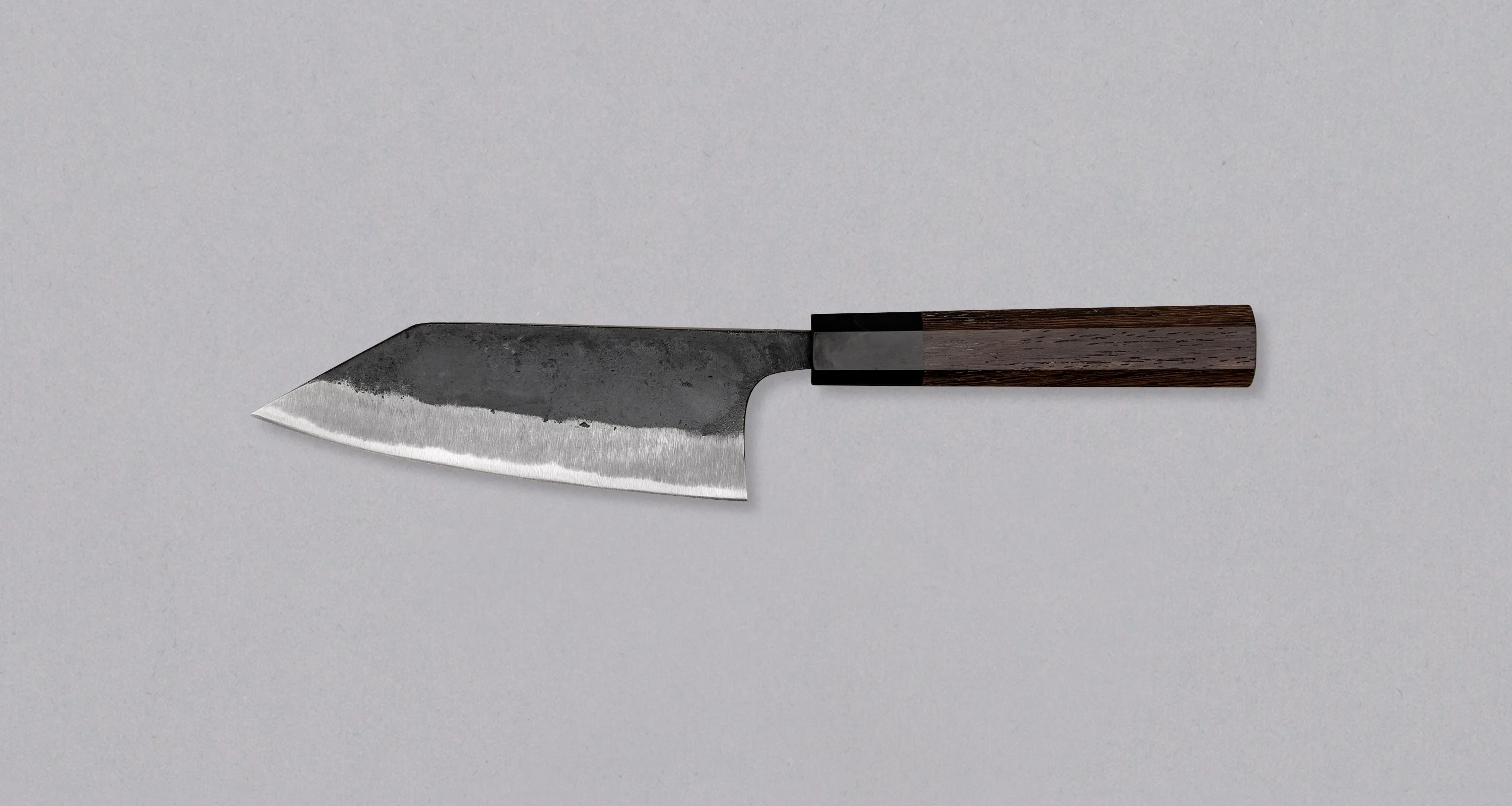
Kurokaze Ryo-Kiri-Deba Aogami #2 Kuro-uchi 150mm (5.9")
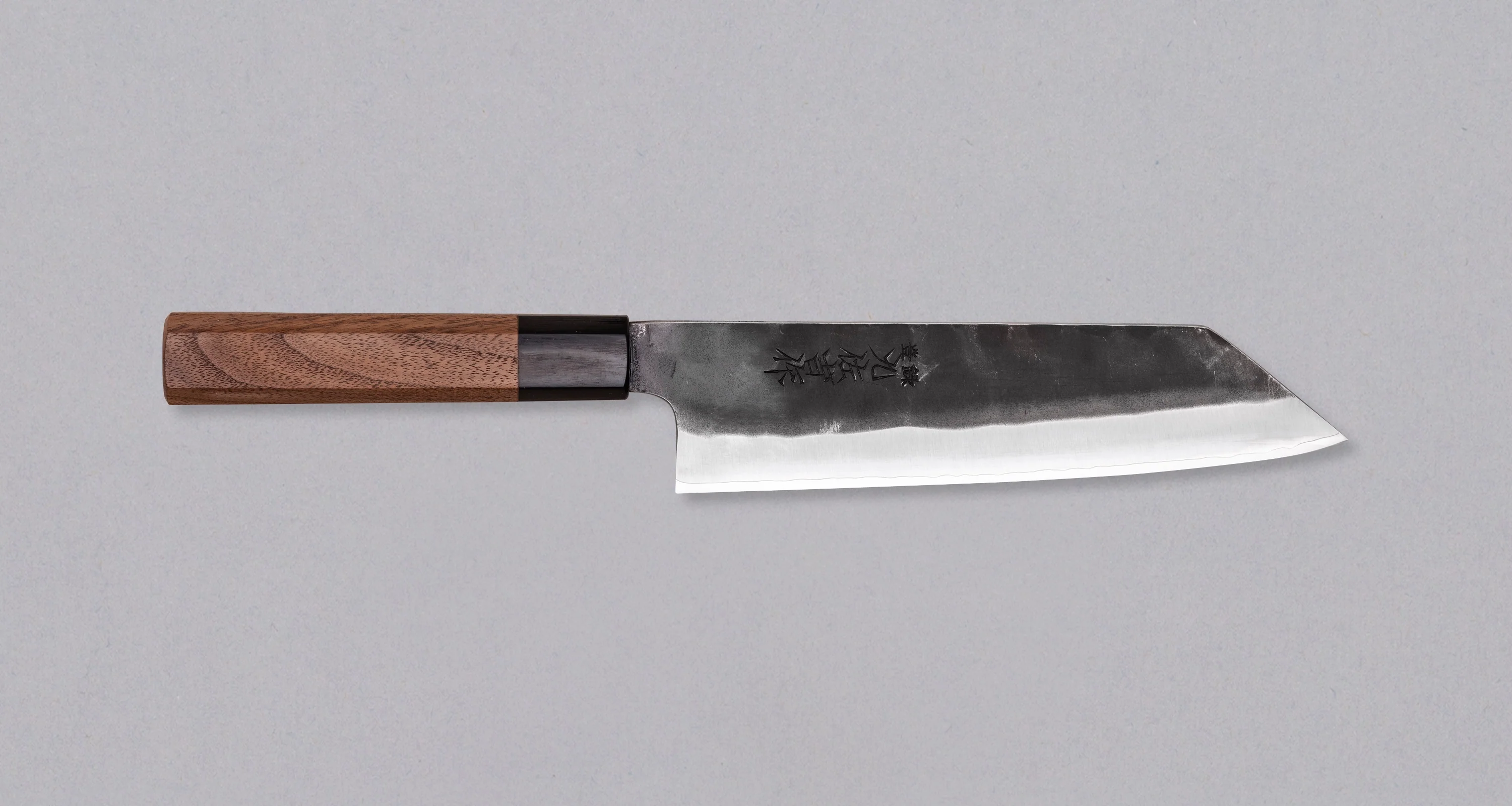
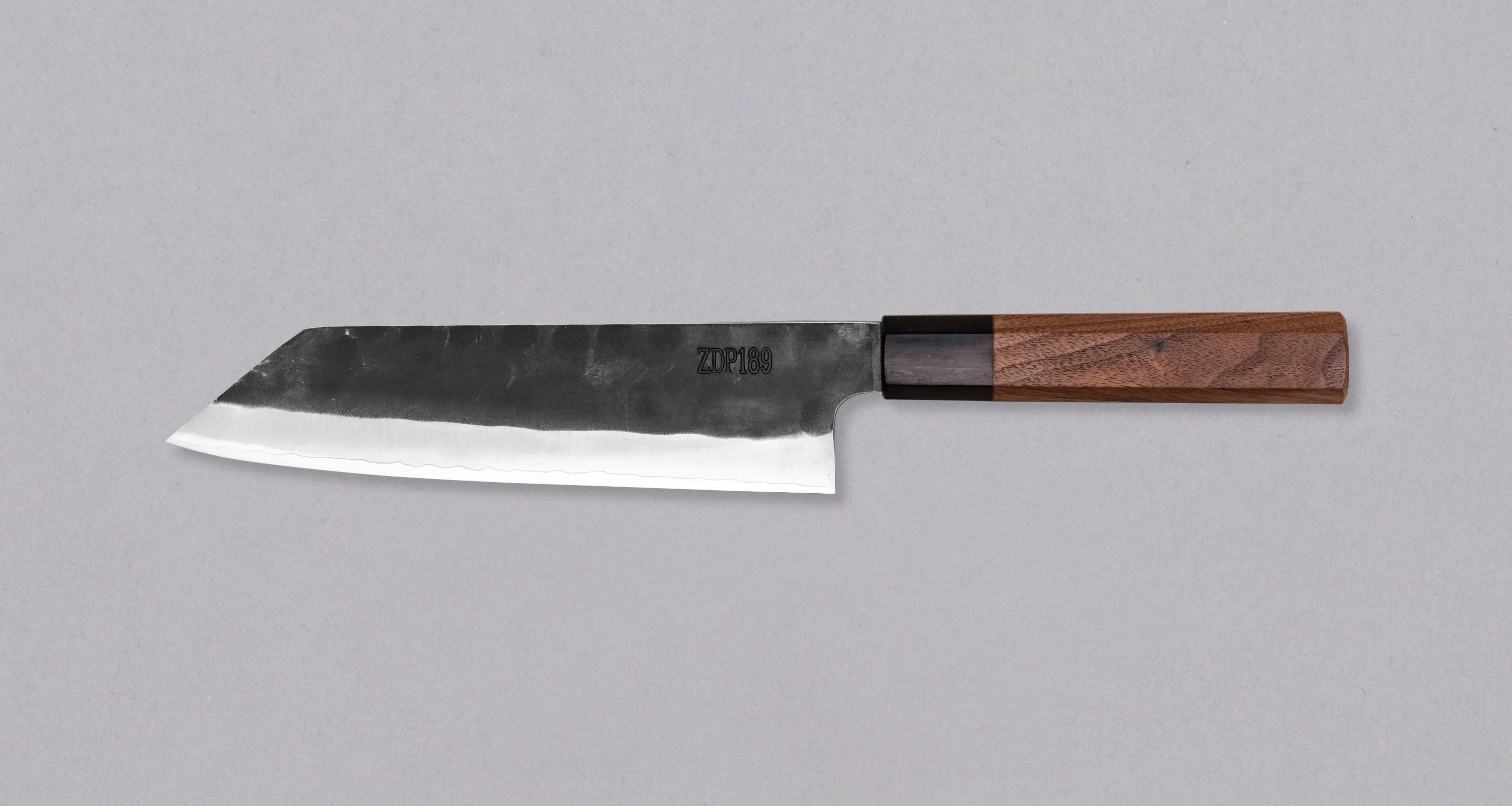
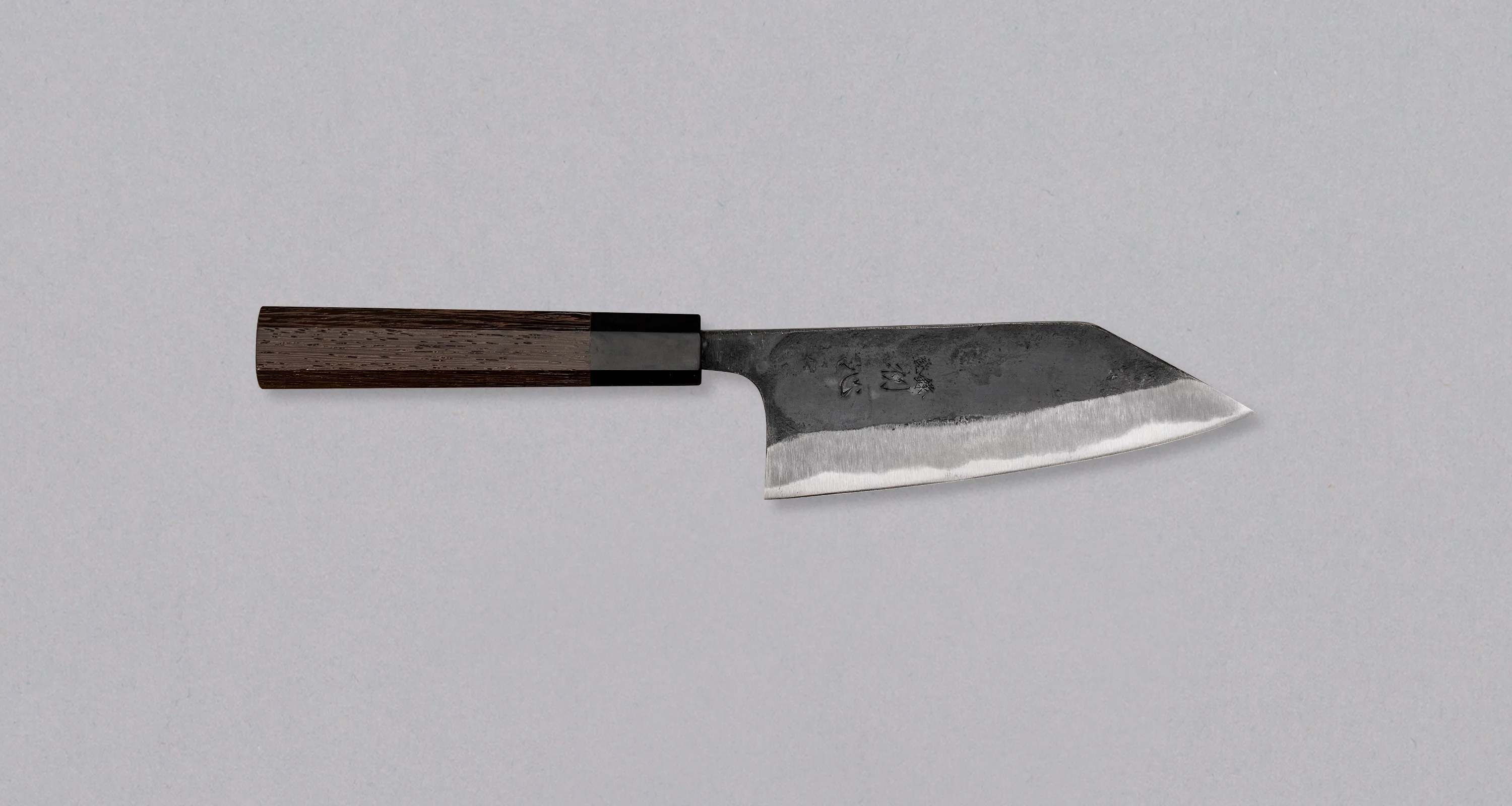
The Kurokaze Ryo-Kiri-Deba Aogami #2 Kuro-uchi 150mm is a sturdy Japanese fish knife designed for preparing whole fish, portioning, and cutting through smaller fish or poultry bones.
Unlike most traditional deba knives, which are single-bevel, this model has a symmetrical double-bevel edge. This makes it suitable for both right- and left-handed users, easier to sharpen, and well suited for heavier cutting tasks.
Its robust profile offers the control needed for precise fish preparation while providing enough strength for more demanding work. An excellent choice for professional chefs and experienced home cooks. Especially recommended for "big game" fishing enthusiasts!
BLADE SHAPE:
Deba is one of the »big three« Japanese traditional kitchen knives, alongside usuba and yanagiba. It is designed for preparing whole fish, from cleaning and filleting to portioning, removing fins and heads, and cutting through smaller bones. Its thick, heavy blade provides the strength needed for more demanding tasks and can also be used for poultry and other meat with smaller bones.
This model is a ryo-deba, meaning it has a symmetrical double-bevel edge rather than the traditional single-bevel grind. It is therefore suitable for both right- and left-handed users and is easier to sharpen.
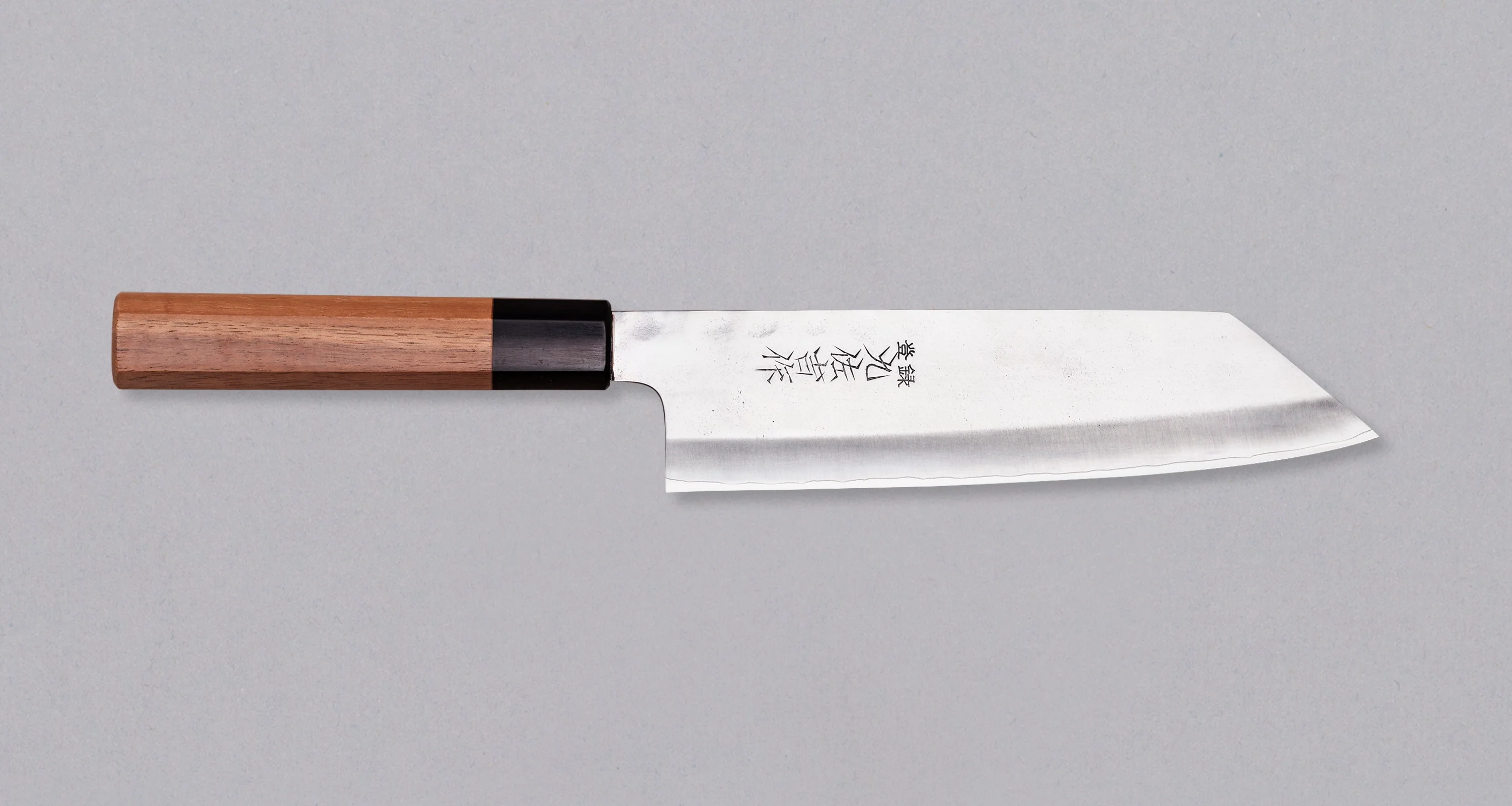
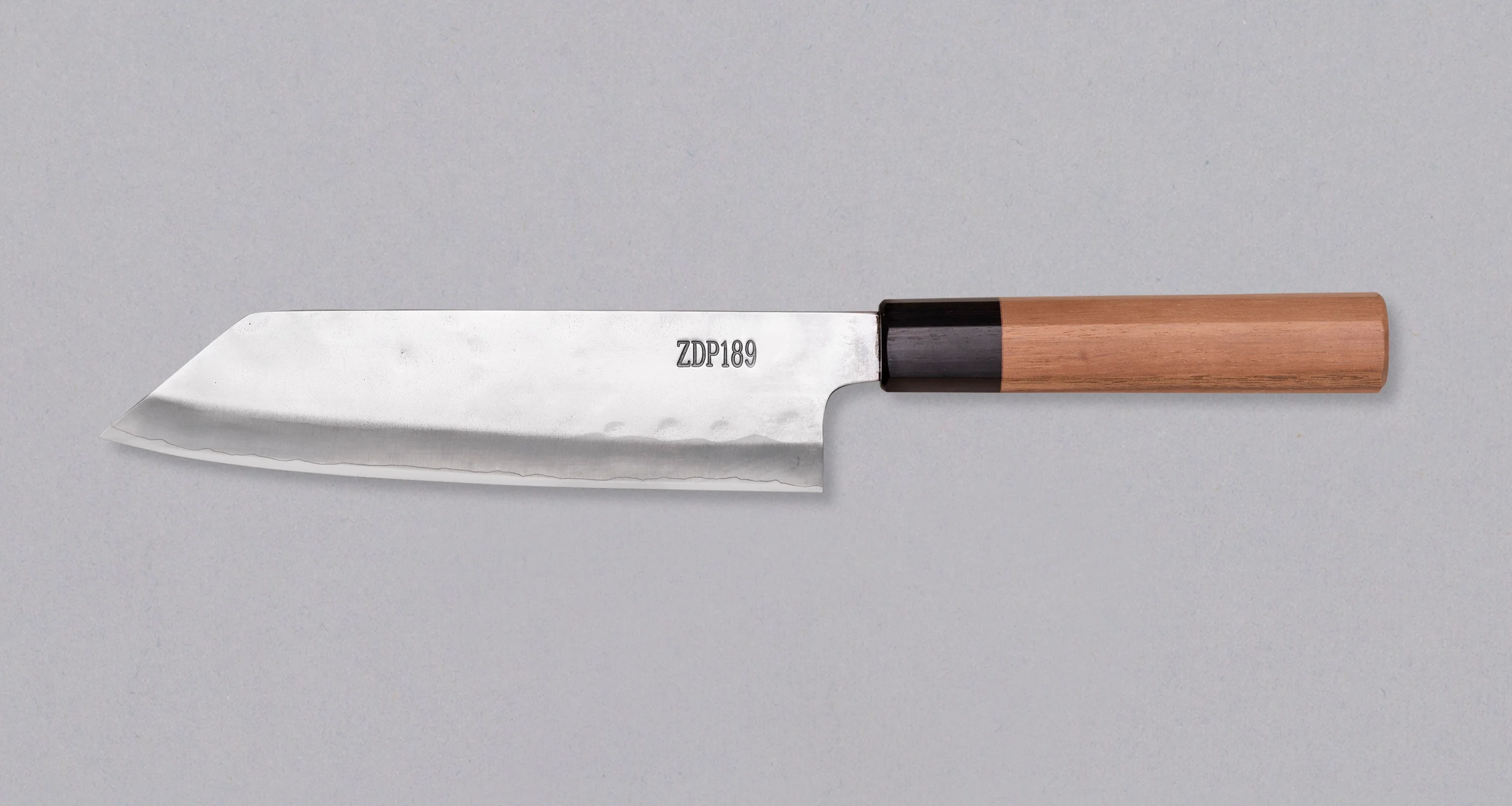
The blade also features a pointed K-tip, commonly associated with kiritsuke knives. This tip improves visibility and control during precise work, making it especially useful for filleting larger fish, preparing smaller fish such as sardines or mackerel, and deboning poultry.
The blade combines a strong, substantial heel with a fine, precise tip. Its thickness provides stability during heavier fish preparation, while the narrow front section allows controlled and accurate cutting around bones and joints.
STEEL:
Aogami #2 is a very popular steel in Japanese knife making and one of the finest high-carbon steels, meaning the knives forged from it will have exceptional edge retention and also sharpen very easily. At the same time, it is less resistant to corrosion, meaning the blade can develop a patina, while longer exposure to water or other corrosives could also lead to rusting. This is improved to some extent with the addition of chromium and tungsten, but it’s still a high-carbon steel that should be maintained accordingly (⚠️ read more about knife maintenance here). Aogami #2 steel is composed of carbon (C) 1.1 %, chromium (Cr) 0.5 %, manganese (Mn) 0.3%, and tungsten (W) 1.5%.
LAMINATION:
The blade’s core was laminated using the san-mai method to improve its structural integrity and subsequent ability to withstand impacts and prevent chipping. San-mai translates to “three layers” in Japanese, referring to a blade that is composed of a primary, inner layer of harder steel (hagane) and of two secondary, outer layers of softer steel (jigane) that protect the prior. → Read more on Blade Construction: Lamination.
GEOMETRY:
The knife has a double-bevel blade with a convex v-edge. It is heavier and stronger at the handle and thinner and more precise at the tip, towards which it tapers. This blade shape makes the knife easier to use because it is very responsive, easily maneuverable, and nicely balanced. This type of blade design is called distal taper - you can read more about it in the article on blade geometry.
BLADE FINISH:
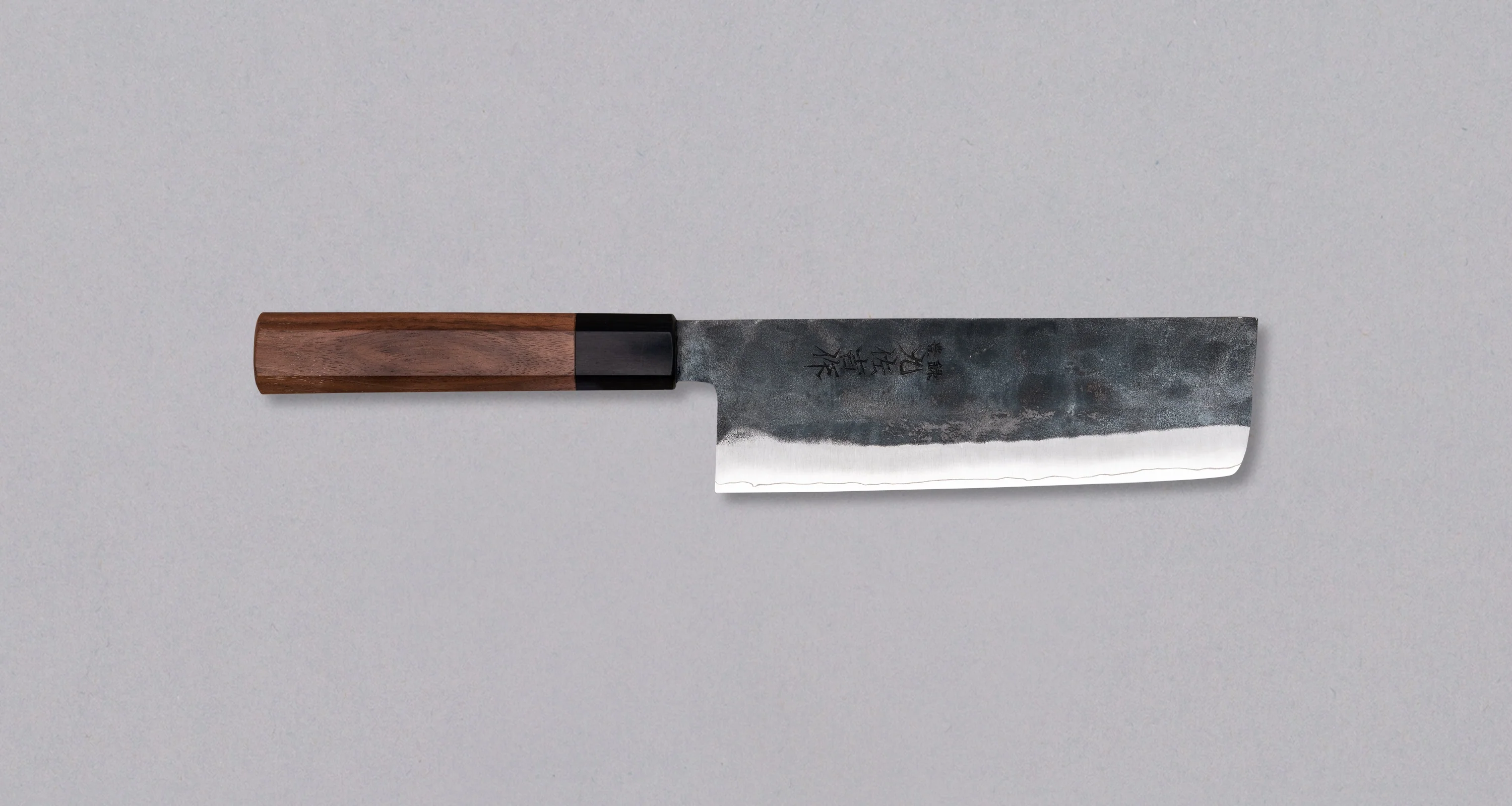
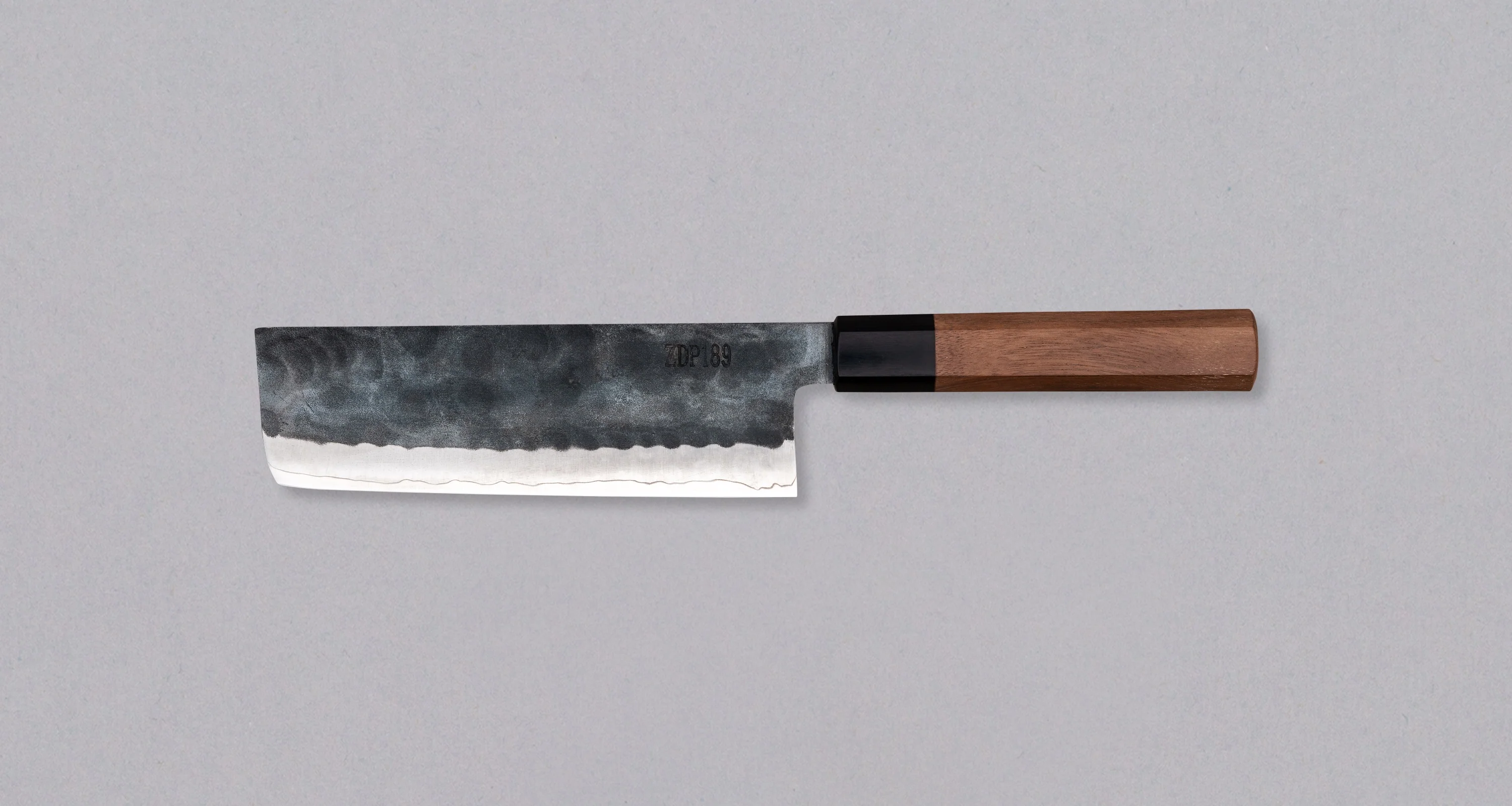
The blade has a kuro-uchi blade finish. The Kuro-uchi finish on Aogami #2 blades provides a protective layer against rust and other external elements that can otherwise damage the surface. The kuro-uchi finish (kuro - ‘black’) is a layer of raw, protective patina on the outer steel. It gets a nice contrast from the hand-chiseled kanji on the blade. The kireha (lower part of the blade or ‘blade road’) has a classic cloudy kasumi finish.
HANDLE:
Japanese (Wa) style handle is made out of wenge wood and is topped with a black buffalo horn ferrule. The otagonal handle allows a comfortable and firm grip, suitable for both left- and right-handed users. Wenge wood features a unique open grain with a dark brown color and smooth, polished appearance. Handles made from this wood are highly durable and resistant to moisture.
|
A traditional feature of wooden handles is that over time the soft surface of the wood will lose its smoothness and shine, giving it an even better grip and making it even safer to use with wet hands. This extra friction of the "roughened" surface ensures that greasy, wet, and slippery palms don't slide forward on the blade during use. |
Original: $185.00
-65%$185.00
$64.75More Images


Kurokaze Ryo-Kiri-Deba Aogami #2 Kuro-uchi 150mm (5.9")
The Kurokaze Ryo-Kiri-Deba Aogami #2 Kuro-uchi 150mm is a sturdy Japanese fish knife designed for preparing whole fish, portioning, and cutting through smaller fish or poultry bones.
Unlike most traditional deba knives, which are single-bevel, this model has a symmetrical double-bevel edge. This makes it suitable for both right- and left-handed users, easier to sharpen, and well suited for heavier cutting tasks.
Its robust profile offers the control needed for precise fish preparation while providing enough strength for more demanding work. An excellent choice for professional chefs and experienced home cooks. Especially recommended for "big game" fishing enthusiasts!
BLADE SHAPE:
Deba is one of the »big three« Japanese traditional kitchen knives, alongside usuba and yanagiba. It is designed for preparing whole fish, from cleaning and filleting to portioning, removing fins and heads, and cutting through smaller bones. Its thick, heavy blade provides the strength needed for more demanding tasks and can also be used for poultry and other meat with smaller bones.
This model is a ryo-deba, meaning it has a symmetrical double-bevel edge rather than the traditional single-bevel grind. It is therefore suitable for both right- and left-handed users and is easier to sharpen.
The blade also features a pointed K-tip, commonly associated with kiritsuke knives. This tip improves visibility and control during precise work, making it especially useful for filleting larger fish, preparing smaller fish such as sardines or mackerel, and deboning poultry.
The blade combines a strong, substantial heel with a fine, precise tip. Its thickness provides stability during heavier fish preparation, while the narrow front section allows controlled and accurate cutting around bones and joints.
STEEL:
Aogami #2 is a very popular steel in Japanese knife making and one of the finest high-carbon steels, meaning the knives forged from it will have exceptional edge retention and also sharpen very easily. At the same time, it is less resistant to corrosion, meaning the blade can develop a patina, while longer exposure to water or other corrosives could also lead to rusting. This is improved to some extent with the addition of chromium and tungsten, but it’s still a high-carbon steel that should be maintained accordingly (⚠️ read more about knife maintenance here). Aogami #2 steel is composed of carbon (C) 1.1 %, chromium (Cr) 0.5 %, manganese (Mn) 0.3%, and tungsten (W) 1.5%.
LAMINATION:
The blade’s core was laminated using the san-mai method to improve its structural integrity and subsequent ability to withstand impacts and prevent chipping. San-mai translates to “three layers” in Japanese, referring to a blade that is composed of a primary, inner layer of harder steel (hagane) and of two secondary, outer layers of softer steel (jigane) that protect the prior. → Read more on Blade Construction: Lamination.
GEOMETRY:
The knife has a double-bevel blade with a convex v-edge. It is heavier and stronger at the handle and thinner and more precise at the tip, towards which it tapers. This blade shape makes the knife easier to use because it is very responsive, easily maneuverable, and nicely balanced. This type of blade design is called distal taper - you can read more about it in the article on blade geometry.
BLADE FINISH:
The blade has a kuro-uchi blade finish. The Kuro-uchi finish on Aogami #2 blades provides a protective layer against rust and other external elements that can otherwise damage the surface. The kuro-uchi finish (kuro - ‘black’) is a layer of raw, protective patina on the outer steel. It gets a nice contrast from the hand-chiseled kanji on the blade. The kireha (lower part of the blade or ‘blade road’) has a classic cloudy kasumi finish.
HANDLE:
Japanese (Wa) style handle is made out of wenge wood and is topped with a black buffalo horn ferrule. The otagonal handle allows a comfortable and firm grip, suitable for both left- and right-handed users. Wenge wood features a unique open grain with a dark brown color and smooth, polished appearance. Handles made from this wood are highly durable and resistant to moisture.
|
A traditional feature of wooden handles is that over time the soft surface of the wood will lose its smoothness and shine, giving it an even better grip and making it even safer to use with wet hands. This extra friction of the "roughened" surface ensures that greasy, wet, and slippery palms don't slide forward on the blade during use. |
Product Information
Product Information
Shipping & Returns
Shipping & Returns
Description
The Kurokaze Ryo-Kiri-Deba Aogami #2 Kuro-uchi 150mm is a sturdy Japanese fish knife designed for preparing whole fish, portioning, and cutting through smaller fish or poultry bones.
Unlike most traditional deba knives, which are single-bevel, this model has a symmetrical double-bevel edge. This makes it suitable for both right- and left-handed users, easier to sharpen, and well suited for heavier cutting tasks.
Its robust profile offers the control needed for precise fish preparation while providing enough strength for more demanding work. An excellent choice for professional chefs and experienced home cooks. Especially recommended for "big game" fishing enthusiasts!
BLADE SHAPE:
Deba is one of the »big three« Japanese traditional kitchen knives, alongside usuba and yanagiba. It is designed for preparing whole fish, from cleaning and filleting to portioning, removing fins and heads, and cutting through smaller bones. Its thick, heavy blade provides the strength needed for more demanding tasks and can also be used for poultry and other meat with smaller bones.
This model is a ryo-deba, meaning it has a symmetrical double-bevel edge rather than the traditional single-bevel grind. It is therefore suitable for both right- and left-handed users and is easier to sharpen.
The blade also features a pointed K-tip, commonly associated with kiritsuke knives. This tip improves visibility and control during precise work, making it especially useful for filleting larger fish, preparing smaller fish such as sardines or mackerel, and deboning poultry.
The blade combines a strong, substantial heel with a fine, precise tip. Its thickness provides stability during heavier fish preparation, while the narrow front section allows controlled and accurate cutting around bones and joints.
STEEL:
Aogami #2 is a very popular steel in Japanese knife making and one of the finest high-carbon steels, meaning the knives forged from it will have exceptional edge retention and also sharpen very easily. At the same time, it is less resistant to corrosion, meaning the blade can develop a patina, while longer exposure to water or other corrosives could also lead to rusting. This is improved to some extent with the addition of chromium and tungsten, but it’s still a high-carbon steel that should be maintained accordingly (⚠️ read more about knife maintenance here). Aogami #2 steel is composed of carbon (C) 1.1 %, chromium (Cr) 0.5 %, manganese (Mn) 0.3%, and tungsten (W) 1.5%.
LAMINATION:
The blade’s core was laminated using the san-mai method to improve its structural integrity and subsequent ability to withstand impacts and prevent chipping. San-mai translates to “three layers” in Japanese, referring to a blade that is composed of a primary, inner layer of harder steel (hagane) and of two secondary, outer layers of softer steel (jigane) that protect the prior. → Read more on Blade Construction: Lamination.
GEOMETRY:
The knife has a double-bevel blade with a convex v-edge. It is heavier and stronger at the handle and thinner and more precise at the tip, towards which it tapers. This blade shape makes the knife easier to use because it is very responsive, easily maneuverable, and nicely balanced. This type of blade design is called distal taper - you can read more about it in the article on blade geometry.
BLADE FINISH:
The blade has a kuro-uchi blade finish. The Kuro-uchi finish on Aogami #2 blades provides a protective layer against rust and other external elements that can otherwise damage the surface. The kuro-uchi finish (kuro - ‘black’) is a layer of raw, protective patina on the outer steel. It gets a nice contrast from the hand-chiseled kanji on the blade. The kireha (lower part of the blade or ‘blade road’) has a classic cloudy kasumi finish.
HANDLE:
Japanese (Wa) style handle is made out of wenge wood and is topped with a black buffalo horn ferrule. The otagonal handle allows a comfortable and firm grip, suitable for both left- and right-handed users. Wenge wood features a unique open grain with a dark brown color and smooth, polished appearance. Handles made from this wood are highly durable and resistant to moisture.
|
A traditional feature of wooden handles is that over time the soft surface of the wood will lose its smoothness and shine, giving it an even better grip and making it even safer to use with wet hands. This extra friction of the "roughened" surface ensures that greasy, wet, and slippery palms don't slide forward on the blade during use. |