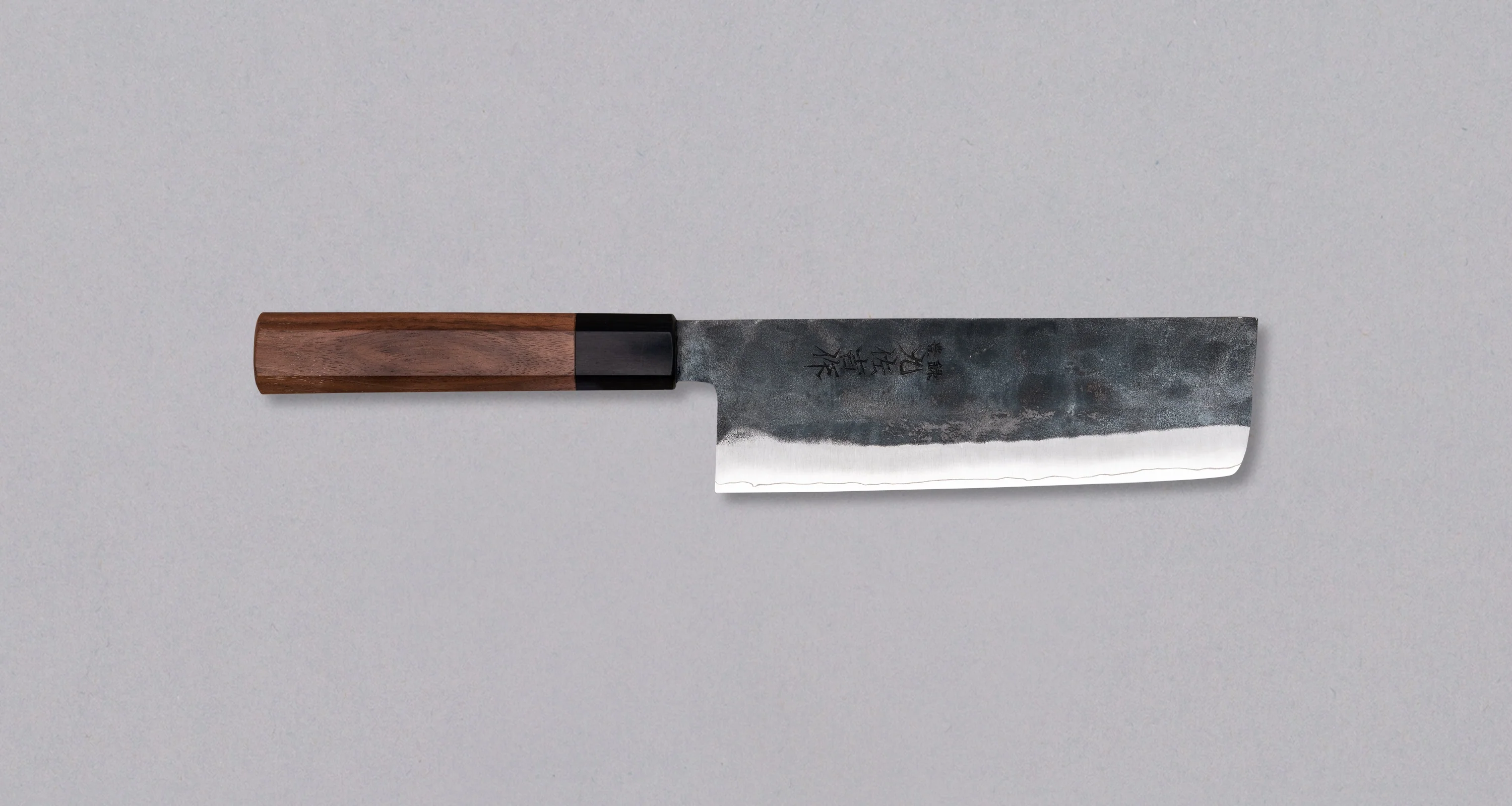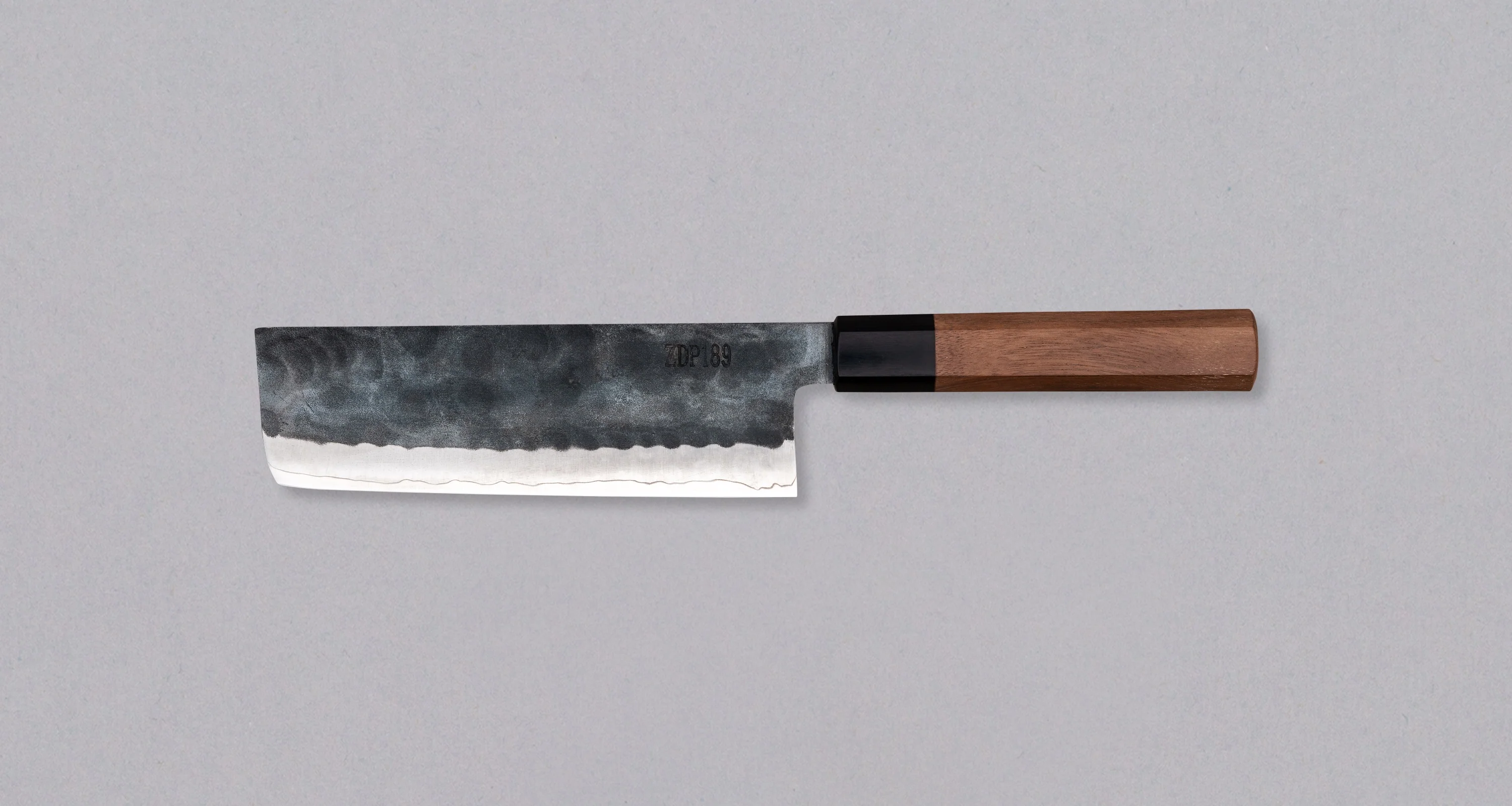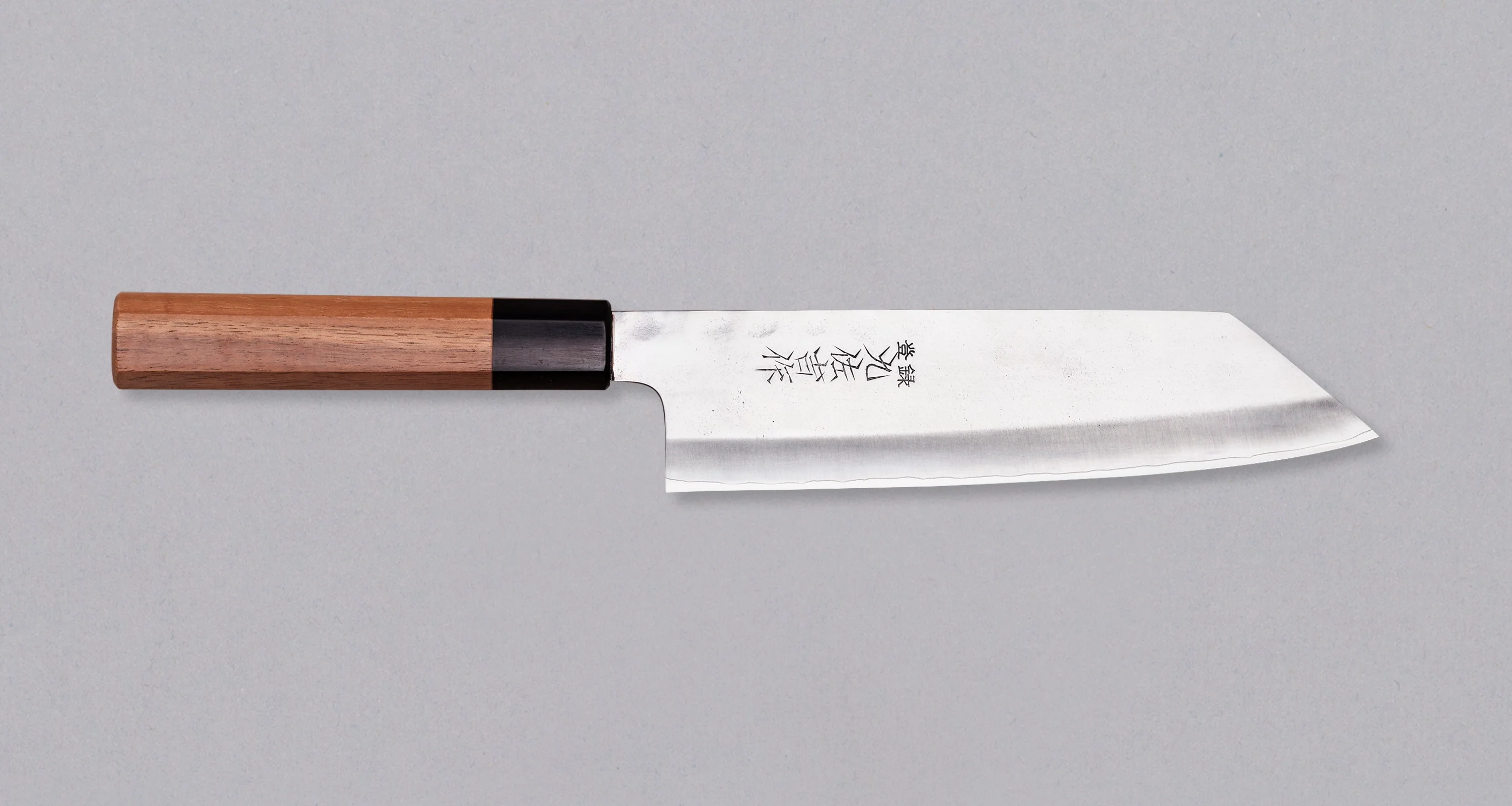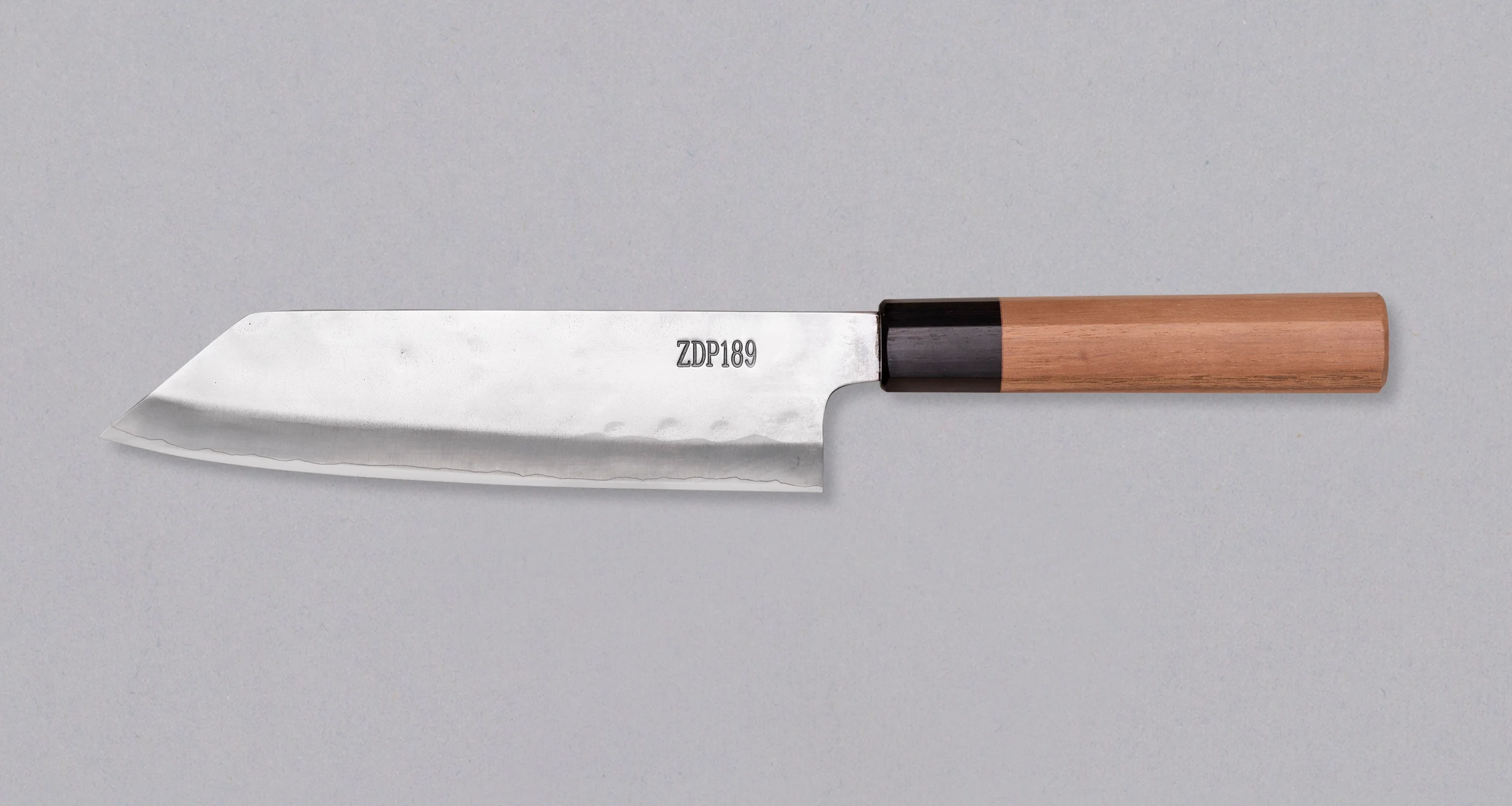

Kurozome Santoku VG-10 Nickel Damascus 180mm (7.1")
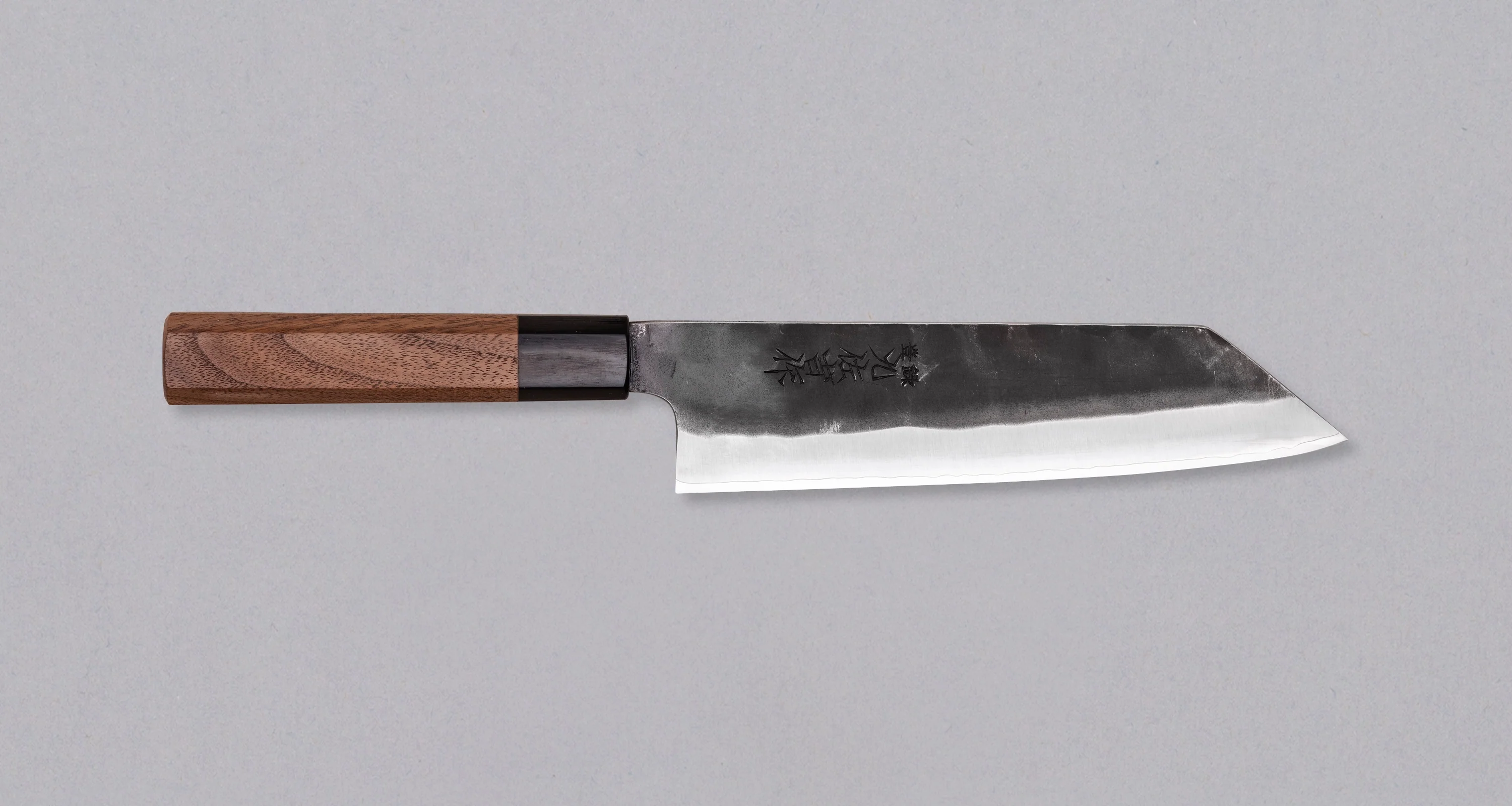
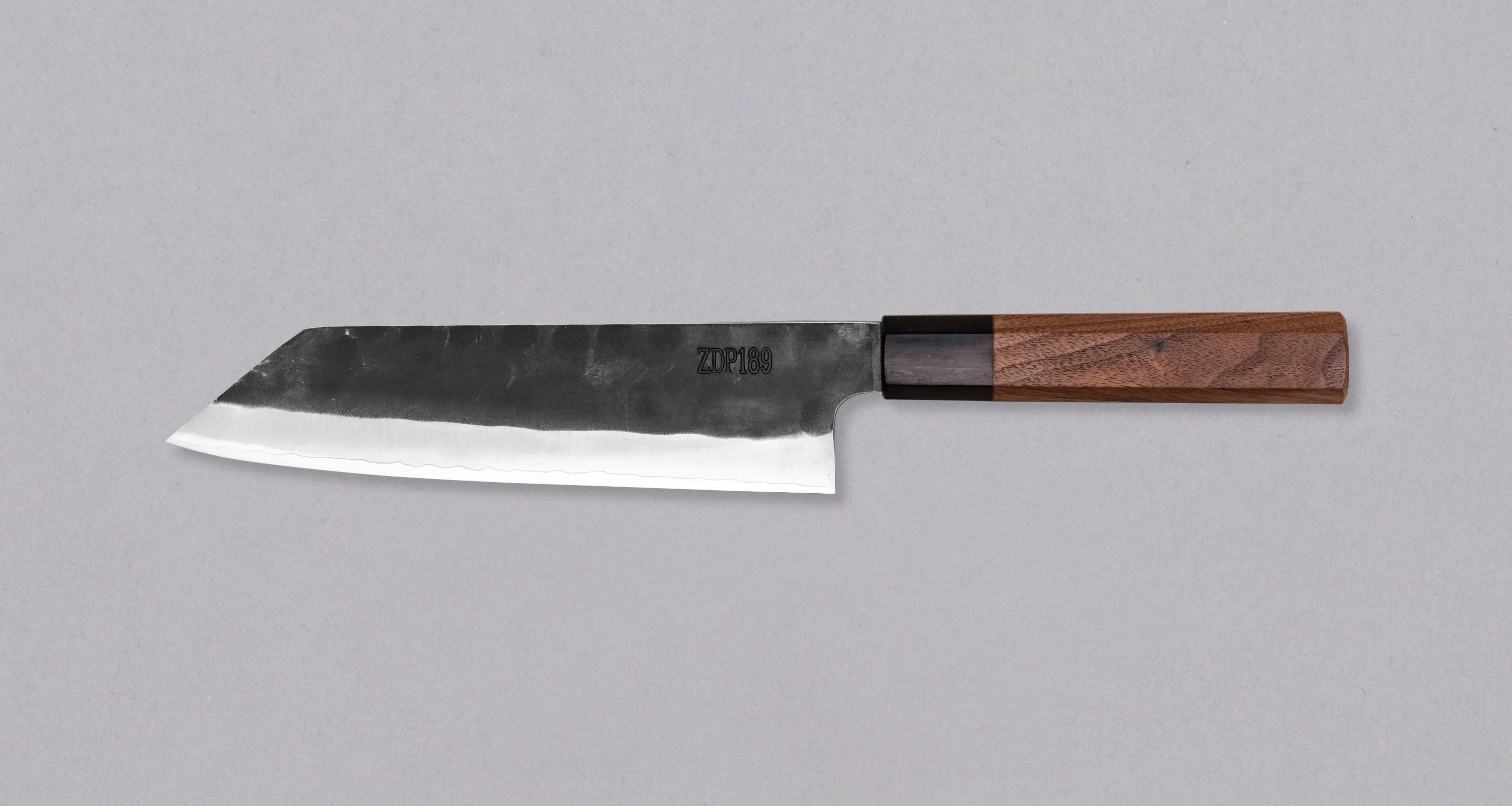
Kurozome Santoku VG-10 Nickel Damascus 180mm is a versatile Japanese knife for everyday slicing, chopping, and preparing vegetables, meat, and fish. The santoku shape offers excellent control on the cutting board, while VG-10 steel provides good edge retention, easy maintenance, and reliable performance for daily use.
An ideal choice for professional chefs and passionate home cooks who want a dependable knife with a smooth cutting feel, less frequent sharpening, and a distinctive kurozome damascus finish.
BLADE SHAPE:
The Santoku is one of the most versatile and efficient blade shapes in the kitchen, perfect for slicing, dicing, and chopping meat, fish, and vegetables. Its wide blade makes it easy to scoop and transfer ingredients, while the relatively flat edge excels at straight-down chopping and push-cutting on the cutting board. The slightly curved belly allows for gentle rocking, and the rounded tip adds precision for more delicate prep work.
STEEL:
VG-10 (V for Vanadium, G for "gold" as in "gold standard") is made by Takefu Special Steel Company, a relatively small steel company that around 60 years ago managed to find just the right balance of different elements to create the most popular Japanese knife making steel today. VG-10 steel is stainless steel with relatively high Carbon (C) content (1%), 15% Chromium (Cr), 1% Molybdenum (Mo), 0.3% Vanadium (V), and 1.5% Cobalt (Co). The combination of Cr, Mo, and V forms a lot of hard carbides, making the steel abrasion-resistant, which translates to long-lasting, smooth sharpness.
LAMINATION:
The core layer consisting of VG-10 steel was sandwiched between layers of softer, pliable steel that had been forged together to create a rippling damascus pattern. This technique is called san-mai and is used to improve the blade's structural integrity and subsequent ability to withstand impacts and to prevent chipping. San-mai translates to “three layers” in Japanese, referring to a blade that is composed of a primary, inner layer of harder steel (hagane) and two secondary, outer layers of softer steel (jigane) that protect the prior.
GEOMETRY:
It has a double bevel (symmetrical) blade so it is suitable for both left- and right-handed users. Based on the ratio between the surfaces (the location of the angle change), this knife's profile is classified as a flat V-edge type, which makes it less brittle and easier to resharpen.
BLADE FINISH:
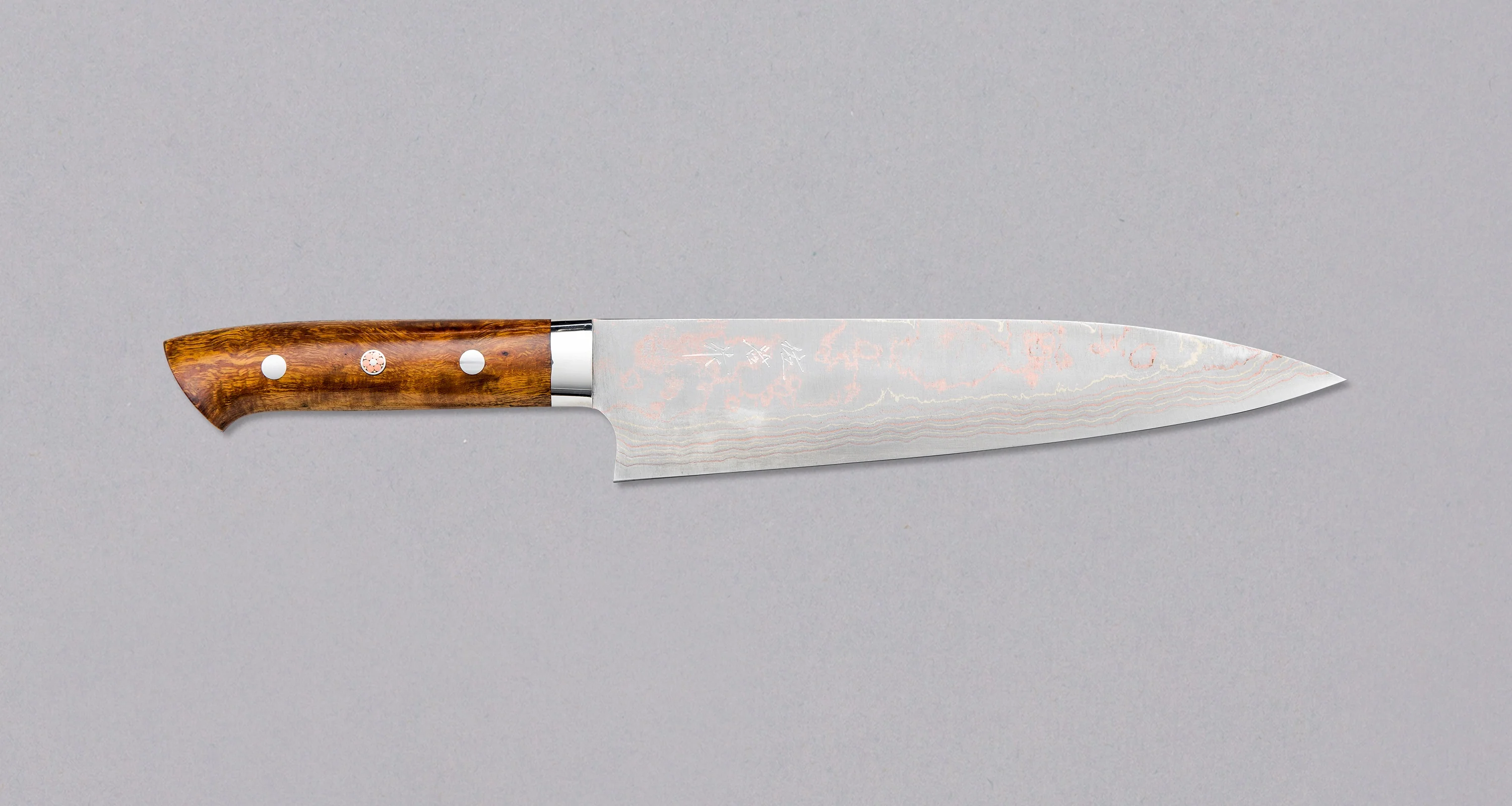
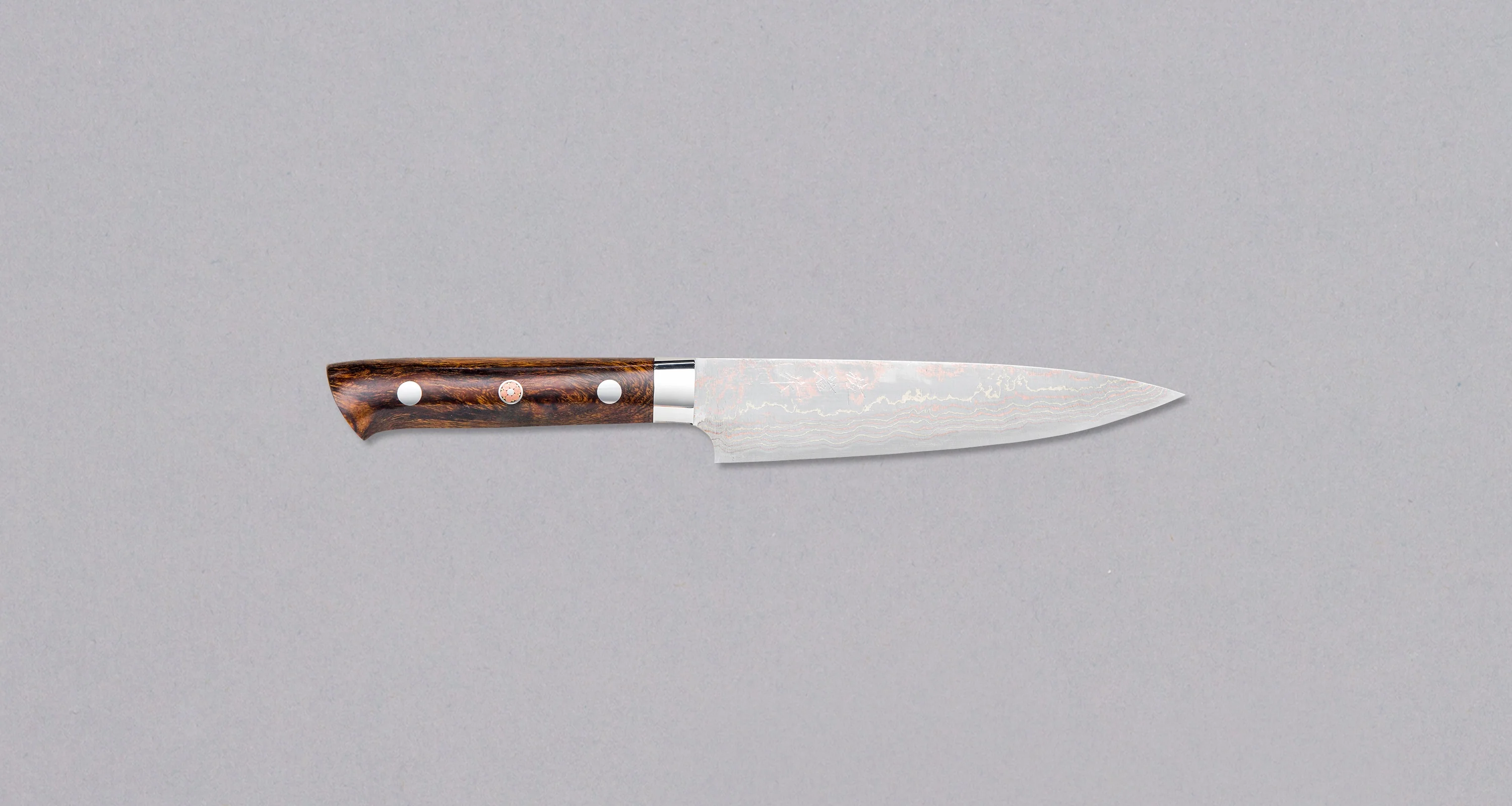
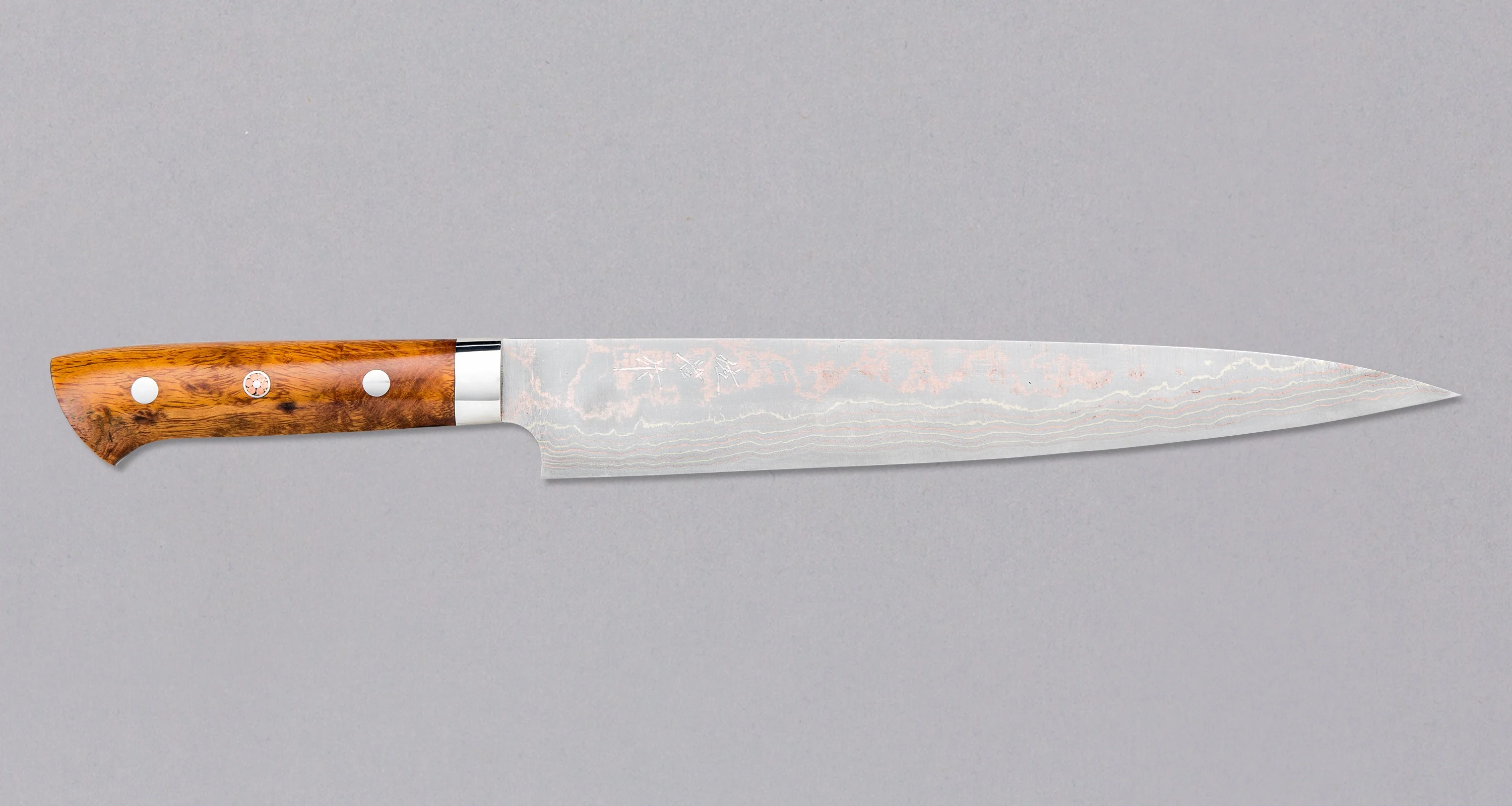
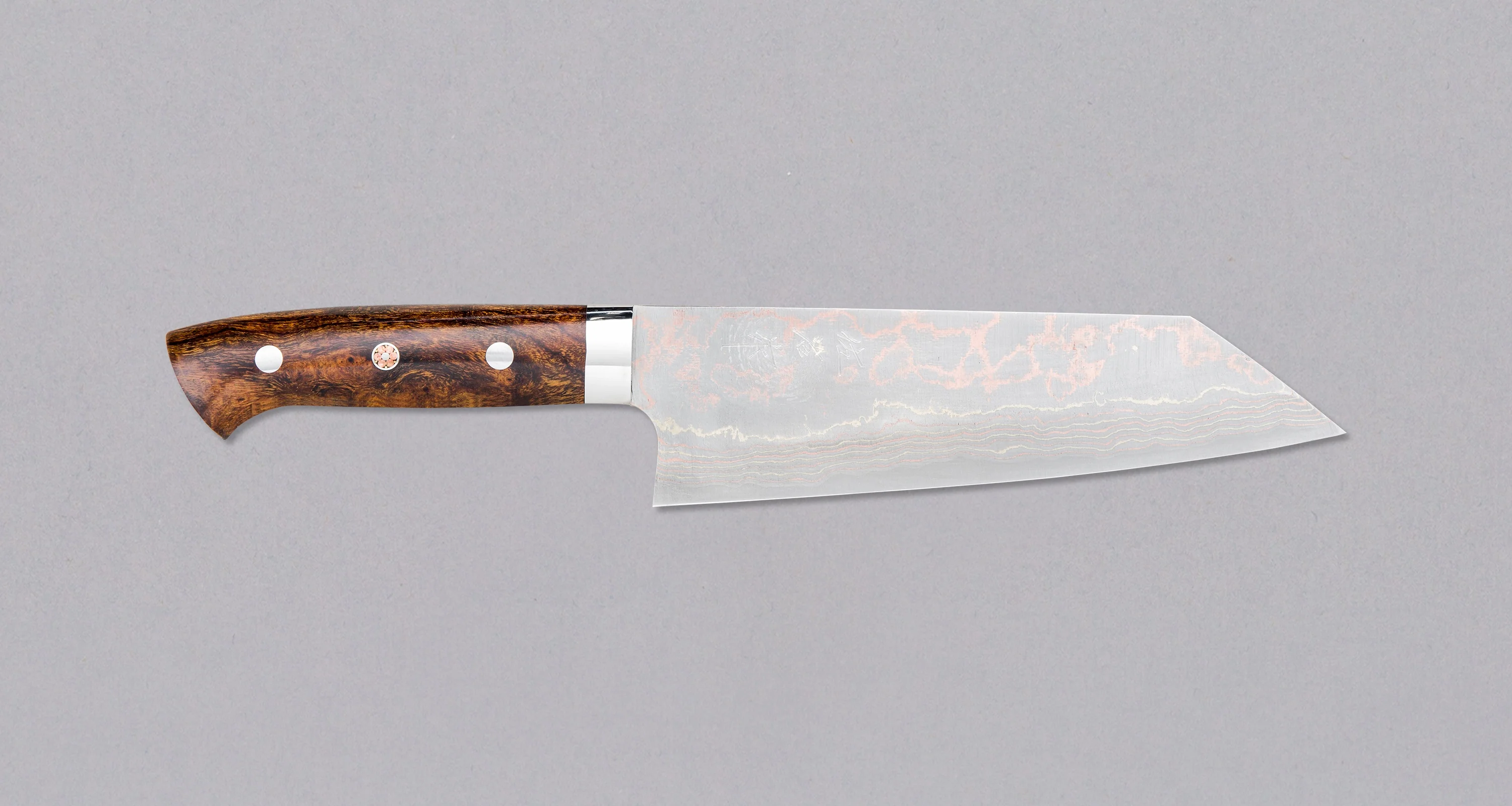
The Hikari line features a unique Damascus pattern, showcasing the beautiful spiral of intertwined steel layers. Each blade is etched to enhance contrast, highlighting the reflections and interplay of light across the different steel surfaces. The result is a finish that is both traditional and sophisticated—visually captivating, impeccably executed, and a true testament to craftsmanship.
HANDLE:
The knife features an octagon Japanese (Wa) style handle made out of rosewood. The octagon shape of the handle provides a comfortable and secure grip, allowing for precise control during use.
Original: $245.00
-65%$245.00
$85.75More Images


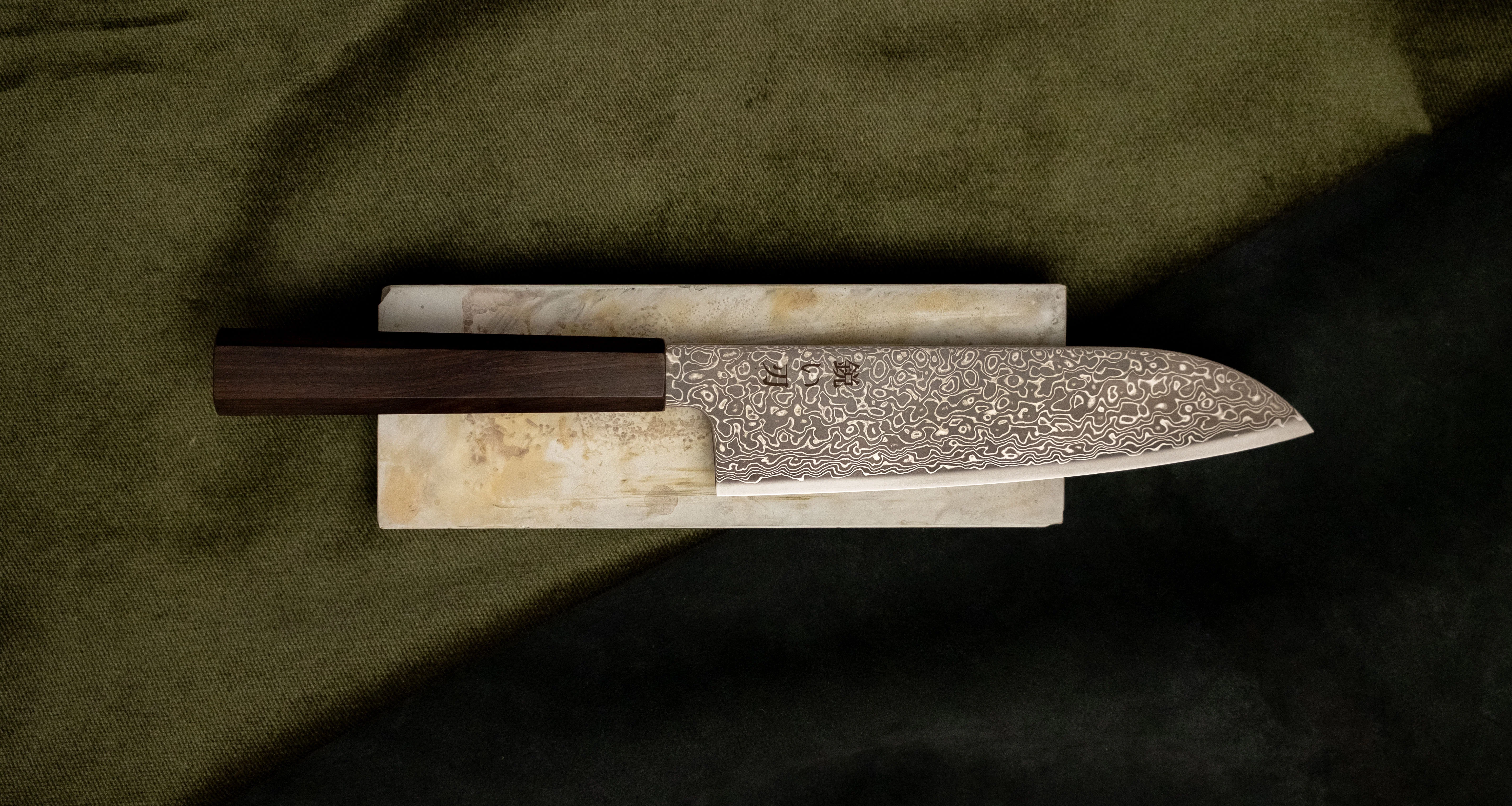

Kurozome Santoku VG-10 Nickel Damascus 180mm (7.1")
Kurozome Santoku VG-10 Nickel Damascus 180mm is a versatile Japanese knife for everyday slicing, chopping, and preparing vegetables, meat, and fish. The santoku shape offers excellent control on the cutting board, while VG-10 steel provides good edge retention, easy maintenance, and reliable performance for daily use.
An ideal choice for professional chefs and passionate home cooks who want a dependable knife with a smooth cutting feel, less frequent sharpening, and a distinctive kurozome damascus finish.
BLADE SHAPE:
The Santoku is one of the most versatile and efficient blade shapes in the kitchen, perfect for slicing, dicing, and chopping meat, fish, and vegetables. Its wide blade makes it easy to scoop and transfer ingredients, while the relatively flat edge excels at straight-down chopping and push-cutting on the cutting board. The slightly curved belly allows for gentle rocking, and the rounded tip adds precision for more delicate prep work.
STEEL:
VG-10 (V for Vanadium, G for "gold" as in "gold standard") is made by Takefu Special Steel Company, a relatively small steel company that around 60 years ago managed to find just the right balance of different elements to create the most popular Japanese knife making steel today. VG-10 steel is stainless steel with relatively high Carbon (C) content (1%), 15% Chromium (Cr), 1% Molybdenum (Mo), 0.3% Vanadium (V), and 1.5% Cobalt (Co). The combination of Cr, Mo, and V forms a lot of hard carbides, making the steel abrasion-resistant, which translates to long-lasting, smooth sharpness.
LAMINATION:
The core layer consisting of VG-10 steel was sandwiched between layers of softer, pliable steel that had been forged together to create a rippling damascus pattern. This technique is called san-mai and is used to improve the blade's structural integrity and subsequent ability to withstand impacts and to prevent chipping. San-mai translates to “three layers” in Japanese, referring to a blade that is composed of a primary, inner layer of harder steel (hagane) and two secondary, outer layers of softer steel (jigane) that protect the prior.
GEOMETRY:
It has a double bevel (symmetrical) blade so it is suitable for both left- and right-handed users. Based on the ratio between the surfaces (the location of the angle change), this knife's profile is classified as a flat V-edge type, which makes it less brittle and easier to resharpen.
BLADE FINISH:
The Hikari line features a unique Damascus pattern, showcasing the beautiful spiral of intertwined steel layers. Each blade is etched to enhance contrast, highlighting the reflections and interplay of light across the different steel surfaces. The result is a finish that is both traditional and sophisticated—visually captivating, impeccably executed, and a true testament to craftsmanship.
HANDLE:
The knife features an octagon Japanese (Wa) style handle made out of rosewood. The octagon shape of the handle provides a comfortable and secure grip, allowing for precise control during use.
Product Information
Product Information
Shipping & Returns
Shipping & Returns
Description
Kurozome Santoku VG-10 Nickel Damascus 180mm is a versatile Japanese knife for everyday slicing, chopping, and preparing vegetables, meat, and fish. The santoku shape offers excellent control on the cutting board, while VG-10 steel provides good edge retention, easy maintenance, and reliable performance for daily use.
An ideal choice for professional chefs and passionate home cooks who want a dependable knife with a smooth cutting feel, less frequent sharpening, and a distinctive kurozome damascus finish.
BLADE SHAPE:
The Santoku is one of the most versatile and efficient blade shapes in the kitchen, perfect for slicing, dicing, and chopping meat, fish, and vegetables. Its wide blade makes it easy to scoop and transfer ingredients, while the relatively flat edge excels at straight-down chopping and push-cutting on the cutting board. The slightly curved belly allows for gentle rocking, and the rounded tip adds precision for more delicate prep work.
STEEL:
VG-10 (V for Vanadium, G for "gold" as in "gold standard") is made by Takefu Special Steel Company, a relatively small steel company that around 60 years ago managed to find just the right balance of different elements to create the most popular Japanese knife making steel today. VG-10 steel is stainless steel with relatively high Carbon (C) content (1%), 15% Chromium (Cr), 1% Molybdenum (Mo), 0.3% Vanadium (V), and 1.5% Cobalt (Co). The combination of Cr, Mo, and V forms a lot of hard carbides, making the steel abrasion-resistant, which translates to long-lasting, smooth sharpness.
LAMINATION:
The core layer consisting of VG-10 steel was sandwiched between layers of softer, pliable steel that had been forged together to create a rippling damascus pattern. This technique is called san-mai and is used to improve the blade's structural integrity and subsequent ability to withstand impacts and to prevent chipping. San-mai translates to “three layers” in Japanese, referring to a blade that is composed of a primary, inner layer of harder steel (hagane) and two secondary, outer layers of softer steel (jigane) that protect the prior.
GEOMETRY:
It has a double bevel (symmetrical) blade so it is suitable for both left- and right-handed users. Based on the ratio between the surfaces (the location of the angle change), this knife's profile is classified as a flat V-edge type, which makes it less brittle and easier to resharpen.
BLADE FINISH:
The Hikari line features a unique Damascus pattern, showcasing the beautiful spiral of intertwined steel layers. Each blade is etched to enhance contrast, highlighting the reflections and interplay of light across the different steel surfaces. The result is a finish that is both traditional and sophisticated—visually captivating, impeccably executed, and a true testament to craftsmanship.
HANDLE:
The knife features an octagon Japanese (Wa) style handle made out of rosewood. The octagon shape of the handle provides a comfortable and secure grip, allowing for precise control during use.