![NENOX-X Gyuto Migaki 240mm (9.4") [Ironwood]](/images/mysharpedge.shop/images/product/nenox-x-gyuto-migaki-240mm-ironwood-1.jpg)
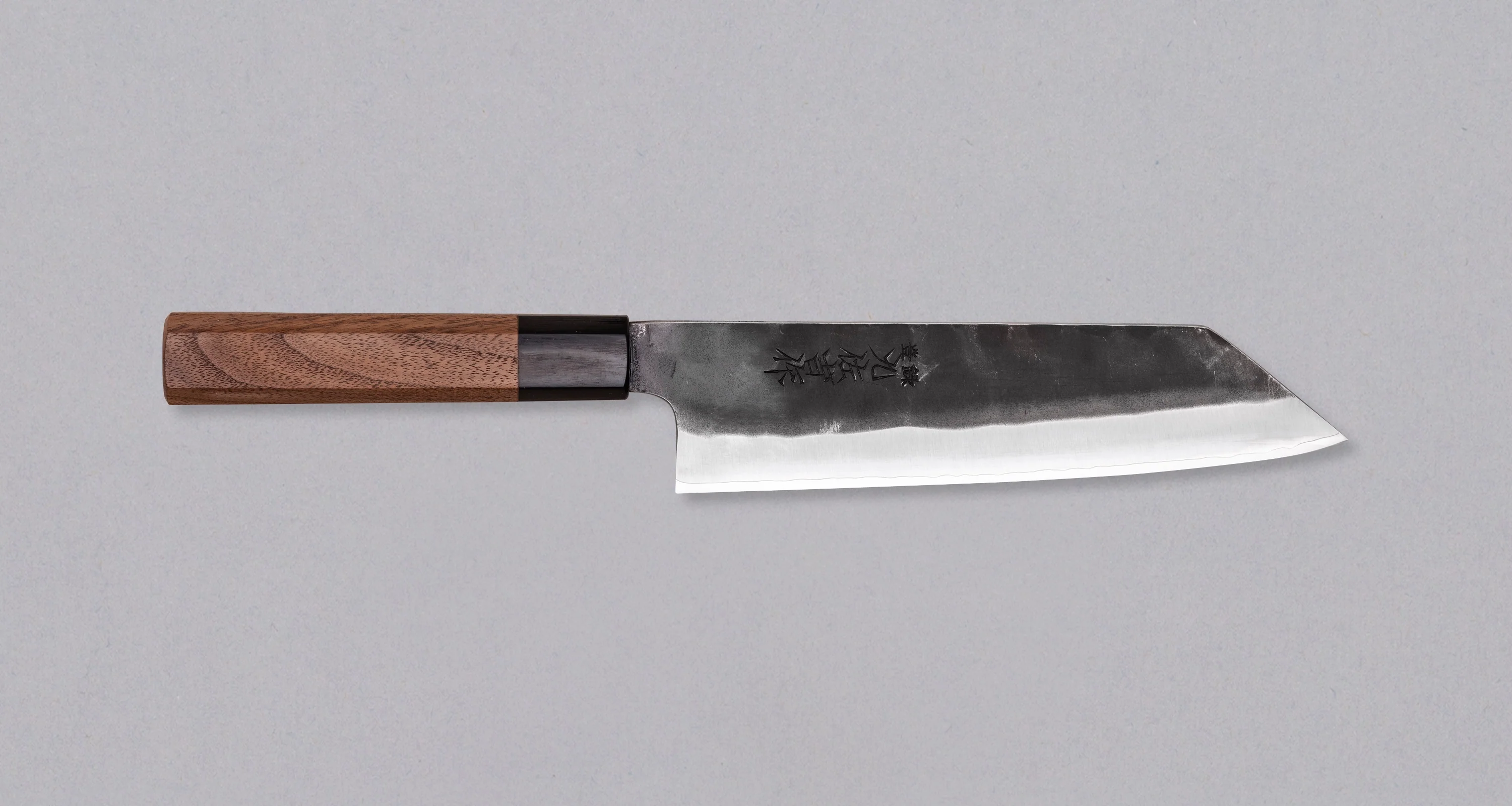
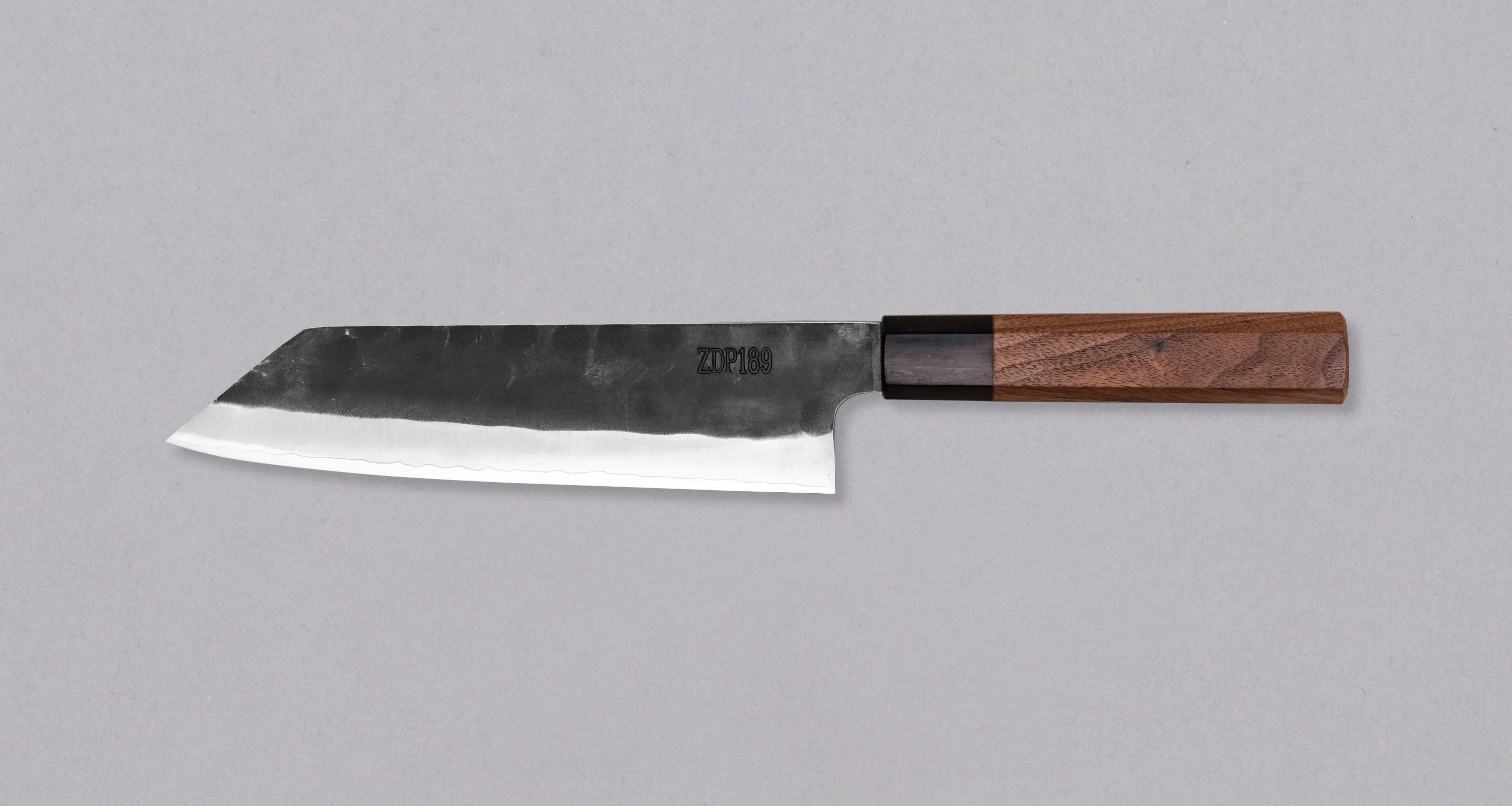
NENOX-X Gyuto Migaki 240mm (9.4") [Ironwood]
One of the things that scares the craftsmen at Nenohi most is compromise, and they go to extraordinary lengths to avoid having to make them. Therefore, in their pursuit of stainless blades with the finest and longest-lasting sharpness, they landed on a couple unique quirks in their production method.
They use a proprietary high-carbon, stain-resistant steel, the composition and exact properties of which are a closely guarded trade secret. It was developed entirely in-house by Nenohi, with the goal of combining the long-lasting, fine sharpness of traditional Japanese steels and the durability of modern Western stainless alloys.
If the NENOX-S series focuses on delivering an all-around, stainless yet durable workhorse knife, their X-series knives go all-out on sharpness, delivering an exceptional cutting performance that puts them toe-to-toe with carbon steel knives, while retaining exceptional stain-resistance.
All of the NENOX series uses a solid steel construction, meaning that the knives are forged from a single sheet of metal. While making the manufacturing process much more difficult and time-consuming, this leads to less deformation during production and use, and results in a finer, easier-to-achieve sharpness. The monosteel construction also means that the entire blade is thinner and lighter due to a lack of additional lamination layers.
In order to avoid damaging the blade with the excessive heat that comes with welding the handles onto the blade, Nenohi also uses a full-tang construction, where a single piece of steel is used that extends from the blade tip to the end of the handle (tang). This also improves the structural integrity of the knife. Every handle is then finished entirely by hand from 16 individual parts and shaped, polished, and fitted by dedicated craftsmen.
Due to the full-tang construction and Western (yo) style handles, one of the most distinctive characteristics of NENOX knives is the blade/handle weight ratio that is heavily skewed towards the handle. This is intended to give the blade itself an almost weightless feel, thus improving comfort and removing fatigue with longer cutting sessions.
BLADE SHAPE:
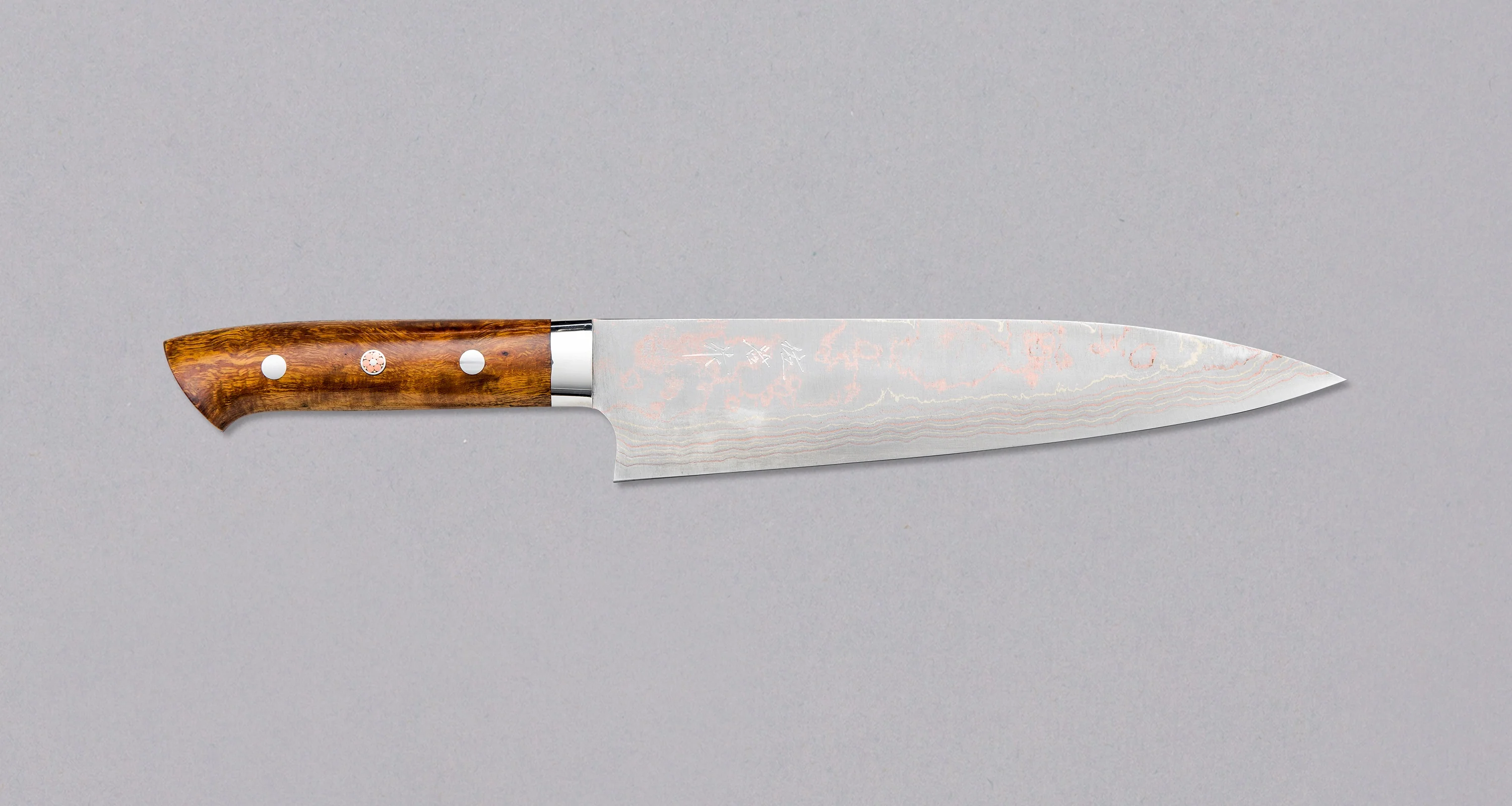
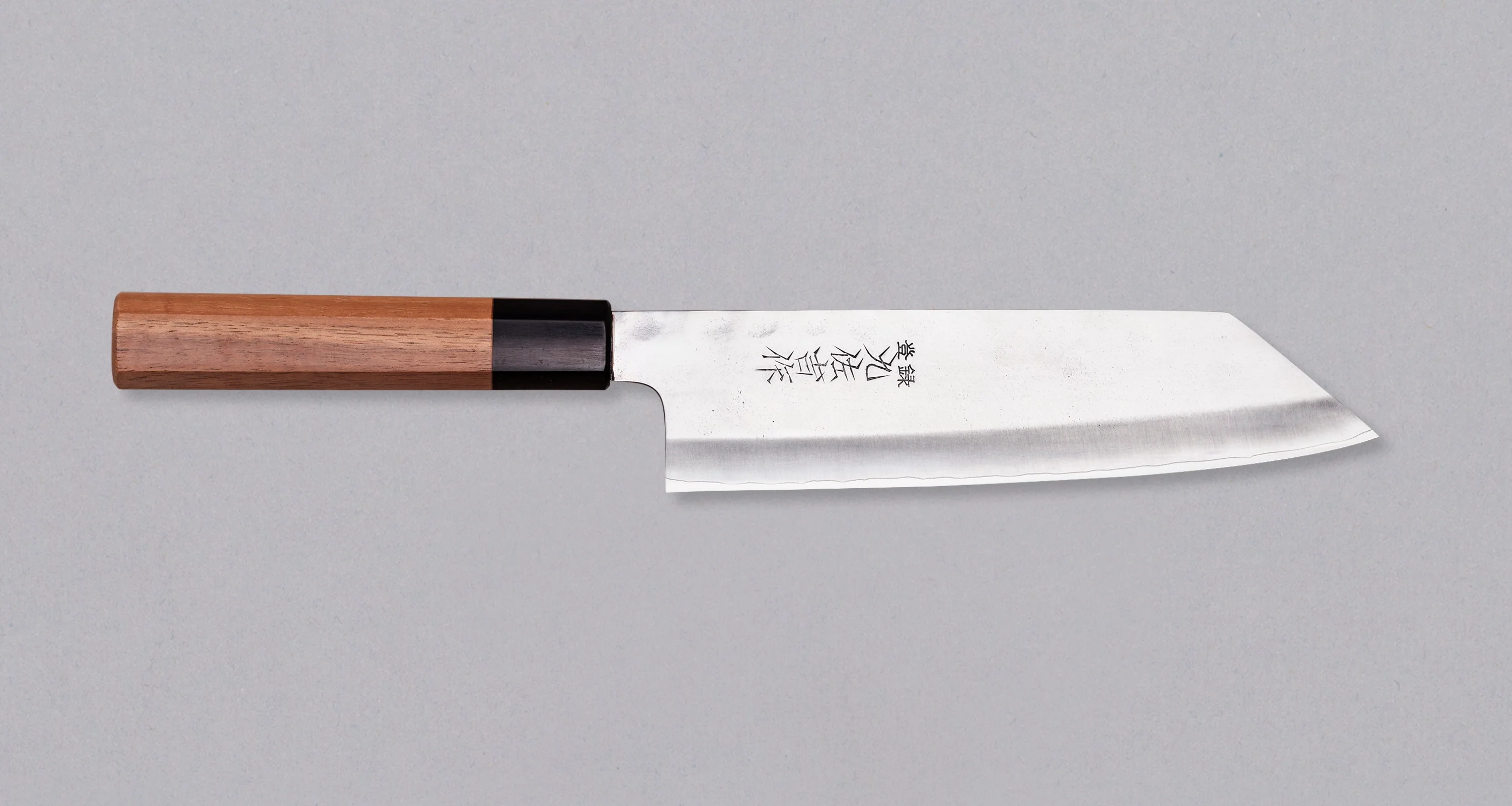
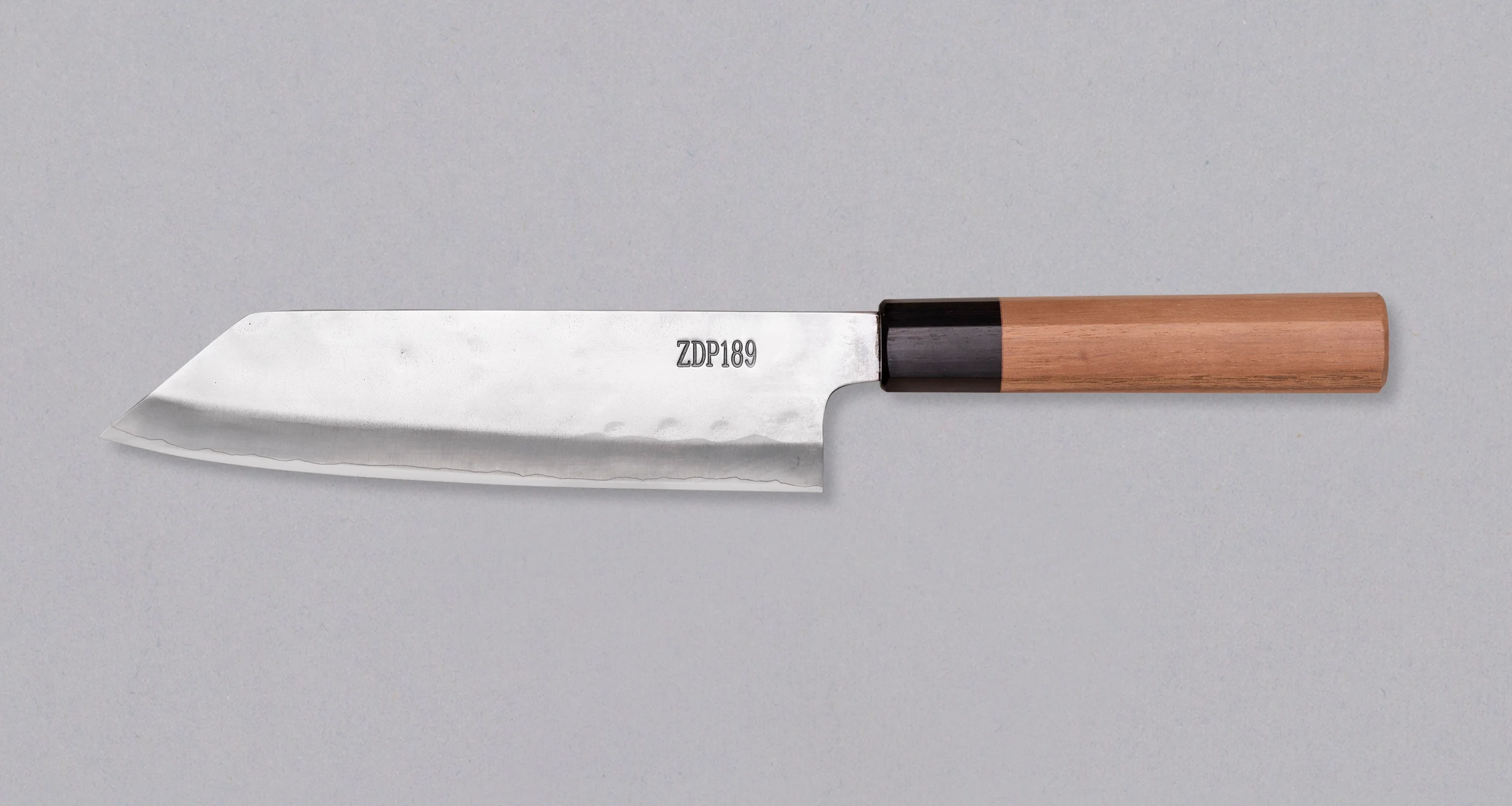
Gyuto is the most versatile and useful blade shape in the modern kitchen. It has a wide profile for easy food transfer and tends to be fairly flat towards the heel, enabling easy and fast chopping on the cutting board. A pointed tip allows piercing and precise, delicate work. A slight curve between the tip and the midsection makes the belly great for rocking the blade back and forth when cutting. It can be used for cutting meat, fish and vegetables.
Includes a wooden saya to protect the blade when not in use.
STEEL:
A closely guarded, in-house designed high-carbon stainless steel. It achieves a high hardness level while maintaining exceptional corrosion resistance and edge stability under heavy professional use.
LAMINATION:
Forged from a single, unclad sheet of steel, also called monosteel. By eliminating the softer outer cladding layers found in traditional laminations, this solid construction results in a thinner, lighter blade that resists deformation and takes an incredibly fine, precise edge.
GEOMETRY:
It has a double bevel (symmetrical) blade with a convex (full hamaguri) grind. Hamaguri grind allows superior sharpness that requires delicate handling and helps to prevent food from sticking to the blade. Such a shape keeps a lot of metal behind the edge and makes for a stronger edge, yet it still allows a good degree of sharpness. The downside to a convex grind is that it is very hard to reproduce by anyone other than a very experienced sharpener.
BLADE FINISH:
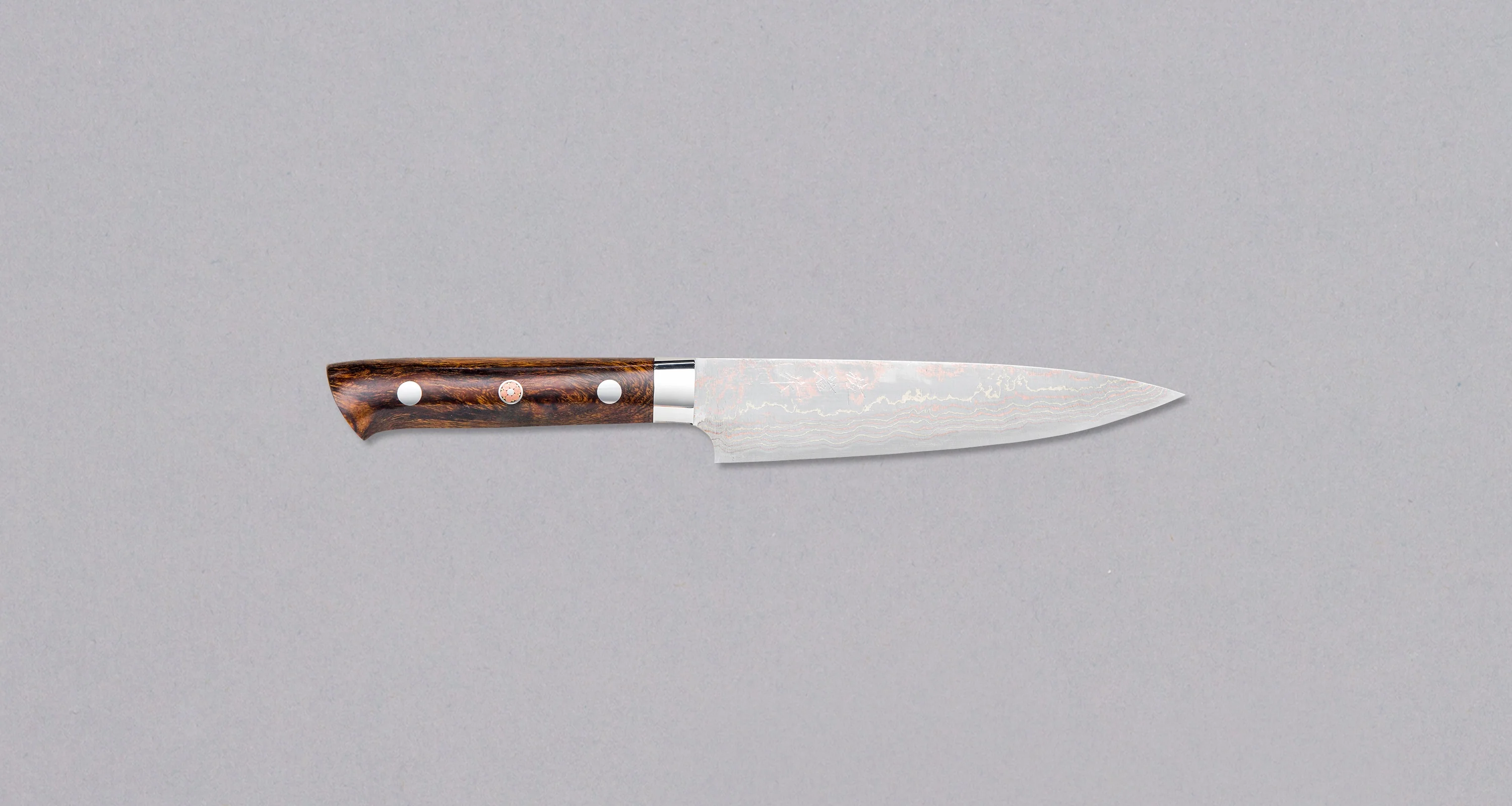
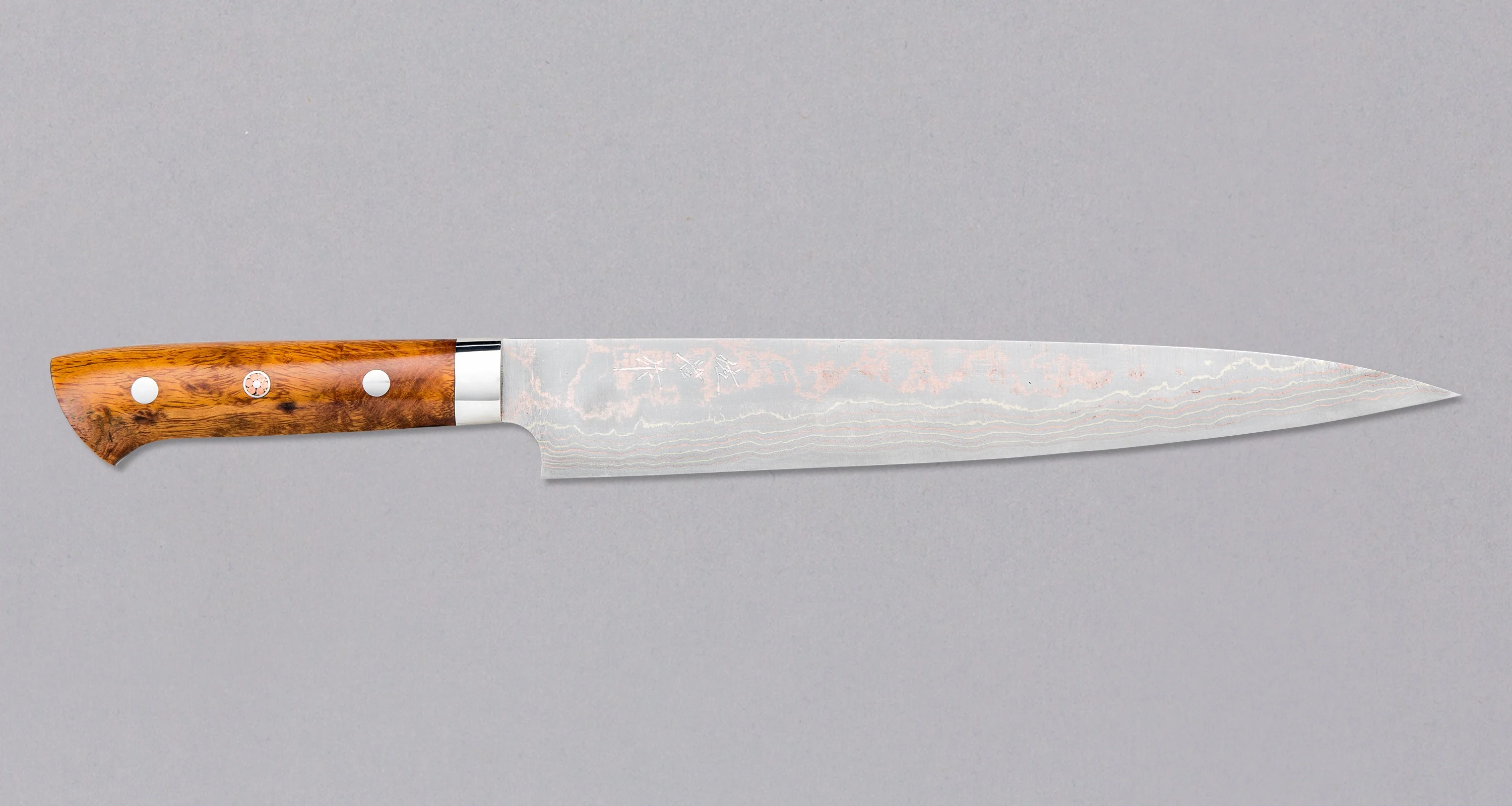
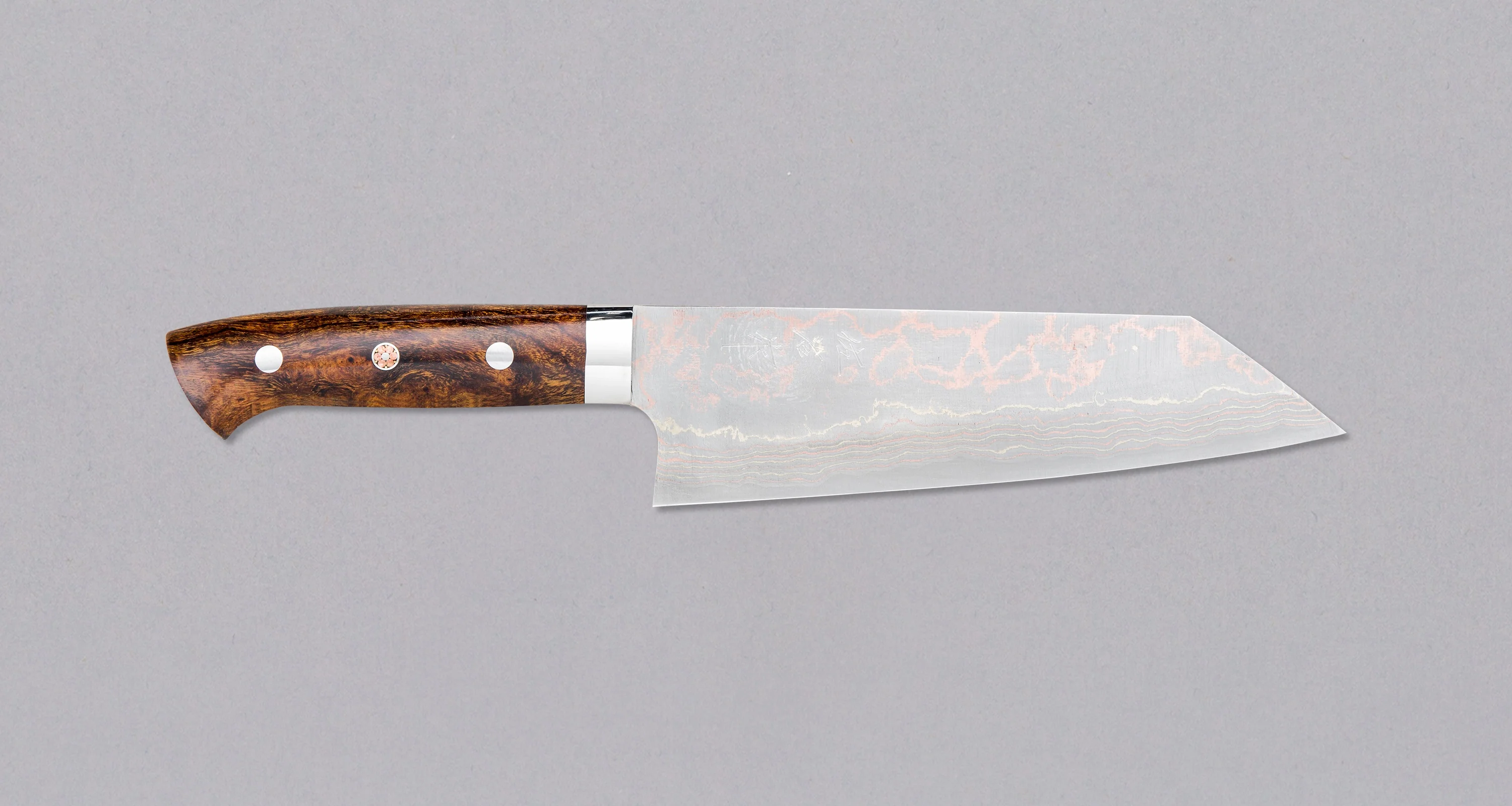
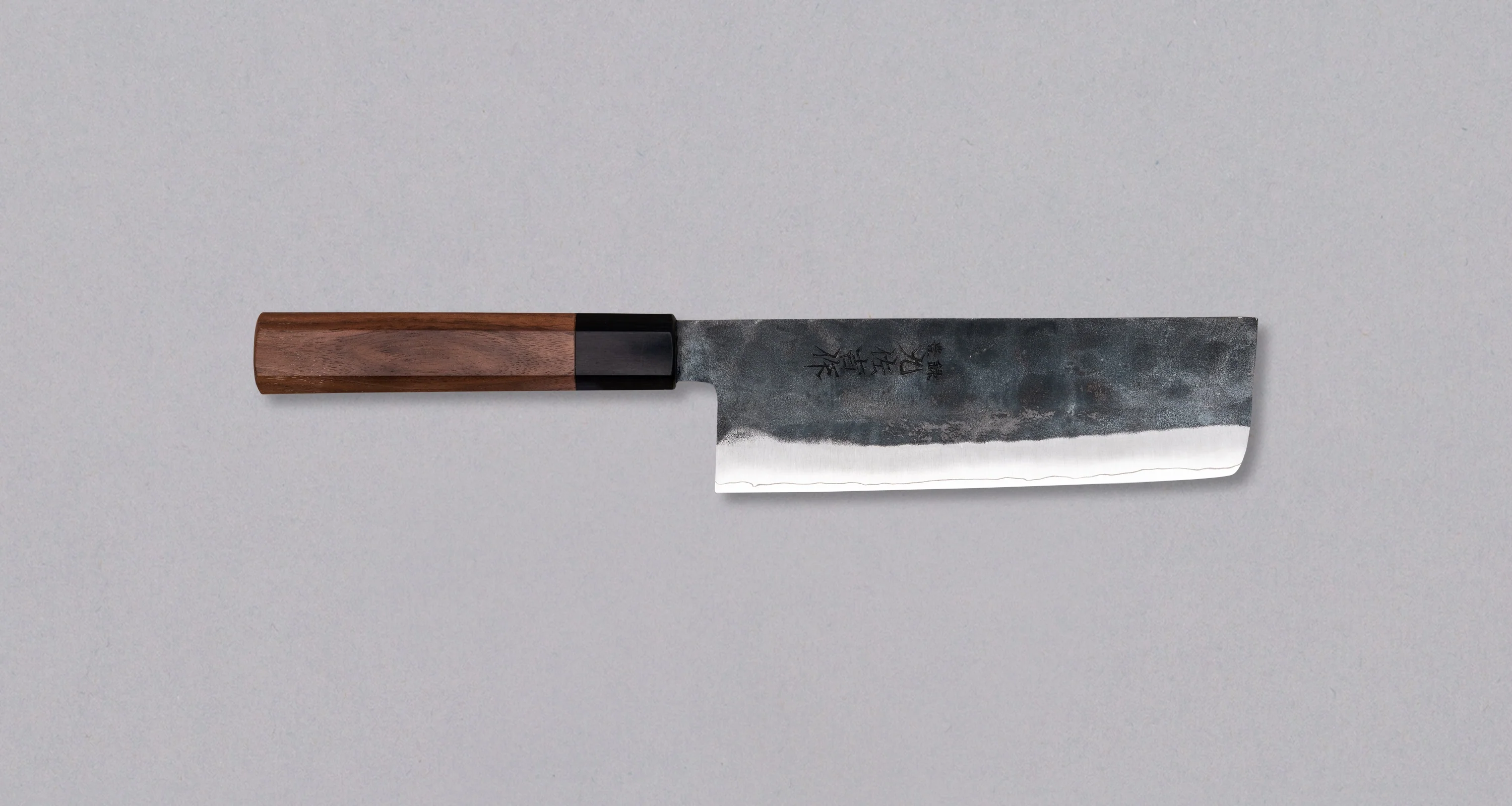
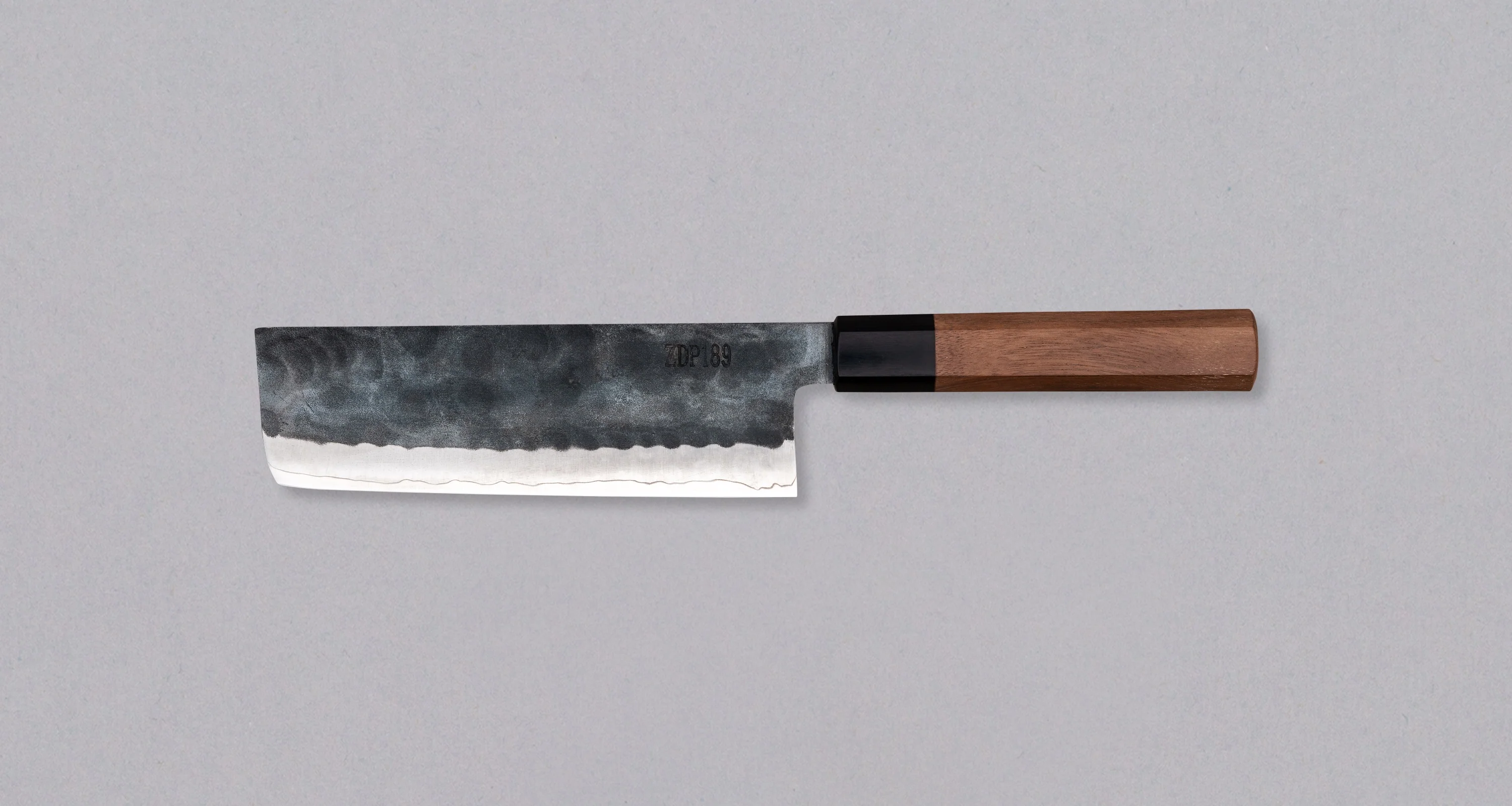
In the case of monosteel construction, the blacksmiths are more limited when it comes to choosing the blade finish. To fit the knife’s professional character, Nenohi opted for a minimalistic, highly reflective migaki finish that provides a striking contrast to the extravagant handle.
HANDLE:
The Western style (Yo) handle is made of very dense and durable ironwood. The blade is secured to the handle with 2 stainless pins. A stainless bolster was added for comfortable grip and balance.
Original: $648.00
-65%$648.00
$226.80More Images
![NENOX-X Gyuto Migaki 240mm (9.4") [Ironwood] - Image 2](/images/mysharpedge.shop/images/product/nenox-x-gyuto-migaki-240mm-ironwood-2.jpg)
![NENOX-X Gyuto Migaki 240mm (9.4") [Ironwood] - Image 3](/images/mysharpedge.shop/images/product/nenox-x-gyuto-migaki-240mm-ironwood-3.jpg)
![NENOX-X Gyuto Migaki 240mm (9.4") [Ironwood] - Image 4](/images/mysharpedge.shop/images/product/nenox-x-gyuto-migaki-240mm-ironwood-4.jpg)
![NENOX-X Gyuto Migaki 240mm (9.4") [Ironwood] - Image 5](/images/mysharpedge.shop/images/product/nenox-x-gyuto-migaki-240mm-ironwood-5.jpg)
![NENOX-X Gyuto Migaki 240mm (9.4") [Ironwood] - Image 6](/images/mysharpedge.shop/images/product/nenox-x-gyuto-migaki-240mm-ironwood-6.jpg)
NENOX-X Gyuto Migaki 240mm (9.4") [Ironwood]
One of the things that scares the craftsmen at Nenohi most is compromise, and they go to extraordinary lengths to avoid having to make them. Therefore, in their pursuit of stainless blades with the finest and longest-lasting sharpness, they landed on a couple unique quirks in their production method.
They use a proprietary high-carbon, stain-resistant steel, the composition and exact properties of which are a closely guarded trade secret. It was developed entirely in-house by Nenohi, with the goal of combining the long-lasting, fine sharpness of traditional Japanese steels and the durability of modern Western stainless alloys.
If the NENOX-S series focuses on delivering an all-around, stainless yet durable workhorse knife, their X-series knives go all-out on sharpness, delivering an exceptional cutting performance that puts them toe-to-toe with carbon steel knives, while retaining exceptional stain-resistance.
All of the NENOX series uses a solid steel construction, meaning that the knives are forged from a single sheet of metal. While making the manufacturing process much more difficult and time-consuming, this leads to less deformation during production and use, and results in a finer, easier-to-achieve sharpness. The monosteel construction also means that the entire blade is thinner and lighter due to a lack of additional lamination layers.
In order to avoid damaging the blade with the excessive heat that comes with welding the handles onto the blade, Nenohi also uses a full-tang construction, where a single piece of steel is used that extends from the blade tip to the end of the handle (tang). This also improves the structural integrity of the knife. Every handle is then finished entirely by hand from 16 individual parts and shaped, polished, and fitted by dedicated craftsmen.
Due to the full-tang construction and Western (yo) style handles, one of the most distinctive characteristics of NENOX knives is the blade/handle weight ratio that is heavily skewed towards the handle. This is intended to give the blade itself an almost weightless feel, thus improving comfort and removing fatigue with longer cutting sessions.
BLADE SHAPE:
Gyuto is the most versatile and useful blade shape in the modern kitchen. It has a wide profile for easy food transfer and tends to be fairly flat towards the heel, enabling easy and fast chopping on the cutting board. A pointed tip allows piercing and precise, delicate work. A slight curve between the tip and the midsection makes the belly great for rocking the blade back and forth when cutting. It can be used for cutting meat, fish and vegetables.
Includes a wooden saya to protect the blade when not in use.
STEEL:
A closely guarded, in-house designed high-carbon stainless steel. It achieves a high hardness level while maintaining exceptional corrosion resistance and edge stability under heavy professional use.
LAMINATION:
Forged from a single, unclad sheet of steel, also called monosteel. By eliminating the softer outer cladding layers found in traditional laminations, this solid construction results in a thinner, lighter blade that resists deformation and takes an incredibly fine, precise edge.
GEOMETRY:
It has a double bevel (symmetrical) blade with a convex (full hamaguri) grind. Hamaguri grind allows superior sharpness that requires delicate handling and helps to prevent food from sticking to the blade. Such a shape keeps a lot of metal behind the edge and makes for a stronger edge, yet it still allows a good degree of sharpness. The downside to a convex grind is that it is very hard to reproduce by anyone other than a very experienced sharpener.
BLADE FINISH:
In the case of monosteel construction, the blacksmiths are more limited when it comes to choosing the blade finish. To fit the knife’s professional character, Nenohi opted for a minimalistic, highly reflective migaki finish that provides a striking contrast to the extravagant handle.
HANDLE:
The Western style (Yo) handle is made of very dense and durable ironwood. The blade is secured to the handle with 2 stainless pins. A stainless bolster was added for comfortable grip and balance.
Product Information
Product Information
Shipping & Returns
Shipping & Returns
Description
One of the things that scares the craftsmen at Nenohi most is compromise, and they go to extraordinary lengths to avoid having to make them. Therefore, in their pursuit of stainless blades with the finest and longest-lasting sharpness, they landed on a couple unique quirks in their production method.
They use a proprietary high-carbon, stain-resistant steel, the composition and exact properties of which are a closely guarded trade secret. It was developed entirely in-house by Nenohi, with the goal of combining the long-lasting, fine sharpness of traditional Japanese steels and the durability of modern Western stainless alloys.
If the NENOX-S series focuses on delivering an all-around, stainless yet durable workhorse knife, their X-series knives go all-out on sharpness, delivering an exceptional cutting performance that puts them toe-to-toe with carbon steel knives, while retaining exceptional stain-resistance.
All of the NENOX series uses a solid steel construction, meaning that the knives are forged from a single sheet of metal. While making the manufacturing process much more difficult and time-consuming, this leads to less deformation during production and use, and results in a finer, easier-to-achieve sharpness. The monosteel construction also means that the entire blade is thinner and lighter due to a lack of additional lamination layers.
In order to avoid damaging the blade with the excessive heat that comes with welding the handles onto the blade, Nenohi also uses a full-tang construction, where a single piece of steel is used that extends from the blade tip to the end of the handle (tang). This also improves the structural integrity of the knife. Every handle is then finished entirely by hand from 16 individual parts and shaped, polished, and fitted by dedicated craftsmen.
Due to the full-tang construction and Western (yo) style handles, one of the most distinctive characteristics of NENOX knives is the blade/handle weight ratio that is heavily skewed towards the handle. This is intended to give the blade itself an almost weightless feel, thus improving comfort and removing fatigue with longer cutting sessions.
BLADE SHAPE:
Gyuto is the most versatile and useful blade shape in the modern kitchen. It has a wide profile for easy food transfer and tends to be fairly flat towards the heel, enabling easy and fast chopping on the cutting board. A pointed tip allows piercing and precise, delicate work. A slight curve between the tip and the midsection makes the belly great for rocking the blade back and forth when cutting. It can be used for cutting meat, fish and vegetables.
Includes a wooden saya to protect the blade when not in use.
STEEL:
A closely guarded, in-house designed high-carbon stainless steel. It achieves a high hardness level while maintaining exceptional corrosion resistance and edge stability under heavy professional use.
LAMINATION:
Forged from a single, unclad sheet of steel, also called monosteel. By eliminating the softer outer cladding layers found in traditional laminations, this solid construction results in a thinner, lighter blade that resists deformation and takes an incredibly fine, precise edge.
GEOMETRY:
It has a double bevel (symmetrical) blade with a convex (full hamaguri) grind. Hamaguri grind allows superior sharpness that requires delicate handling and helps to prevent food from sticking to the blade. Such a shape keeps a lot of metal behind the edge and makes for a stronger edge, yet it still allows a good degree of sharpness. The downside to a convex grind is that it is very hard to reproduce by anyone other than a very experienced sharpener.
BLADE FINISH:
In the case of monosteel construction, the blacksmiths are more limited when it comes to choosing the blade finish. To fit the knife’s professional character, Nenohi opted for a minimalistic, highly reflective migaki finish that provides a striking contrast to the extravagant handle.
HANDLE:
The Western style (Yo) handle is made of very dense and durable ironwood. The blade is secured to the handle with 2 stainless pins. A stainless bolster was added for comfortable grip and balance.