
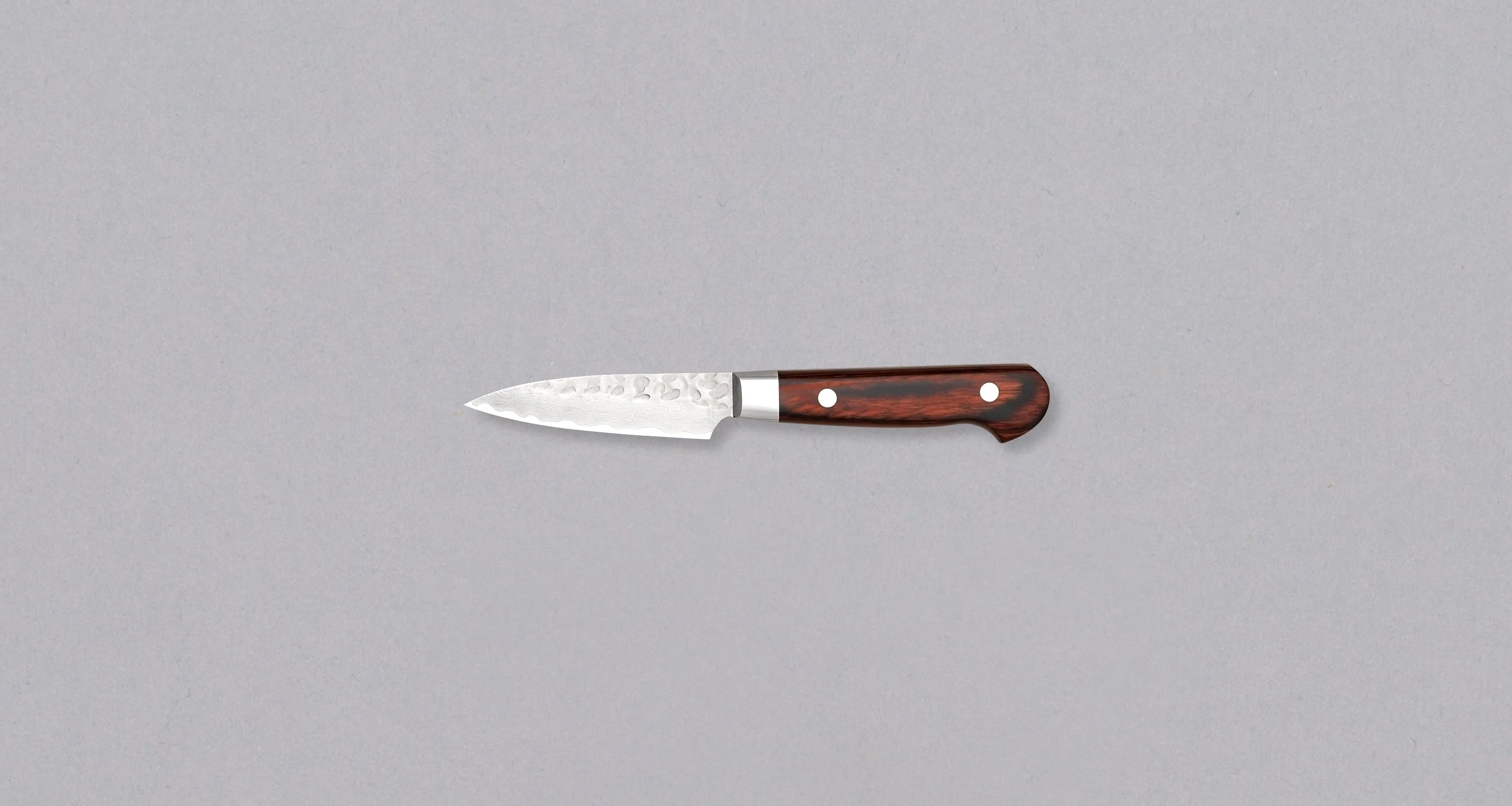
Sakai Takayuki Petty Damascus 80mm (3.1")
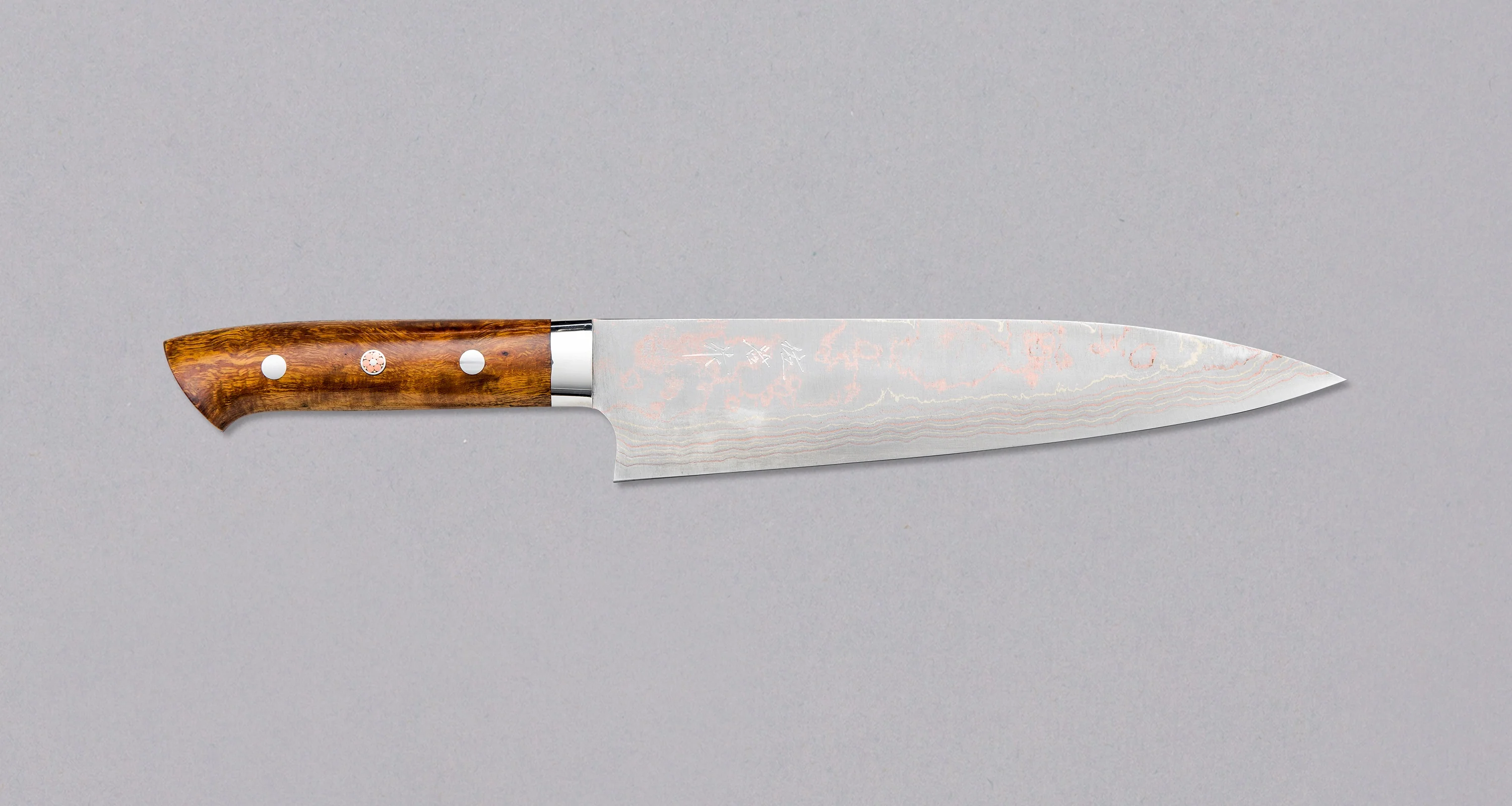
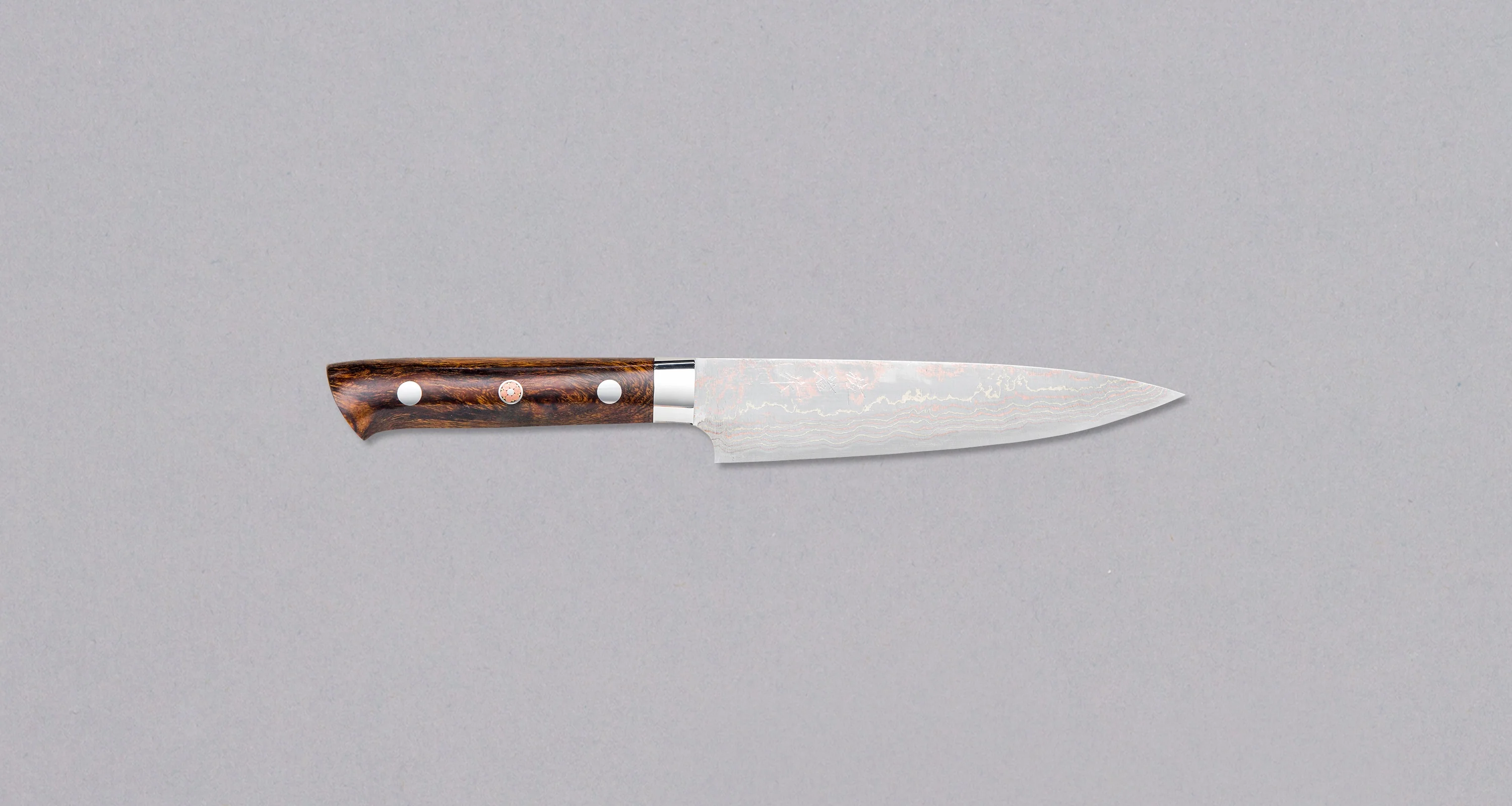
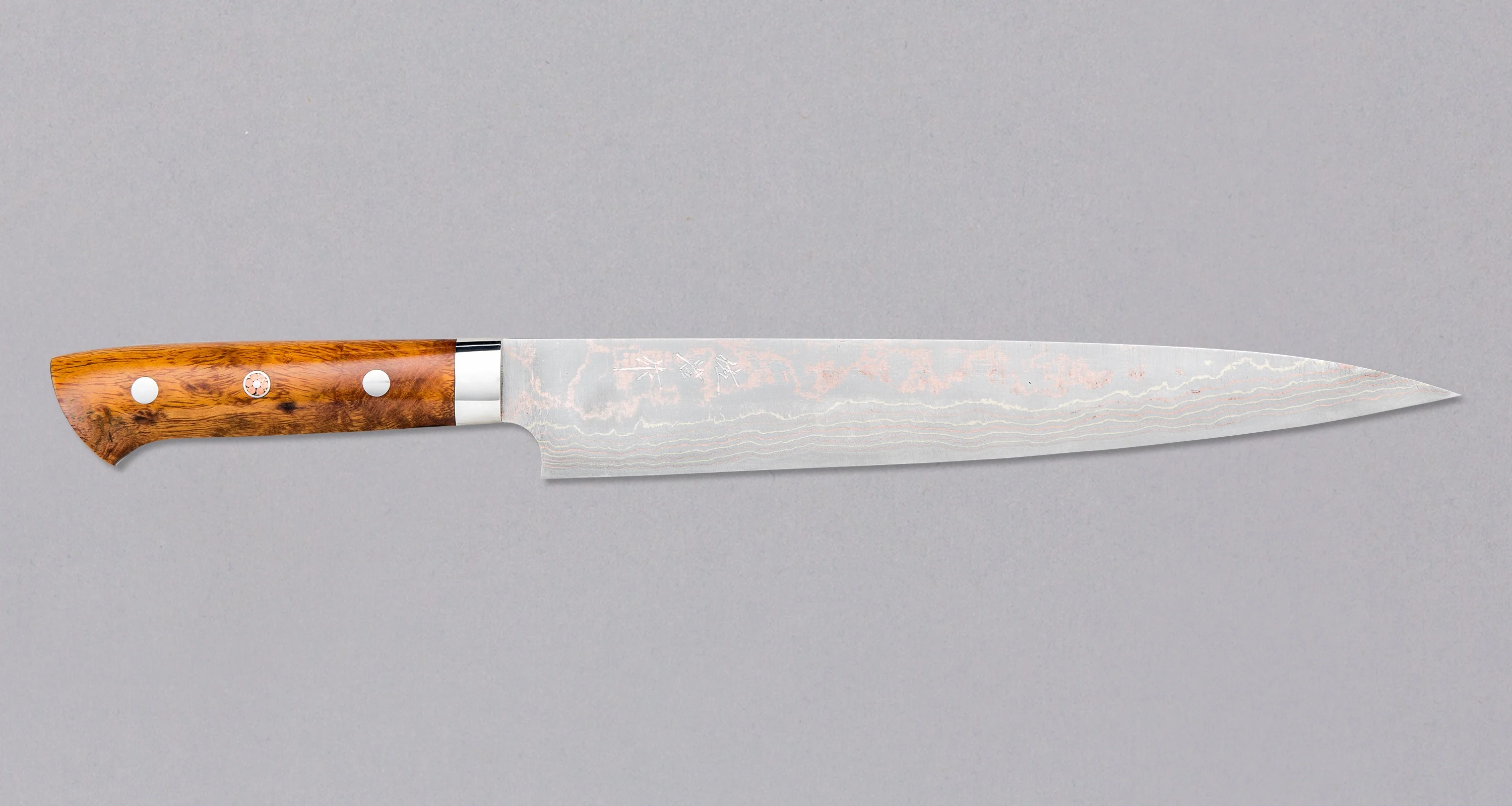
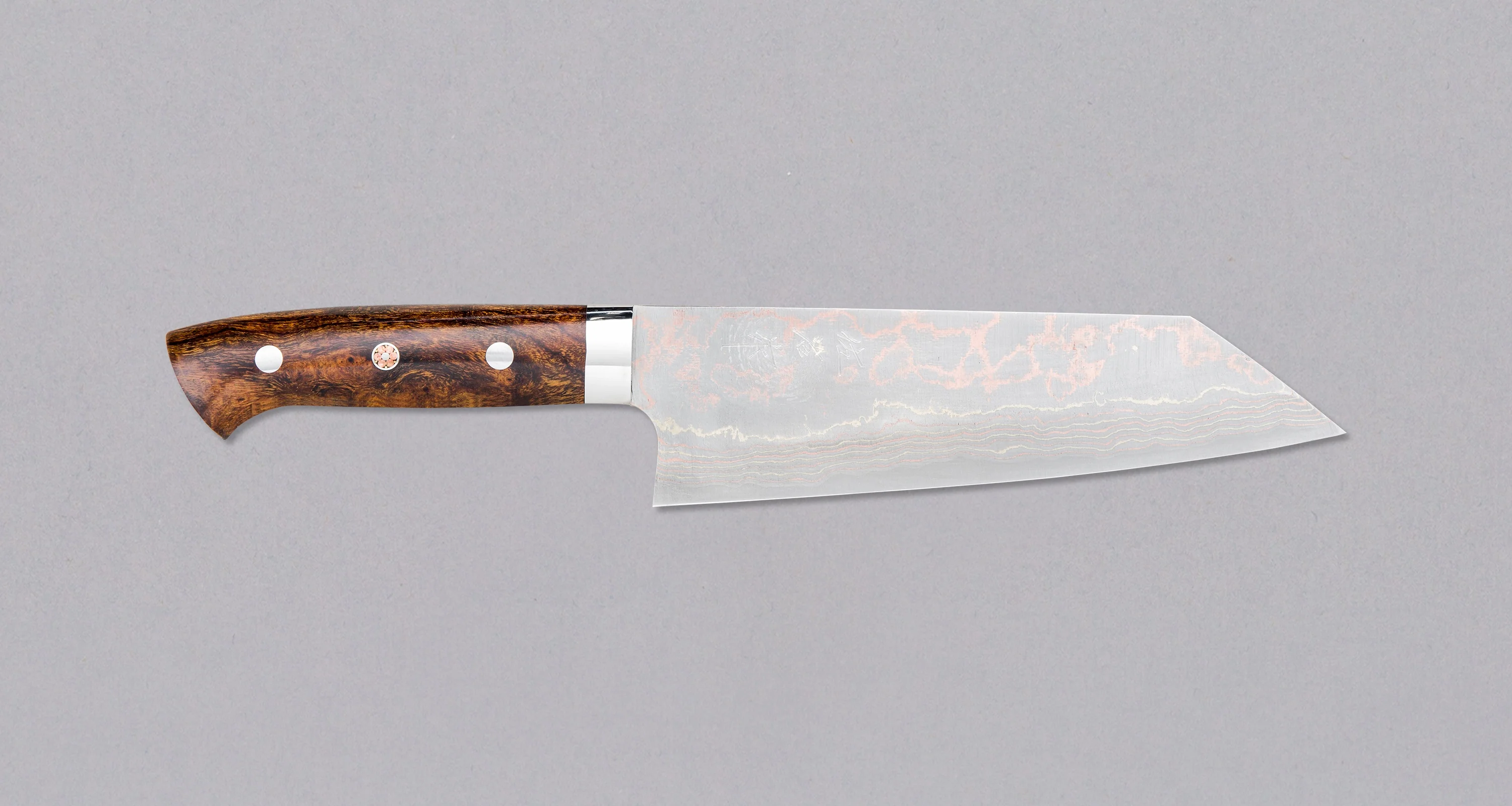
Handcrafted in the renowned Sakai Takayuki smithy, this 80mm Santoku pairs a 61 HRC VG-10 core with stainless Damascus cladding for lasting sharpness and corrosion resistance. The tsuchime finish adds texture and reduces sticking. Finished with a balanced Western (Yo) handle for confident, controlled movement.
BLADE SHAPE:
A petty knife is an essential part of any knife collection, ideal for tasks where larger, longer knives feel too cumbersome. It is perfect for peeling vegetables, preparing fruit, and other in-hand work. Its thin, agile tip also makes it well suited to fine, decorative work with fruit and vegetables. The knife’s shape, weight, and balance are designed for easy handling and comfortable everyday use.
STEEL:
VG-10 (V for Vanadium, G for "gold" as in "gold standard") is made by Takefu Special Steel Company, a relatively small steel company that around 60 years ago managed to find just the right balance of different elements to create the most popular Japanese knife making steel today. VG-10 steel is stainless steel with relatively high Carbon (C) content (1%), 15% Chromium (Cr), 1% Molybdenum (Mo), 0.3% Vanadium (V), and 1.5% Cobalt (Co). The combination of Cr, Mo, and V forms a lot of hard carbides, making the steel abrasion-resistant, which translates to long-lasting, smooth sharpness.
LAMINATION:
The core layer consisting of VG-10 steel was sandwiched between layers of softer, pliable steel that had been forged together to create a rippling damascus pattern. This technique is called san-mai and is used to improve the blade's structural integrity and subsequent ability to withstand impacts and to prevent chipping. San-mai translates to “three layers” in Japanese, referring to a blade that is composed of a primary, inner layer of harder steel (hagane) and two secondary, outer layers of softer steel (jigane) that protect the prior.
GEOMETRY:
It has a double bevel (symmetrical) blade so it is suitable for both left- and right-handed users. Based on the ratio between the surfaces (the location of the angle change), this knife's profile is classified as a flat V-edge type, which makes it less brittle and easier to resharpen.
BLADE FINISH:
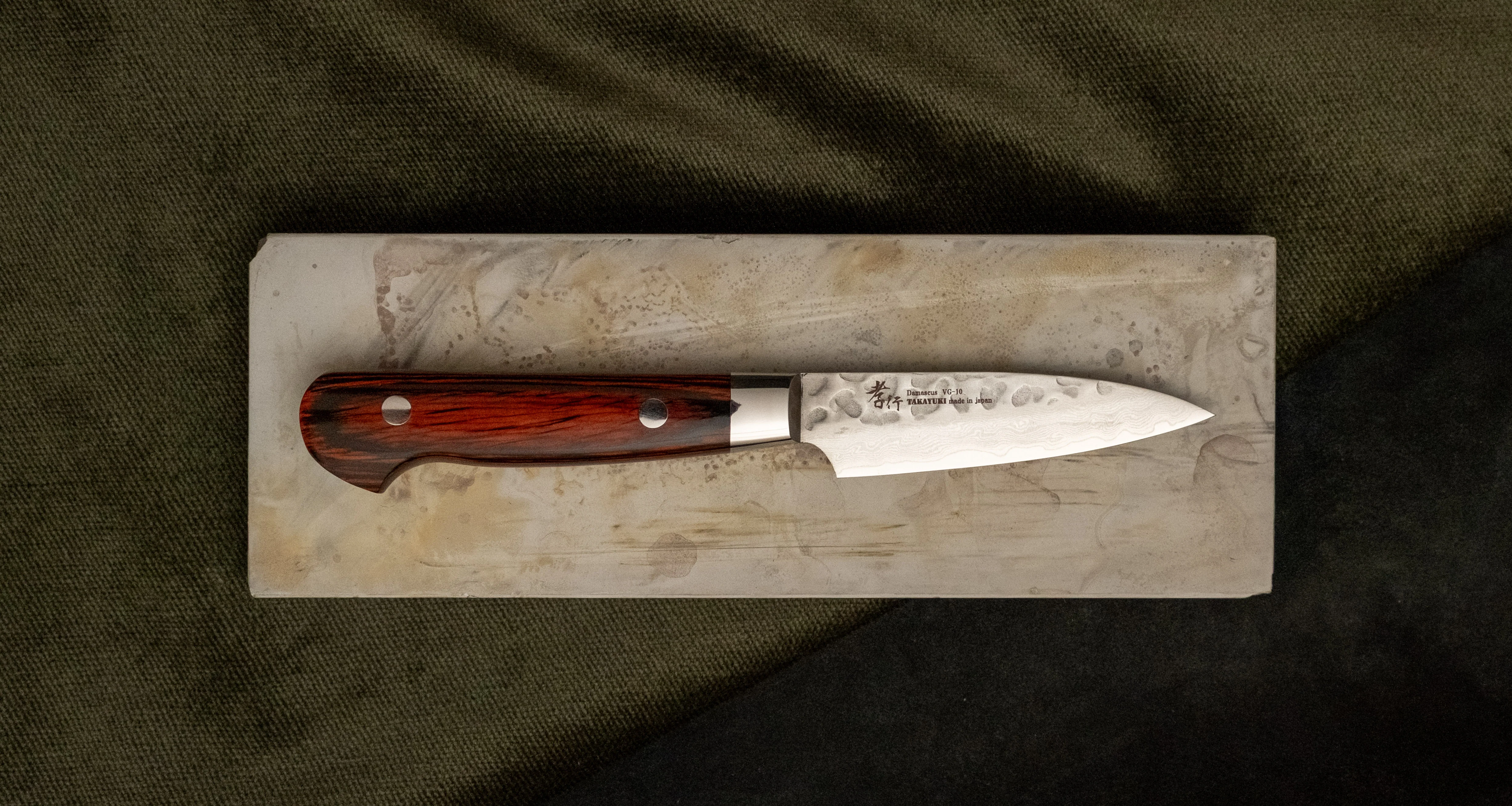
The upper part of the blade features a hammered pattern, which then transform into an intricate damascus finish that flows down to the cutting edge. The blade was treated with hammer blows, resulting in a textured tsuchime look, which gives it a beautiful finish and also prevents food from sticking to the blade.
HANDLE:
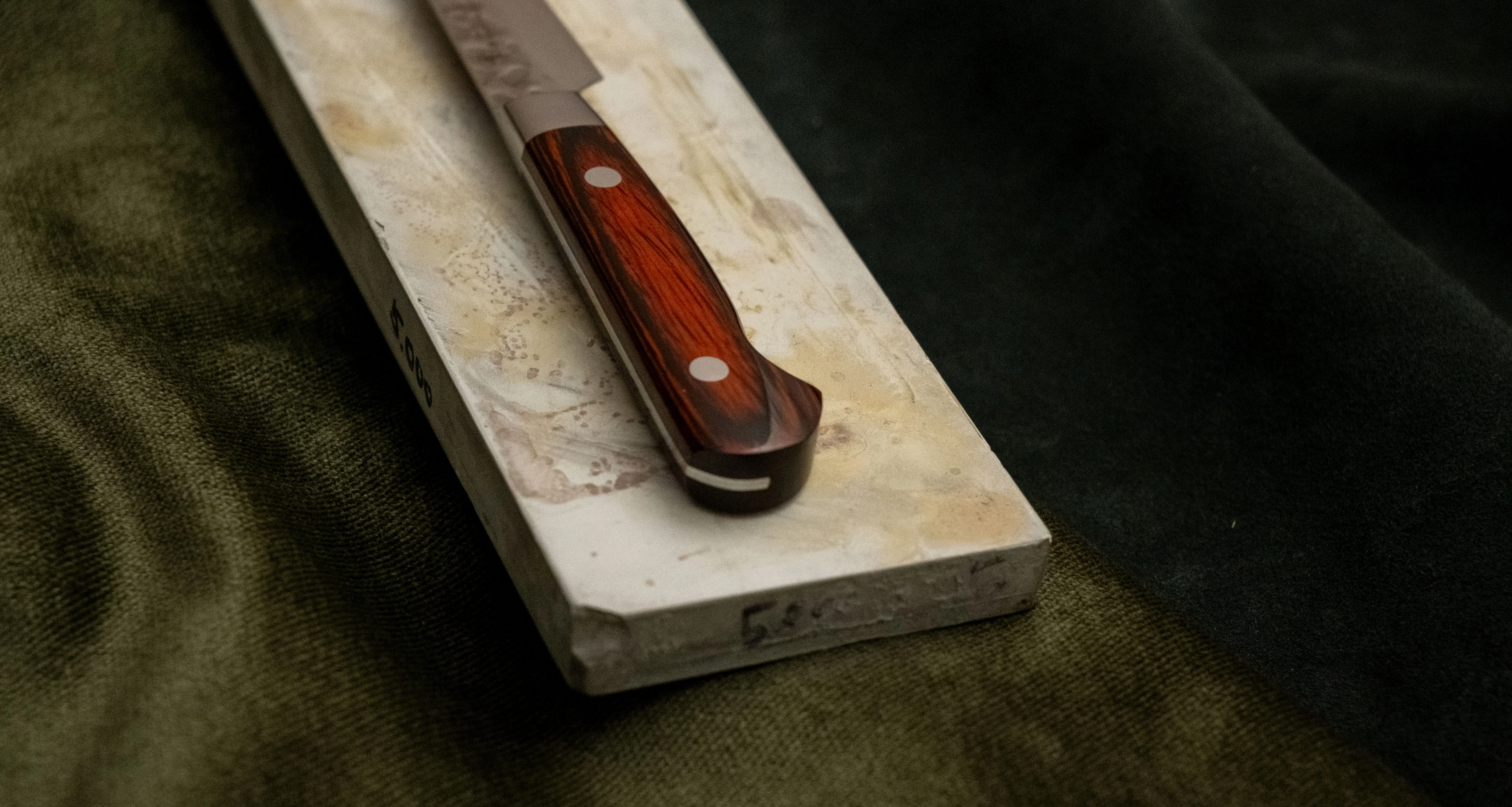
The knife was fitted a western-style (Yo) ergonomic handle made of durable pakkawood wood, secured to the tang with three stainless rivets. The also stainless nickel-silver bolster gives the knife a gentle transition from the handle to the blade and provides a comfortable and firm grip during use.
BLACKSMITH:
Sakai Takayuki blades come from the town of Sakai and have a rich, 600-year old history. They are very recognizable and popular in the traditional Japanese kitchen. All knives are handmade by renowned craftsmen, who offer a lot of models made of different materials.
Original: $120.00
-65%$120.00
$42.00More Images


Sakai Takayuki Petty Damascus 80mm (3.1")
Handcrafted in the renowned Sakai Takayuki smithy, this 80mm Santoku pairs a 61 HRC VG-10 core with stainless Damascus cladding for lasting sharpness and corrosion resistance. The tsuchime finish adds texture and reduces sticking. Finished with a balanced Western (Yo) handle for confident, controlled movement.
BLADE SHAPE:
A petty knife is an essential part of any knife collection, ideal for tasks where larger, longer knives feel too cumbersome. It is perfect for peeling vegetables, preparing fruit, and other in-hand work. Its thin, agile tip also makes it well suited to fine, decorative work with fruit and vegetables. The knife’s shape, weight, and balance are designed for easy handling and comfortable everyday use.
STEEL:
VG-10 (V for Vanadium, G for "gold" as in "gold standard") is made by Takefu Special Steel Company, a relatively small steel company that around 60 years ago managed to find just the right balance of different elements to create the most popular Japanese knife making steel today. VG-10 steel is stainless steel with relatively high Carbon (C) content (1%), 15% Chromium (Cr), 1% Molybdenum (Mo), 0.3% Vanadium (V), and 1.5% Cobalt (Co). The combination of Cr, Mo, and V forms a lot of hard carbides, making the steel abrasion-resistant, which translates to long-lasting, smooth sharpness.
LAMINATION:
The core layer consisting of VG-10 steel was sandwiched between layers of softer, pliable steel that had been forged together to create a rippling damascus pattern. This technique is called san-mai and is used to improve the blade's structural integrity and subsequent ability to withstand impacts and to prevent chipping. San-mai translates to “three layers” in Japanese, referring to a blade that is composed of a primary, inner layer of harder steel (hagane) and two secondary, outer layers of softer steel (jigane) that protect the prior.
GEOMETRY:
It has a double bevel (symmetrical) blade so it is suitable for both left- and right-handed users. Based on the ratio between the surfaces (the location of the angle change), this knife's profile is classified as a flat V-edge type, which makes it less brittle and easier to resharpen.
BLADE FINISH:
The upper part of the blade features a hammered pattern, which then transform into an intricate damascus finish that flows down to the cutting edge. The blade was treated with hammer blows, resulting in a textured tsuchime look, which gives it a beautiful finish and also prevents food from sticking to the blade.
HANDLE:
The knife was fitted a western-style (Yo) ergonomic handle made of durable pakkawood wood, secured to the tang with three stainless rivets. The also stainless nickel-silver bolster gives the knife a gentle transition from the handle to the blade and provides a comfortable and firm grip during use.
BLACKSMITH:
Sakai Takayuki blades come from the town of Sakai and have a rich, 600-year old history. They are very recognizable and popular in the traditional Japanese kitchen. All knives are handmade by renowned craftsmen, who offer a lot of models made of different materials.
Product Information
Product Information
Shipping & Returns
Shipping & Returns
Description
Handcrafted in the renowned Sakai Takayuki smithy, this 80mm Santoku pairs a 61 HRC VG-10 core with stainless Damascus cladding for lasting sharpness and corrosion resistance. The tsuchime finish adds texture and reduces sticking. Finished with a balanced Western (Yo) handle for confident, controlled movement.
BLADE SHAPE:
A petty knife is an essential part of any knife collection, ideal for tasks where larger, longer knives feel too cumbersome. It is perfect for peeling vegetables, preparing fruit, and other in-hand work. Its thin, agile tip also makes it well suited to fine, decorative work with fruit and vegetables. The knife’s shape, weight, and balance are designed for easy handling and comfortable everyday use.
STEEL:
VG-10 (V for Vanadium, G for "gold" as in "gold standard") is made by Takefu Special Steel Company, a relatively small steel company that around 60 years ago managed to find just the right balance of different elements to create the most popular Japanese knife making steel today. VG-10 steel is stainless steel with relatively high Carbon (C) content (1%), 15% Chromium (Cr), 1% Molybdenum (Mo), 0.3% Vanadium (V), and 1.5% Cobalt (Co). The combination of Cr, Mo, and V forms a lot of hard carbides, making the steel abrasion-resistant, which translates to long-lasting, smooth sharpness.
LAMINATION:
The core layer consisting of VG-10 steel was sandwiched between layers of softer, pliable steel that had been forged together to create a rippling damascus pattern. This technique is called san-mai and is used to improve the blade's structural integrity and subsequent ability to withstand impacts and to prevent chipping. San-mai translates to “three layers” in Japanese, referring to a blade that is composed of a primary, inner layer of harder steel (hagane) and two secondary, outer layers of softer steel (jigane) that protect the prior.
GEOMETRY:
It has a double bevel (symmetrical) blade so it is suitable for both left- and right-handed users. Based on the ratio between the surfaces (the location of the angle change), this knife's profile is classified as a flat V-edge type, which makes it less brittle and easier to resharpen.
BLADE FINISH:
The upper part of the blade features a hammered pattern, which then transform into an intricate damascus finish that flows down to the cutting edge. The blade was treated with hammer blows, resulting in a textured tsuchime look, which gives it a beautiful finish and also prevents food from sticking to the blade.
HANDLE:
The knife was fitted a western-style (Yo) ergonomic handle made of durable pakkawood wood, secured to the tang with three stainless rivets. The also stainless nickel-silver bolster gives the knife a gentle transition from the handle to the blade and provides a comfortable and firm grip during use.
BLACKSMITH:
Sakai Takayuki blades come from the town of Sakai and have a rich, 600-year old history. They are very recognizable and popular in the traditional Japanese kitchen. All knives are handmade by renowned craftsmen, who offer a lot of models made of different materials.