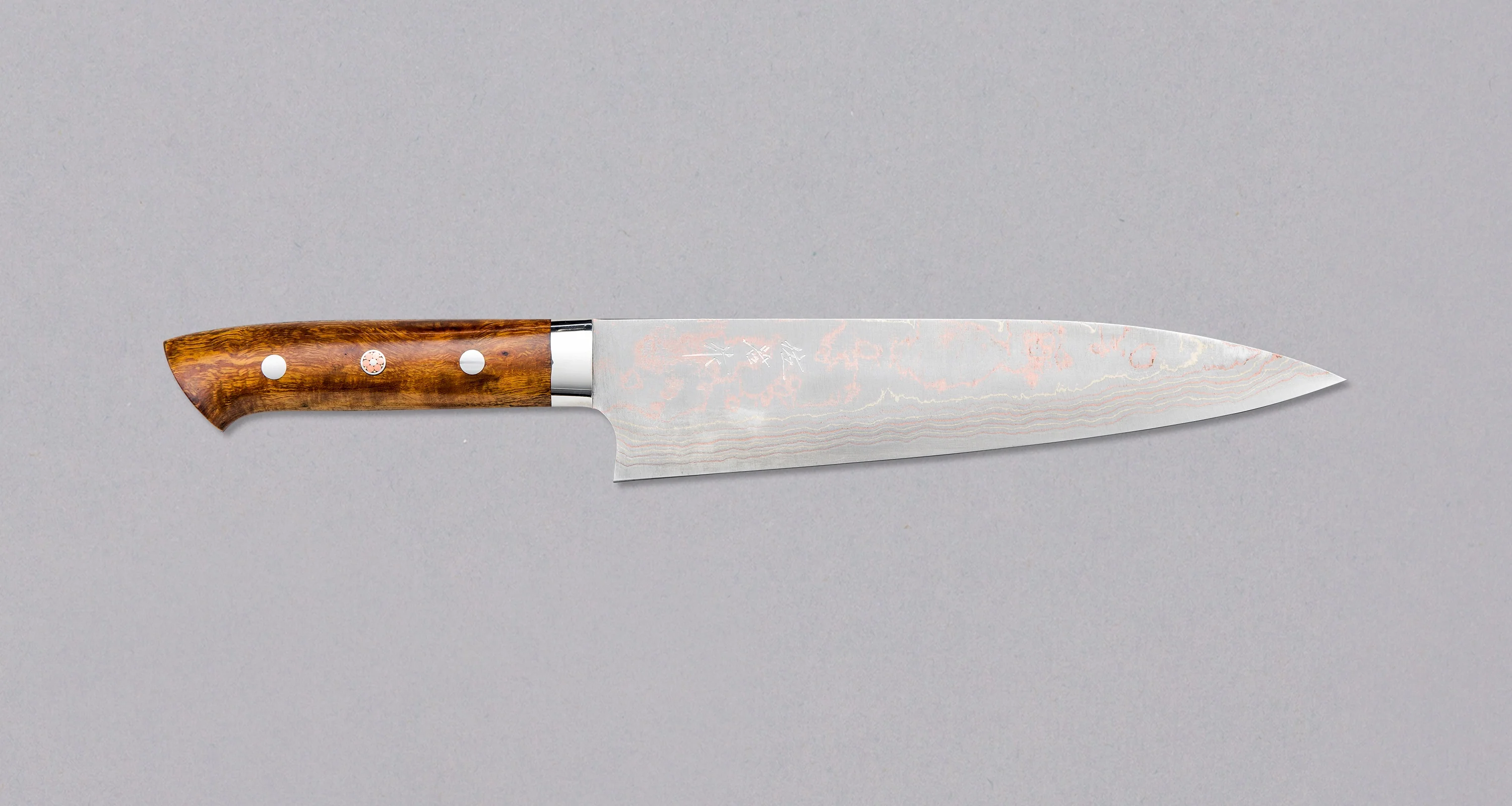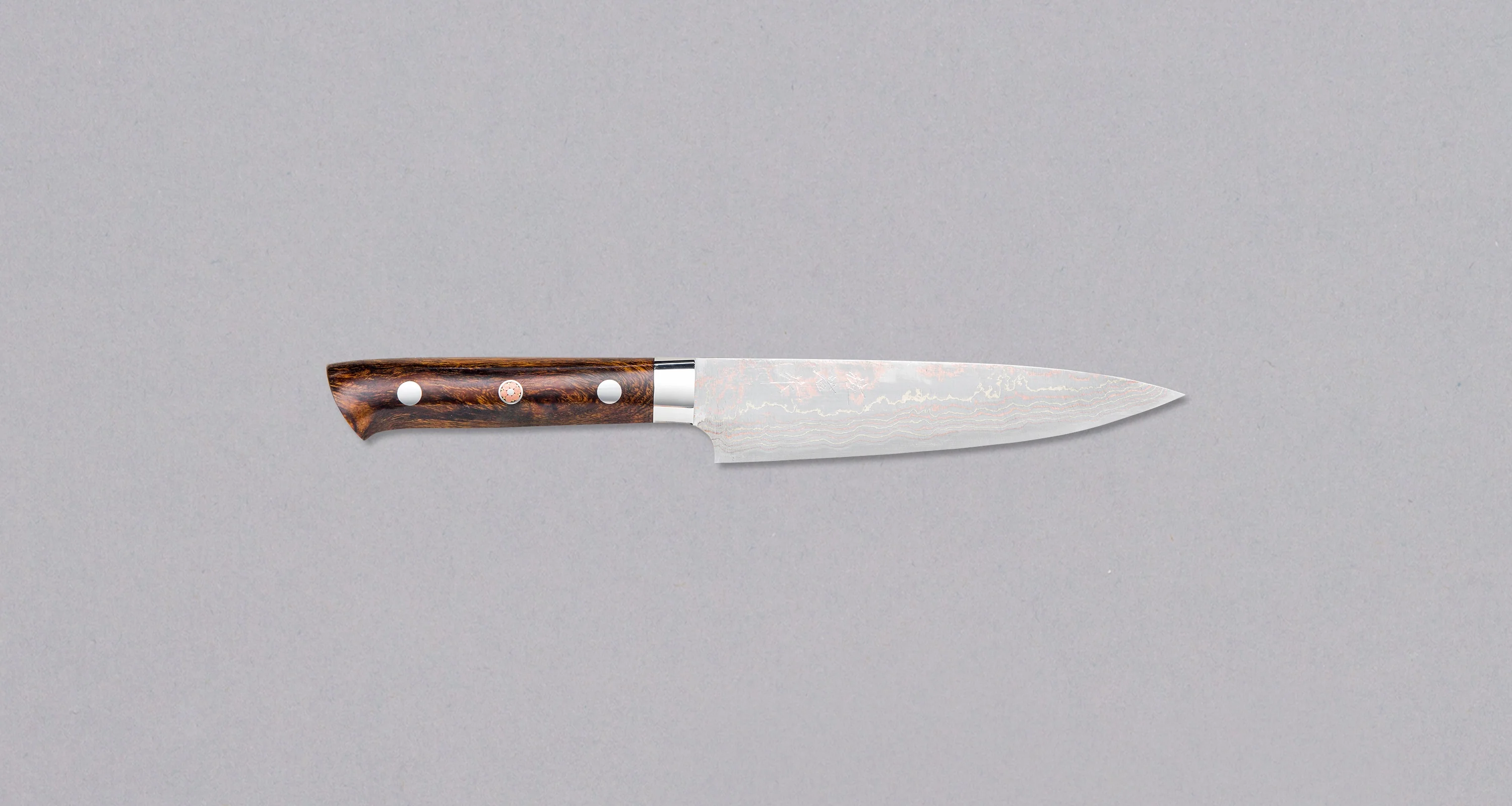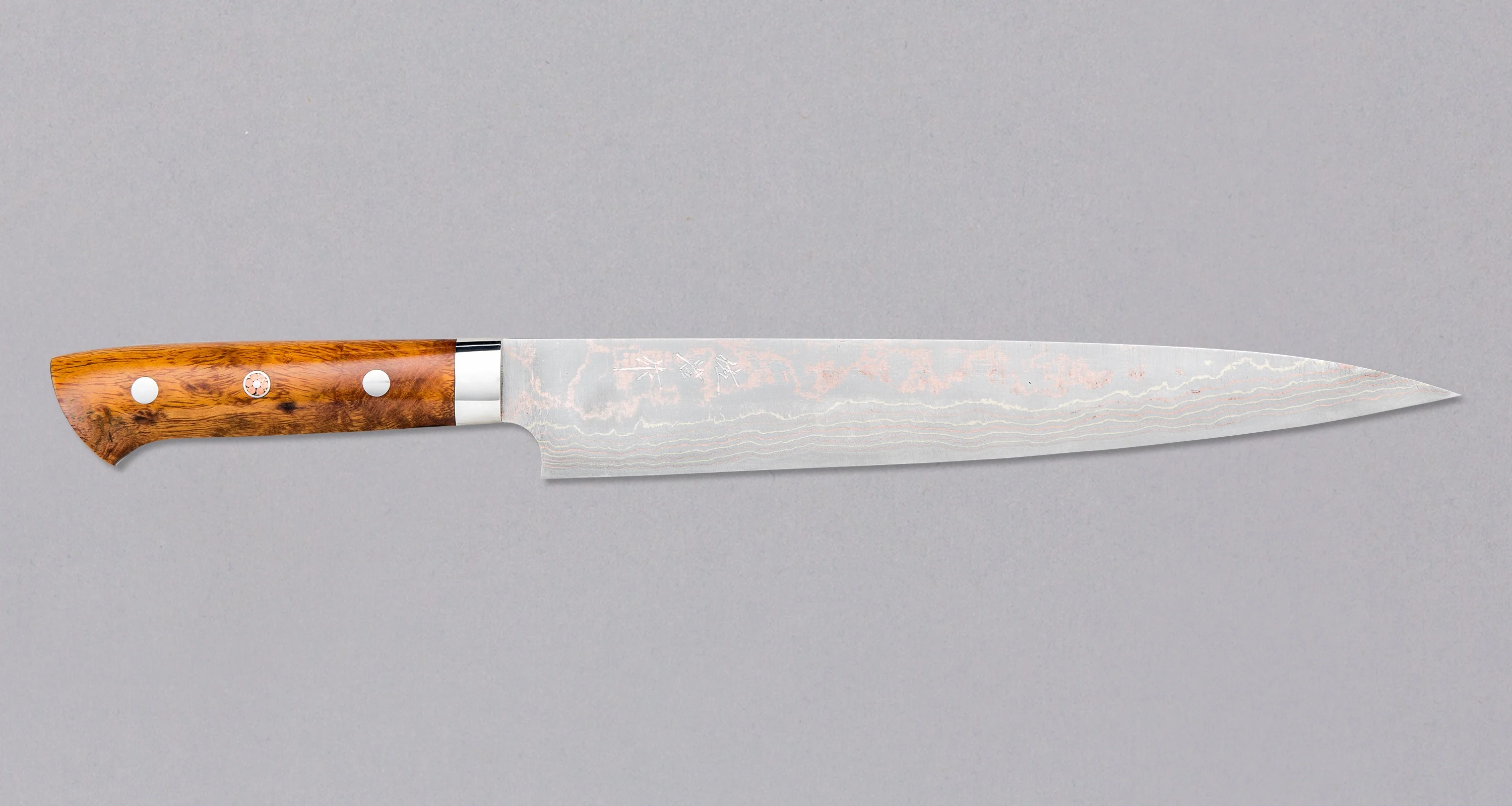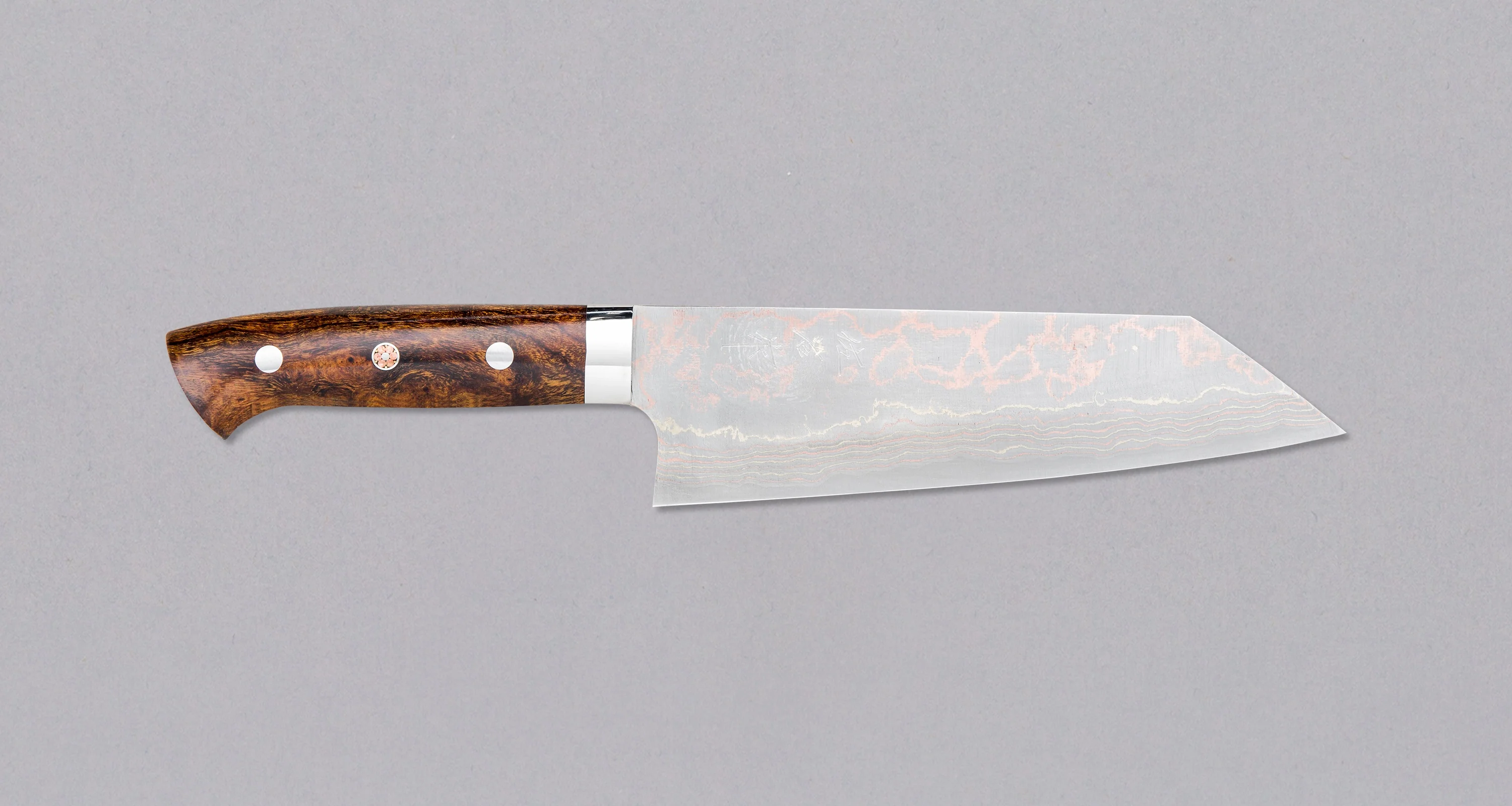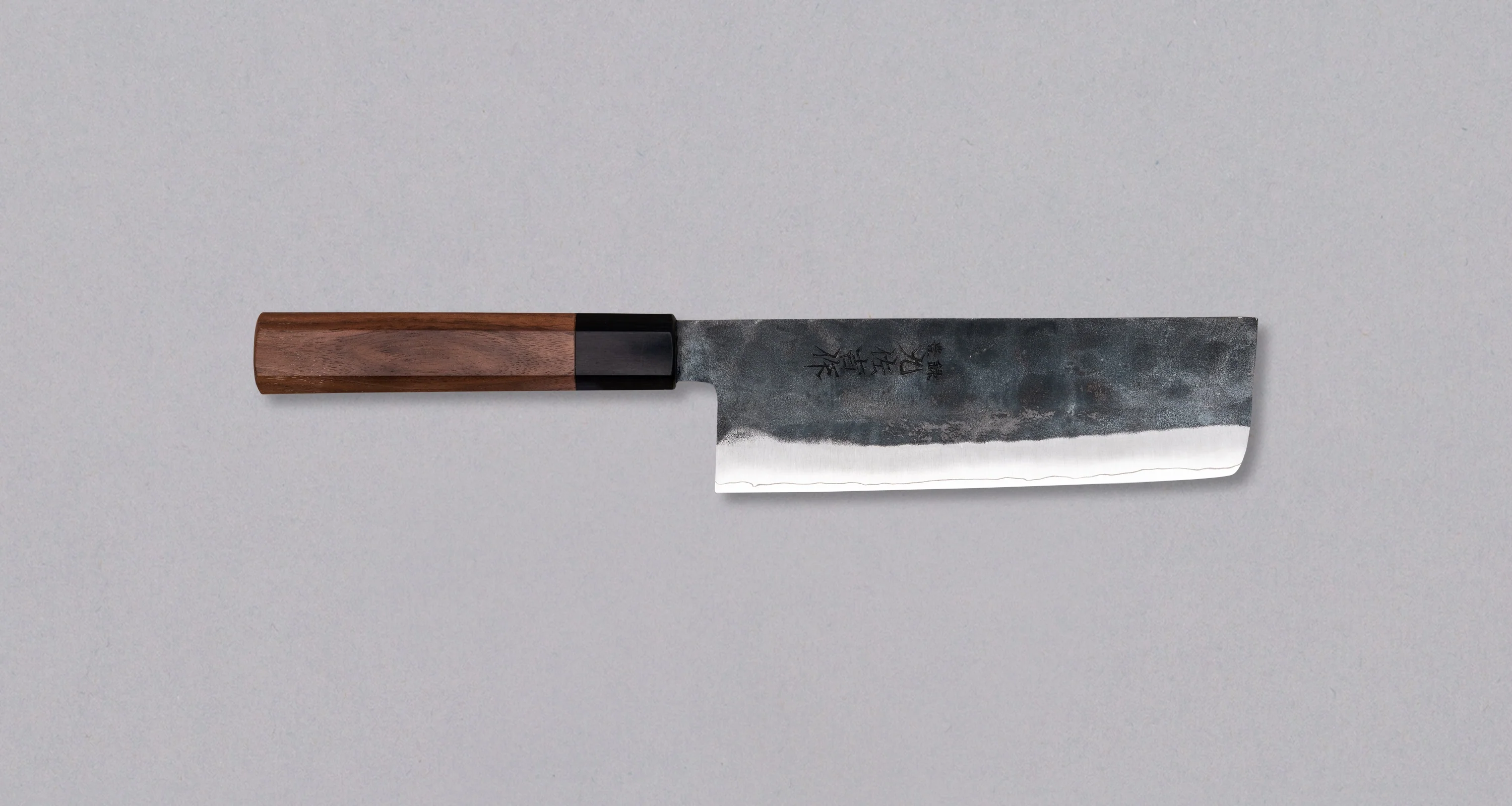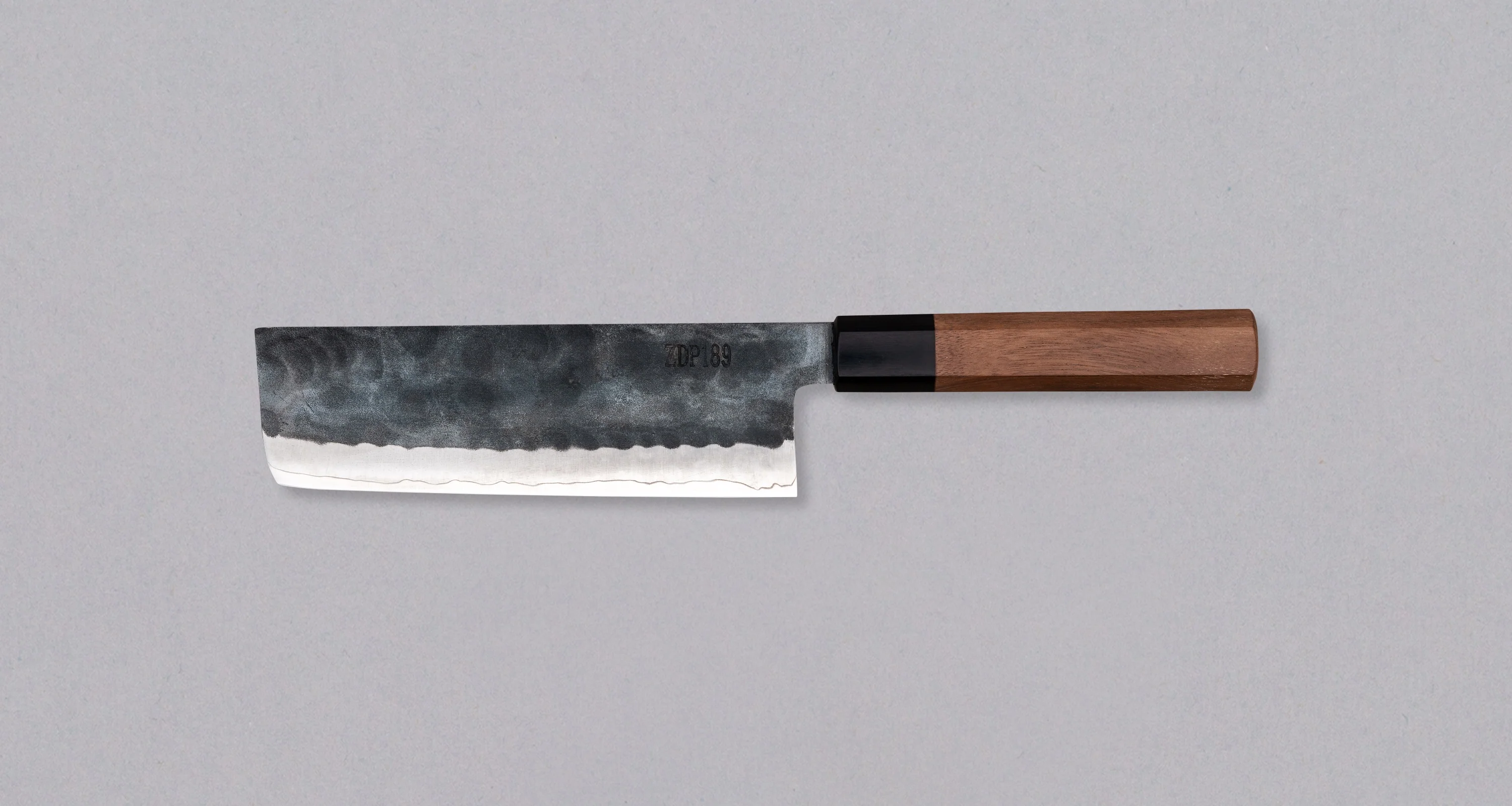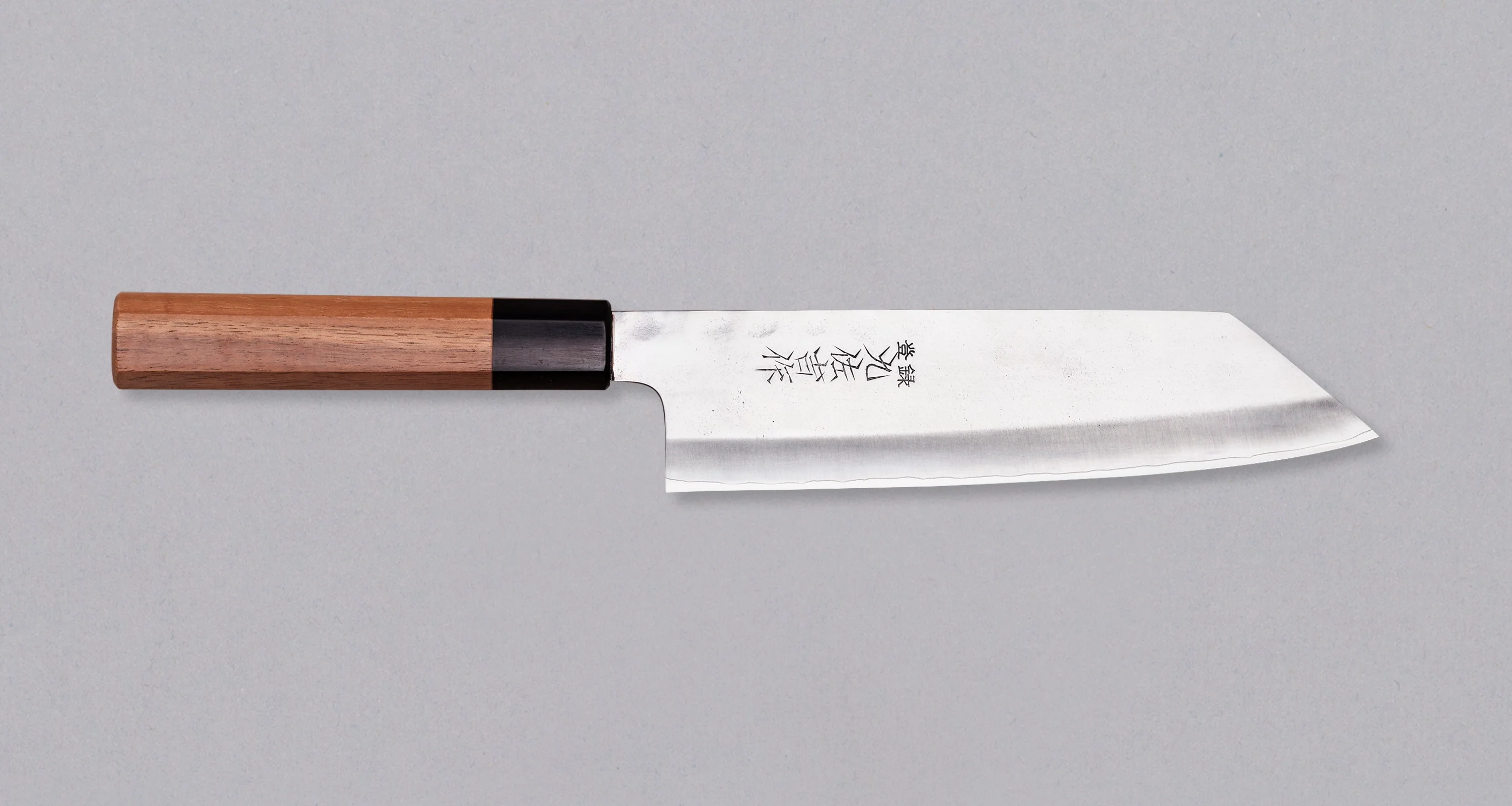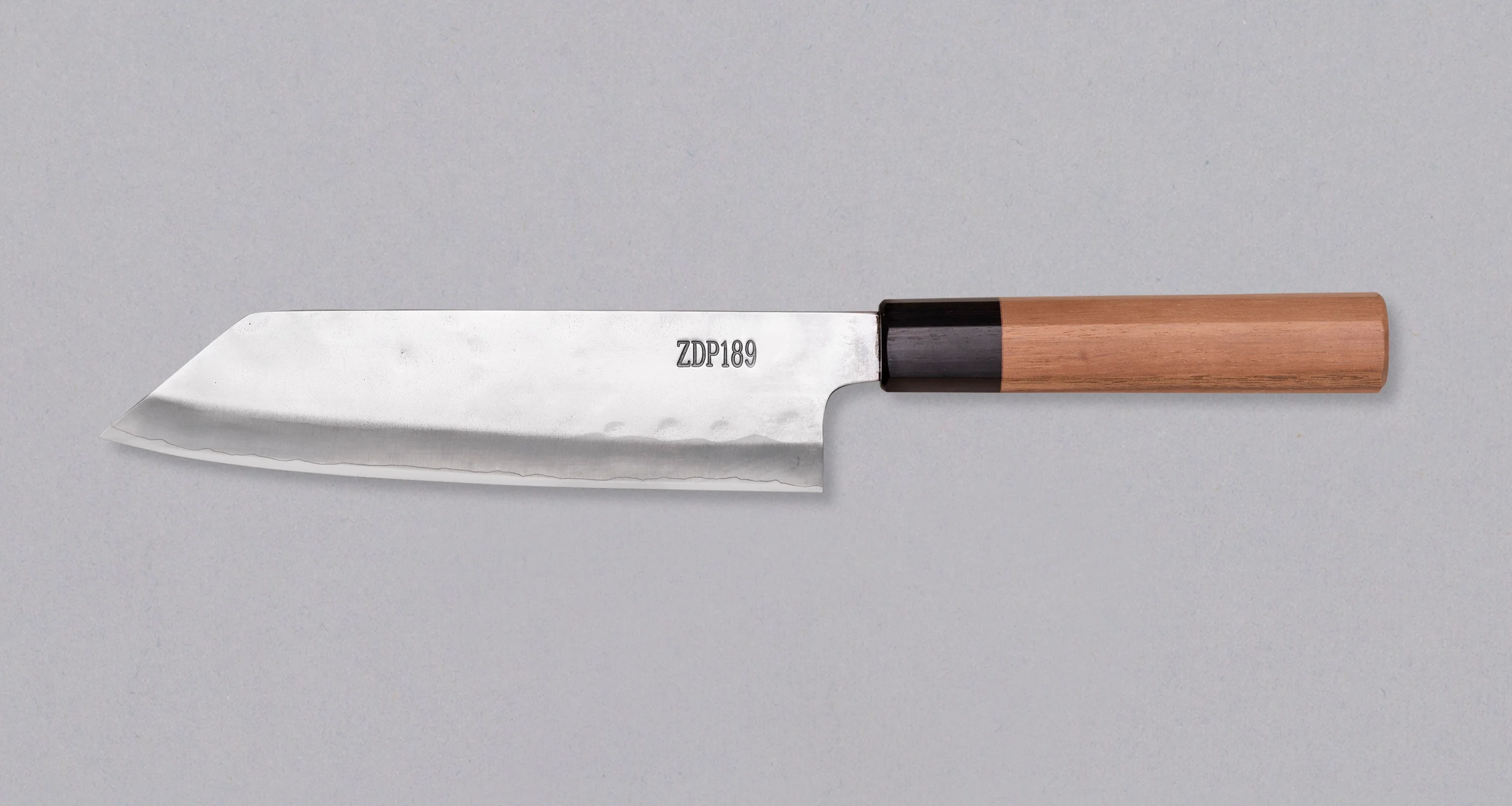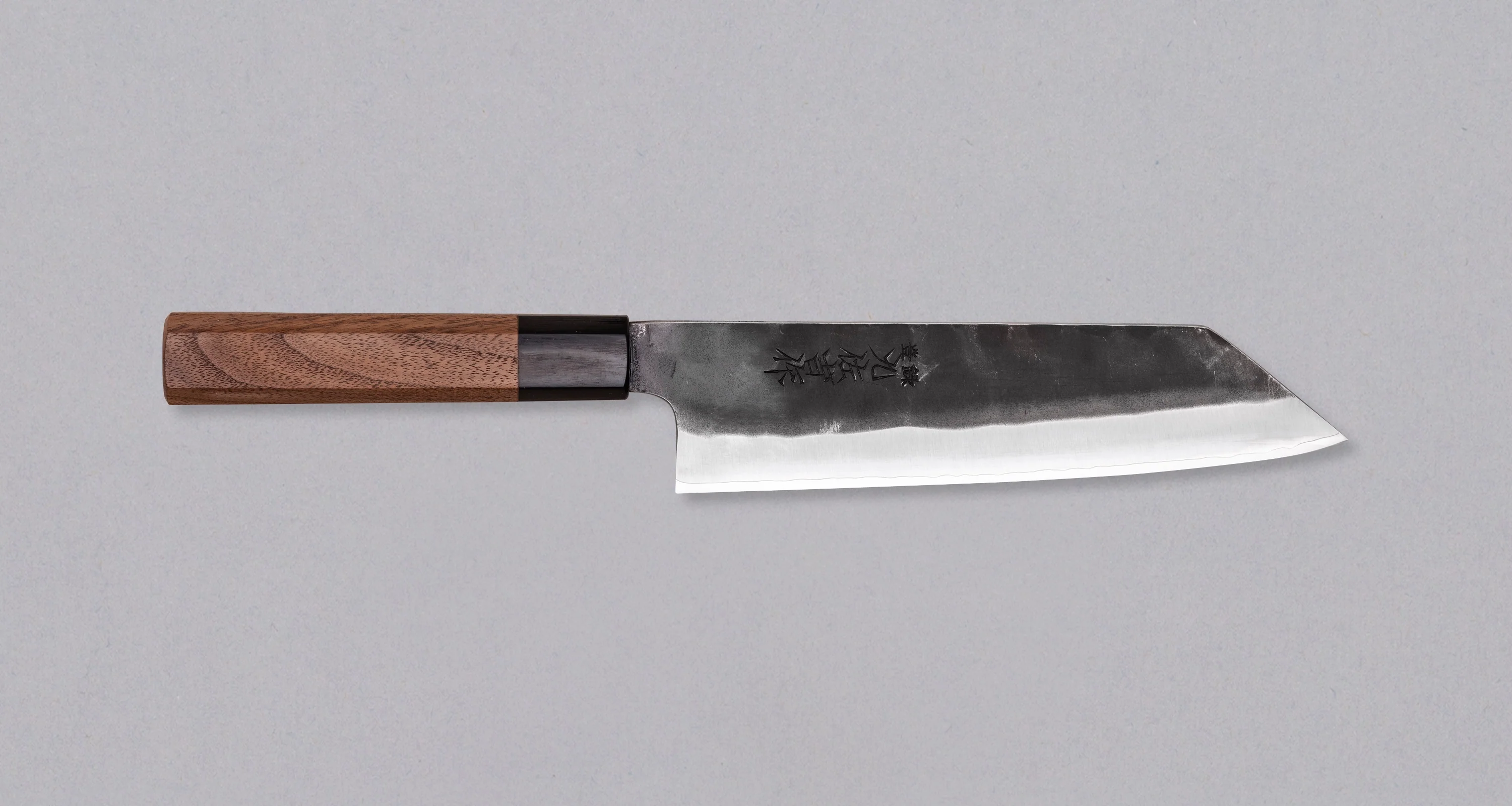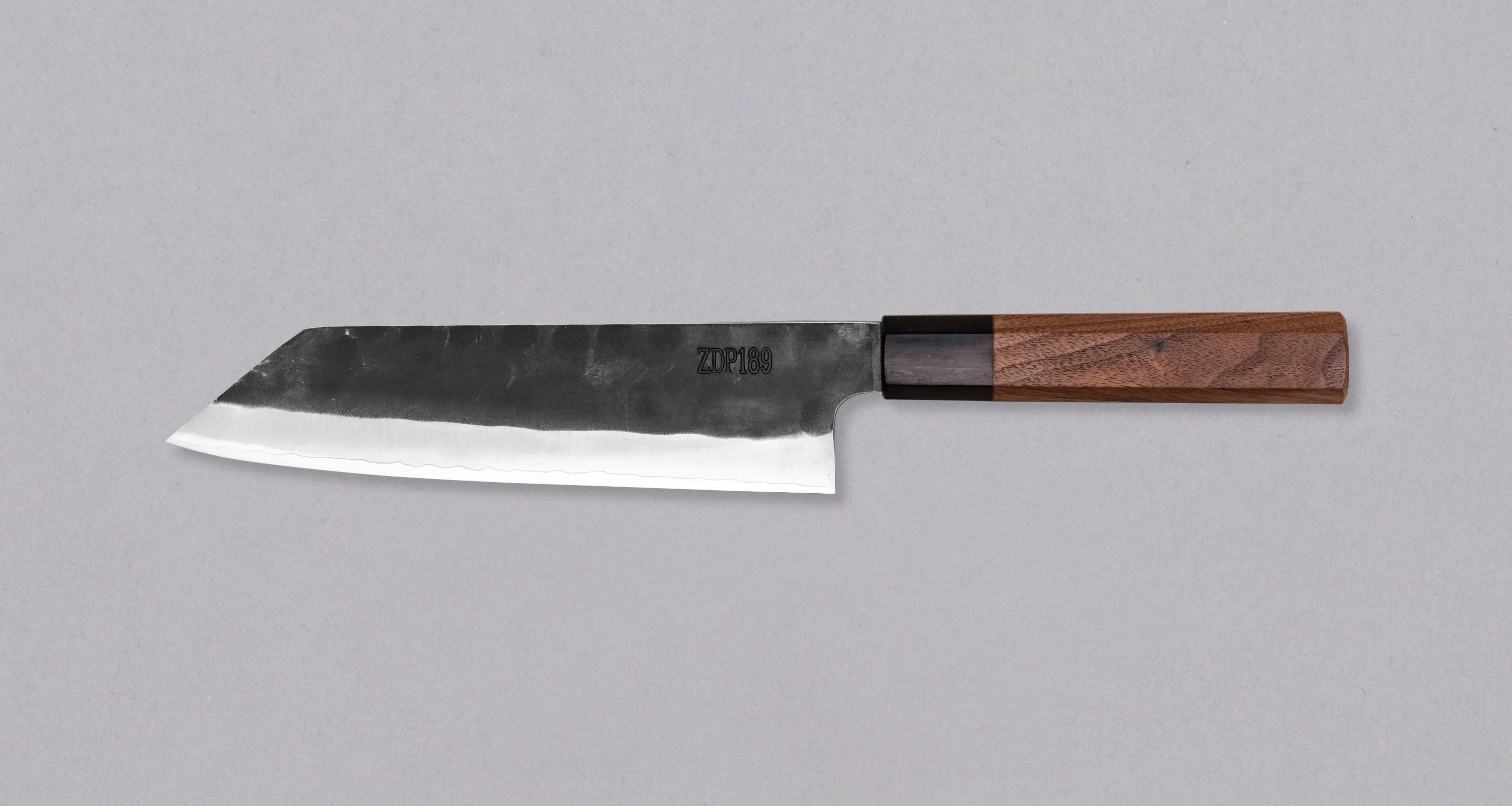

Tsunehisa Petty Swedish Steel Damascus Washiji 135mm (5.3")
Tsunehisa Petty Swedish Steel Damascus Washiji 135mm is basically a smaller version of a Gyuto knife (Chef's knife). Petty knives are intended for all those smaller tasks where larger knives are deemed unwieldy, both on and off the cutting board. A must-have knife in every kitchen, it can be used for peeling, mincing, paring and decorating food.
BLADE SHAPE:
A petty knife is a multi-purpose knife that is smaller in size than other Japanese knives, so it also allows for in-hand work such as coring and peeling, as well as other smaller tasks for which larger knives are deemed unwieldy. It is seen as one of the most important knives to have in the kitchen, coming second only to gyuto (the Japanese version of the Western chef’s knife).
The reason for its popularity lies in its small size and sturdy spine—it can handle most small and intricate tasks that other knives are too big or fragile for, including in-hand work such as peeling, or cutting meat at the tendons. Its smallness is also the source of its name petty, which comes from the French word “petit”.
STEEL:
The blade is forged from Swedish steel (19c27, Sandvik), a very popular steel among Japanese knifemakers. This high-carbon steel (63 HRC) delivers a fine, long-lasting edge and good corrosion resistance, making it ideal for professional chefs and home users who demand top performance.
Despite its high hardness, the blade is easy to re-sharpen and simple to maintain, ensuring exceptional durability and long-term use.
LAMINATION:
The blade’s core was laminated using the san-mai method to improve its structural integrity and subsequent ability to withstand impacts and prevent chipping.
BLADE FINISH:
This knife boasts a striking blade finish that combines the elegance of Damascus steel with the unique Washiji texture.
The Washiji finish, applied by the blacksmith with a special hammer, creates a subtle matte texture on the upper part of the blade. More than just decorative, this finish reduces food sticking by creating tiny air pockets, allowing the blade to glide smoothly through ingredients.
Beneath the Washiji finish, the Damascus layers reveal graceful, flowing lines of folded steel. Together, these two finishes create a blade that is not only visually captivating but also highly functional in everyday use.
HANDLE:
This knife is fitted with a traditional Japanese Wa handle, crafted from magnolia wood and finished with a buffalo horn ferrule. Its octagonal shape provides a comfortable, balanced grip for both left- and right-handed users.
BLACKSMITH:
Tsunehisa is a curated brand that brings together high-quality knives from Japan’s top smithing regions—Tosa, Seki, and Sakai. Each area specializes in distinct steels and techniques: Tosa is known for Ginsanko and AUS-8; Seki for the V-Gold series; and Sakai for its traditional single-bevel Honyaki knives.
Original: $190.00
-65%$190.00
$66.50More Images


Tsunehisa Petty Swedish Steel Damascus Washiji 135mm (5.3")
Tsunehisa Petty Swedish Steel Damascus Washiji 135mm is basically a smaller version of a Gyuto knife (Chef's knife). Petty knives are intended for all those smaller tasks where larger knives are deemed unwieldy, both on and off the cutting board. A must-have knife in every kitchen, it can be used for peeling, mincing, paring and decorating food.
BLADE SHAPE:
A petty knife is a multi-purpose knife that is smaller in size than other Japanese knives, so it also allows for in-hand work such as coring and peeling, as well as other smaller tasks for which larger knives are deemed unwieldy. It is seen as one of the most important knives to have in the kitchen, coming second only to gyuto (the Japanese version of the Western chef’s knife).
The reason for its popularity lies in its small size and sturdy spine—it can handle most small and intricate tasks that other knives are too big or fragile for, including in-hand work such as peeling, or cutting meat at the tendons. Its smallness is also the source of its name petty, which comes from the French word “petit”.
STEEL:
The blade is forged from Swedish steel (19c27, Sandvik), a very popular steel among Japanese knifemakers. This high-carbon steel (63 HRC) delivers a fine, long-lasting edge and good corrosion resistance, making it ideal for professional chefs and home users who demand top performance.
Despite its high hardness, the blade is easy to re-sharpen and simple to maintain, ensuring exceptional durability and long-term use.
LAMINATION:
The blade’s core was laminated using the san-mai method to improve its structural integrity and subsequent ability to withstand impacts and prevent chipping.
BLADE FINISH:
This knife boasts a striking blade finish that combines the elegance of Damascus steel with the unique Washiji texture.
The Washiji finish, applied by the blacksmith with a special hammer, creates a subtle matte texture on the upper part of the blade. More than just decorative, this finish reduces food sticking by creating tiny air pockets, allowing the blade to glide smoothly through ingredients.
Beneath the Washiji finish, the Damascus layers reveal graceful, flowing lines of folded steel. Together, these two finishes create a blade that is not only visually captivating but also highly functional in everyday use.
HANDLE:
This knife is fitted with a traditional Japanese Wa handle, crafted from magnolia wood and finished with a buffalo horn ferrule. Its octagonal shape provides a comfortable, balanced grip for both left- and right-handed users.
BLACKSMITH:
Tsunehisa is a curated brand that brings together high-quality knives from Japan’s top smithing regions—Tosa, Seki, and Sakai. Each area specializes in distinct steels and techniques: Tosa is known for Ginsanko and AUS-8; Seki for the V-Gold series; and Sakai for its traditional single-bevel Honyaki knives.
Product Information
Product Information
Shipping & Returns
Shipping & Returns
Description
Tsunehisa Petty Swedish Steel Damascus Washiji 135mm is basically a smaller version of a Gyuto knife (Chef's knife). Petty knives are intended for all those smaller tasks where larger knives are deemed unwieldy, both on and off the cutting board. A must-have knife in every kitchen, it can be used for peeling, mincing, paring and decorating food.
BLADE SHAPE:
A petty knife is a multi-purpose knife that is smaller in size than other Japanese knives, so it also allows for in-hand work such as coring and peeling, as well as other smaller tasks for which larger knives are deemed unwieldy. It is seen as one of the most important knives to have in the kitchen, coming second only to gyuto (the Japanese version of the Western chef’s knife).
The reason for its popularity lies in its small size and sturdy spine—it can handle most small and intricate tasks that other knives are too big or fragile for, including in-hand work such as peeling, or cutting meat at the tendons. Its smallness is also the source of its name petty, which comes from the French word “petit”.
STEEL:
The blade is forged from Swedish steel (19c27, Sandvik), a very popular steel among Japanese knifemakers. This high-carbon steel (63 HRC) delivers a fine, long-lasting edge and good corrosion resistance, making it ideal for professional chefs and home users who demand top performance.
Despite its high hardness, the blade is easy to re-sharpen and simple to maintain, ensuring exceptional durability and long-term use.
LAMINATION:
The blade’s core was laminated using the san-mai method to improve its structural integrity and subsequent ability to withstand impacts and prevent chipping.
BLADE FINISH:
This knife boasts a striking blade finish that combines the elegance of Damascus steel with the unique Washiji texture.
The Washiji finish, applied by the blacksmith with a special hammer, creates a subtle matte texture on the upper part of the blade. More than just decorative, this finish reduces food sticking by creating tiny air pockets, allowing the blade to glide smoothly through ingredients.
Beneath the Washiji finish, the Damascus layers reveal graceful, flowing lines of folded steel. Together, these two finishes create a blade that is not only visually captivating but also highly functional in everyday use.
HANDLE:
This knife is fitted with a traditional Japanese Wa handle, crafted from magnolia wood and finished with a buffalo horn ferrule. Its octagonal shape provides a comfortable, balanced grip for both left- and right-handed users.
BLACKSMITH:
Tsunehisa is a curated brand that brings together high-quality knives from Japan’s top smithing regions—Tosa, Seki, and Sakai. Each area specializes in distinct steels and techniques: Tosa is known for Ginsanko and AUS-8; Seki for the V-Gold series; and Sakai for its traditional single-bevel Honyaki knives.