ZDP-189 Bunka Black Ebony Blond Buffalo 190mm (7.5")
"Fifteen years ago, ZDP-189 was practically a myth—the Holy Grail of knife steels," our founder Luka recalls. "I shared my dream of forging it with master Osamu San of Yoshida Hamono. One day he called: 'Luka, let’s give it a try.' We created a raw, black bunka. Don't let the rough look fool you. This blade is hand-forged, ice-hardened for smooth, effortless cutting, and built to withstand years of hard daily work. Even today, those very first bunkas still come back to us for sharpening after a decade of hard, everyday work in professional kitchens.
BLADE SHAPE:
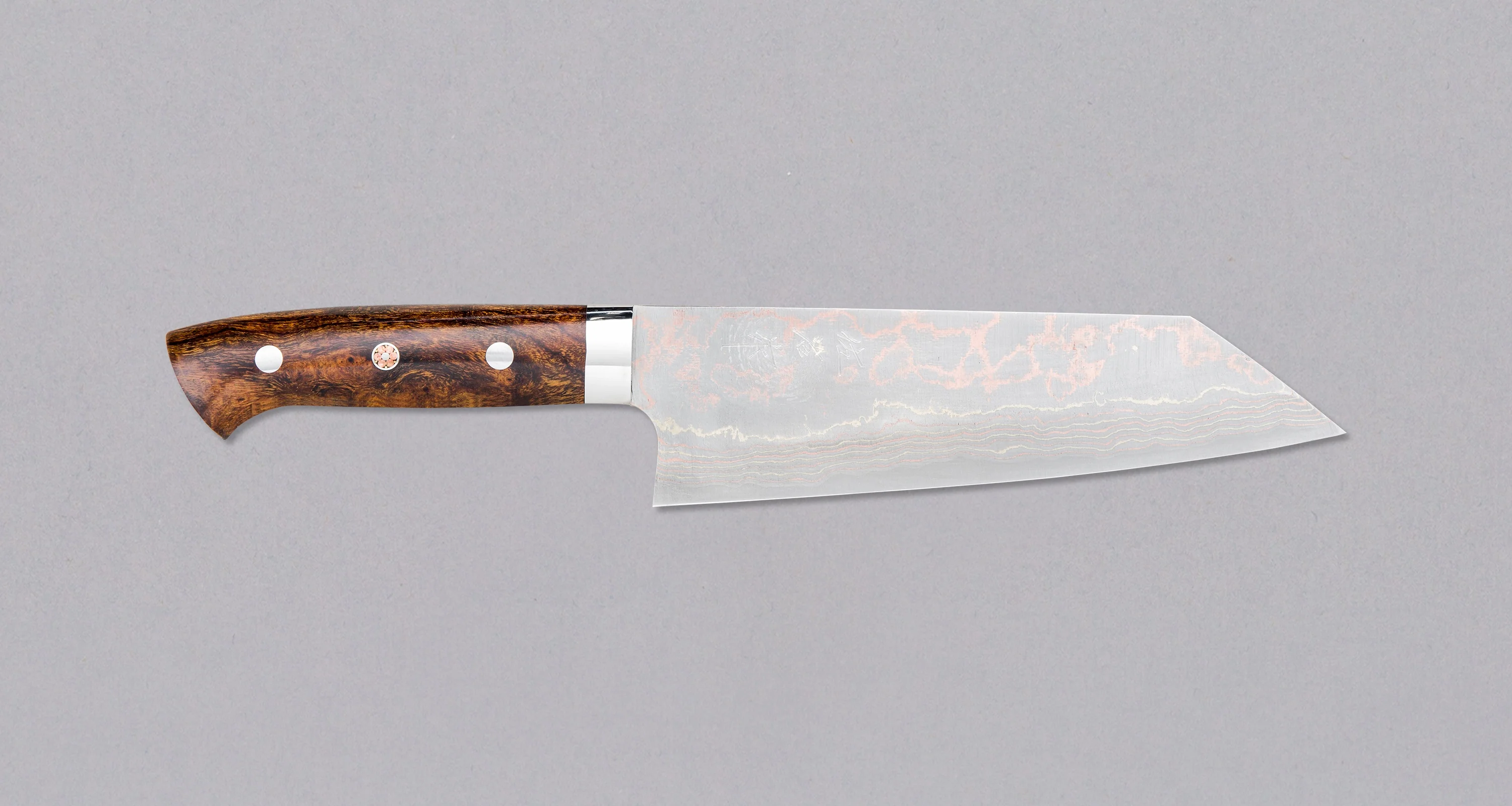
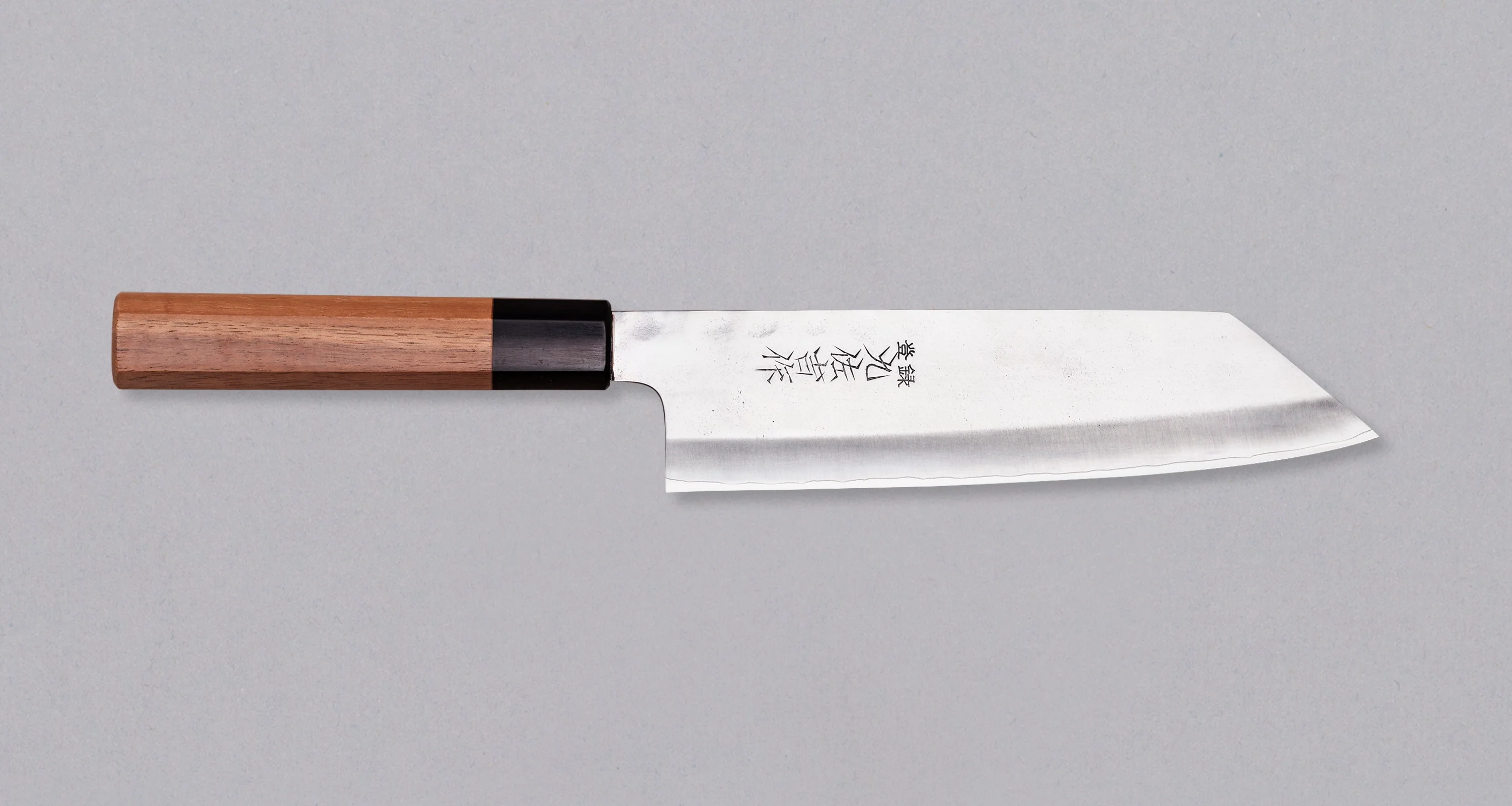
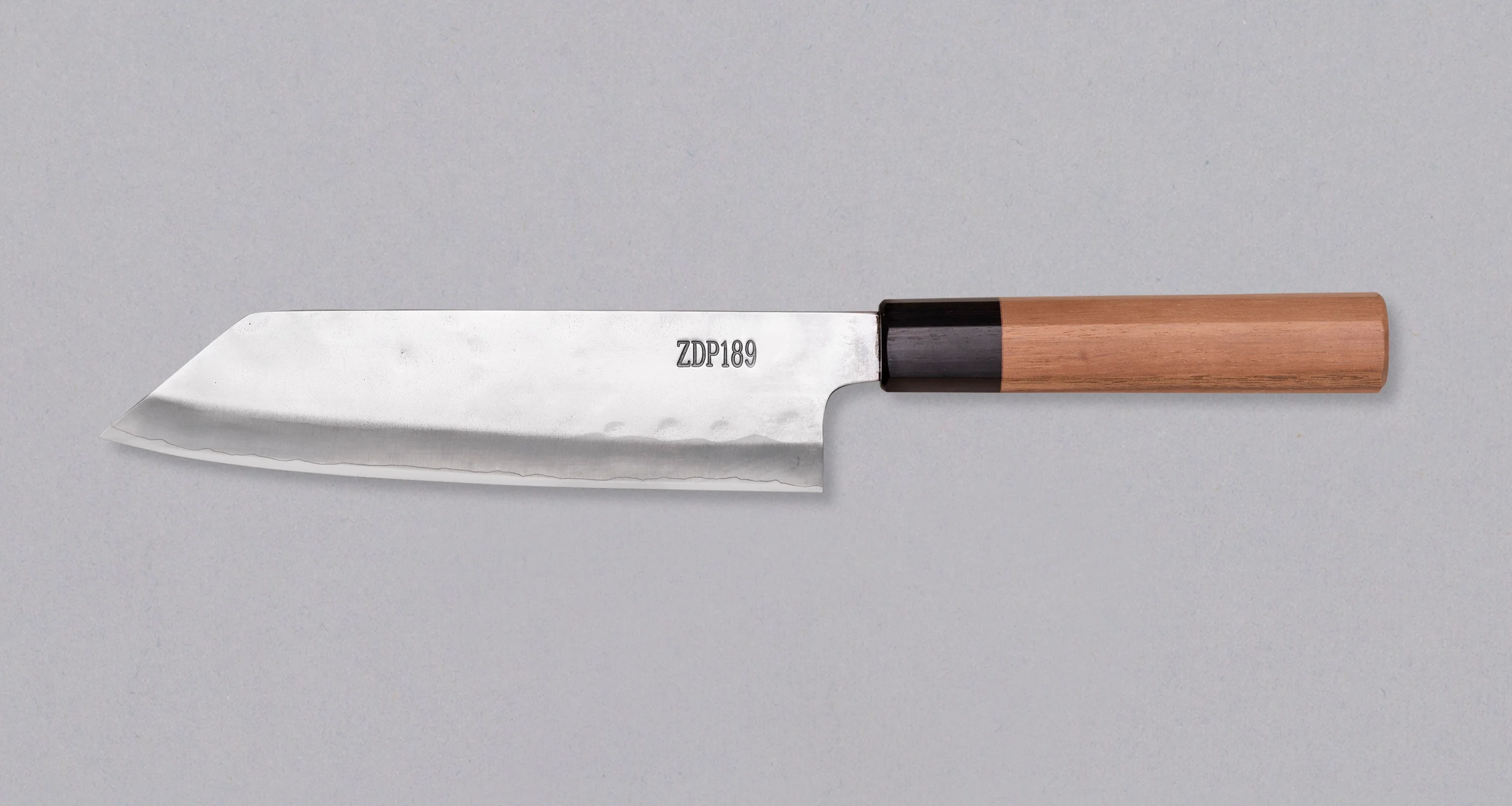
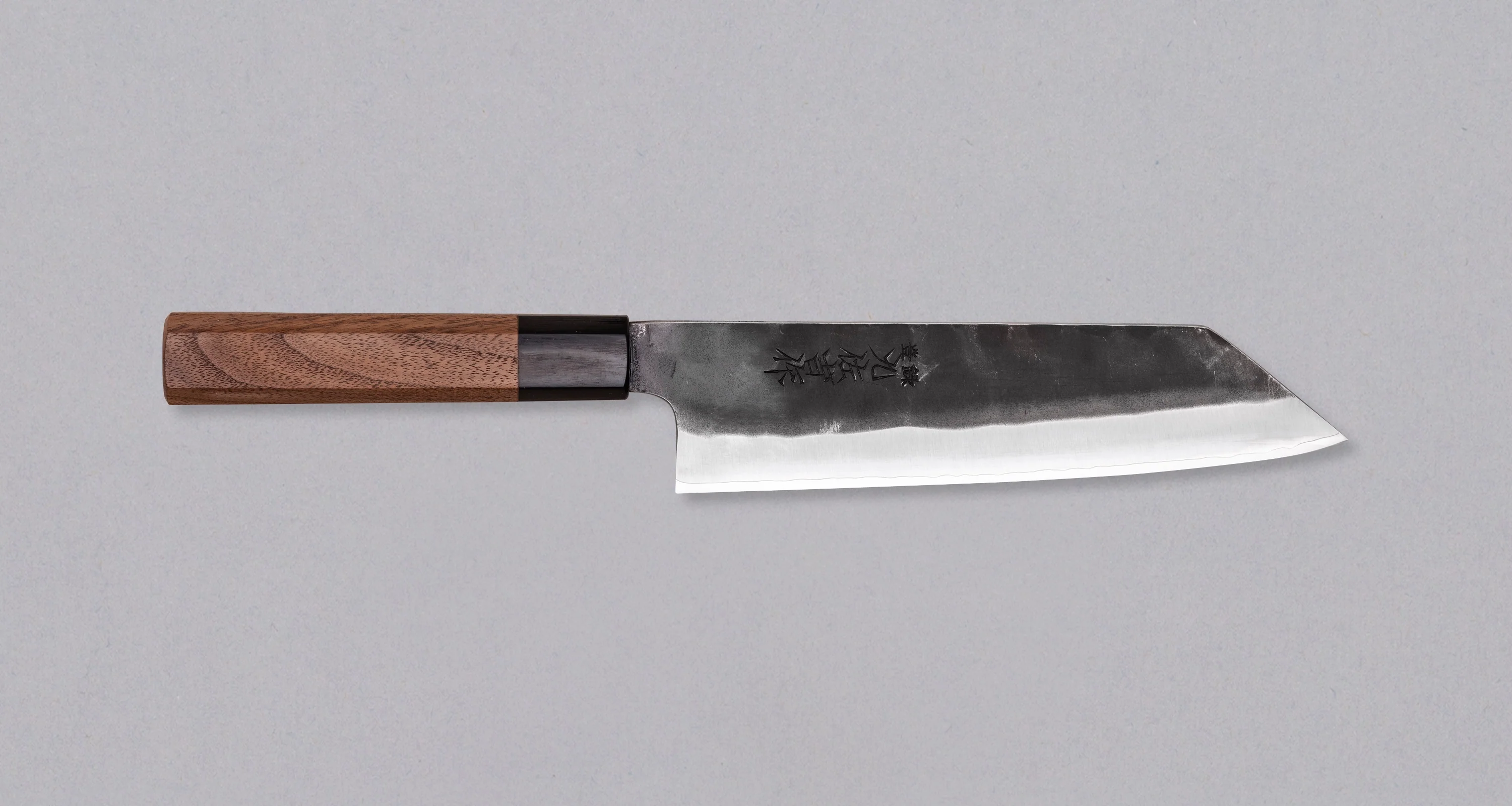
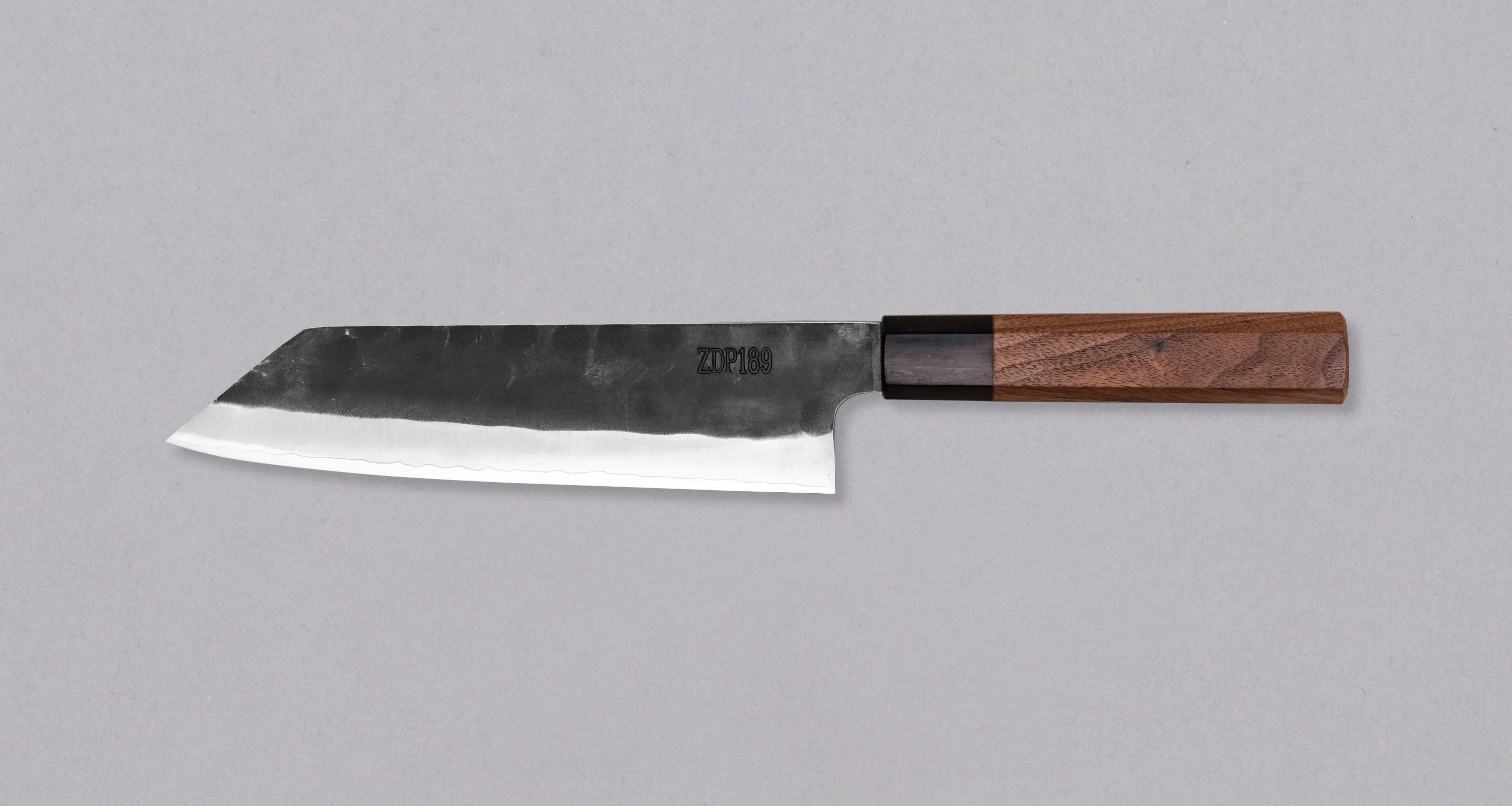
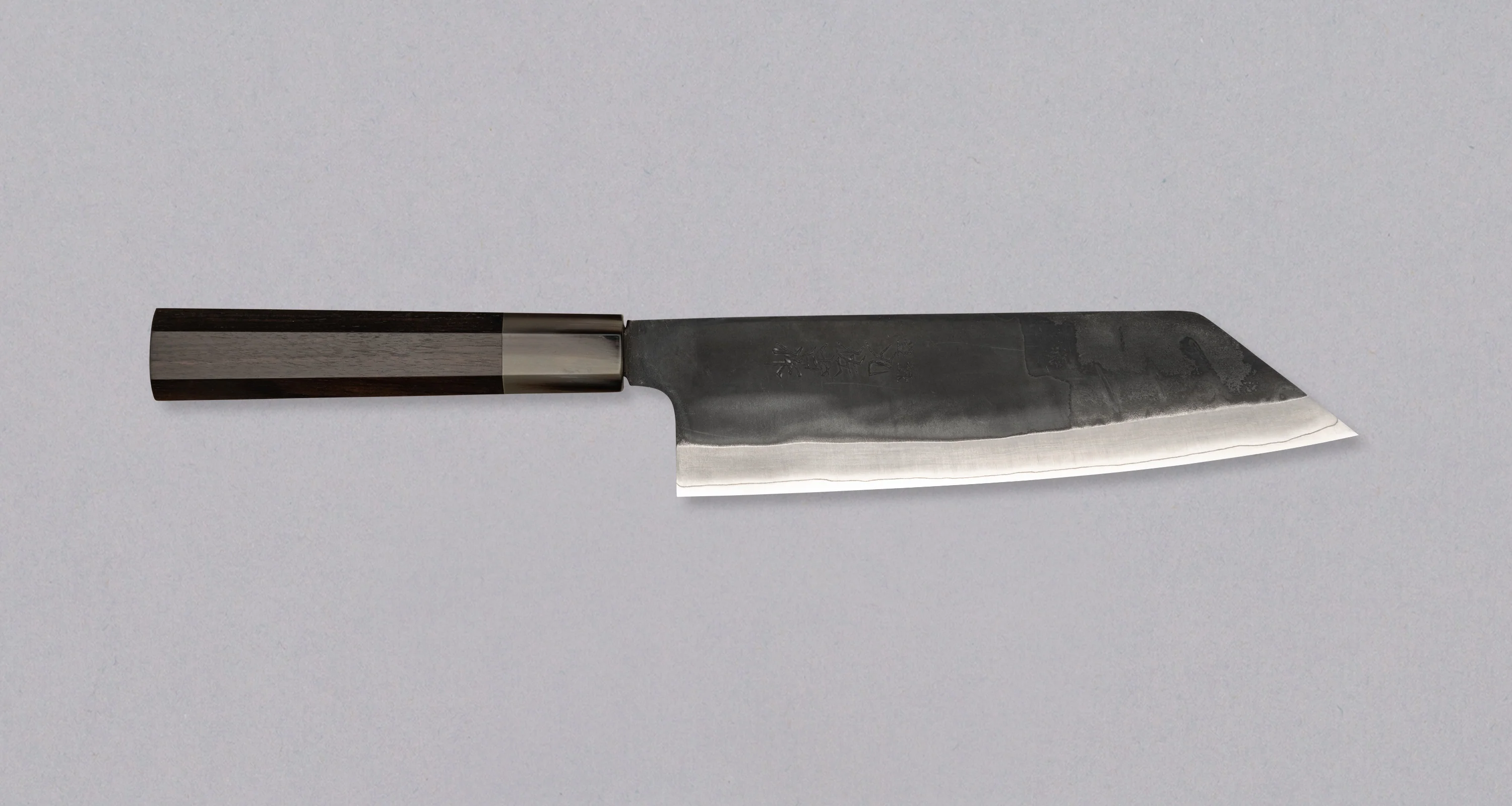
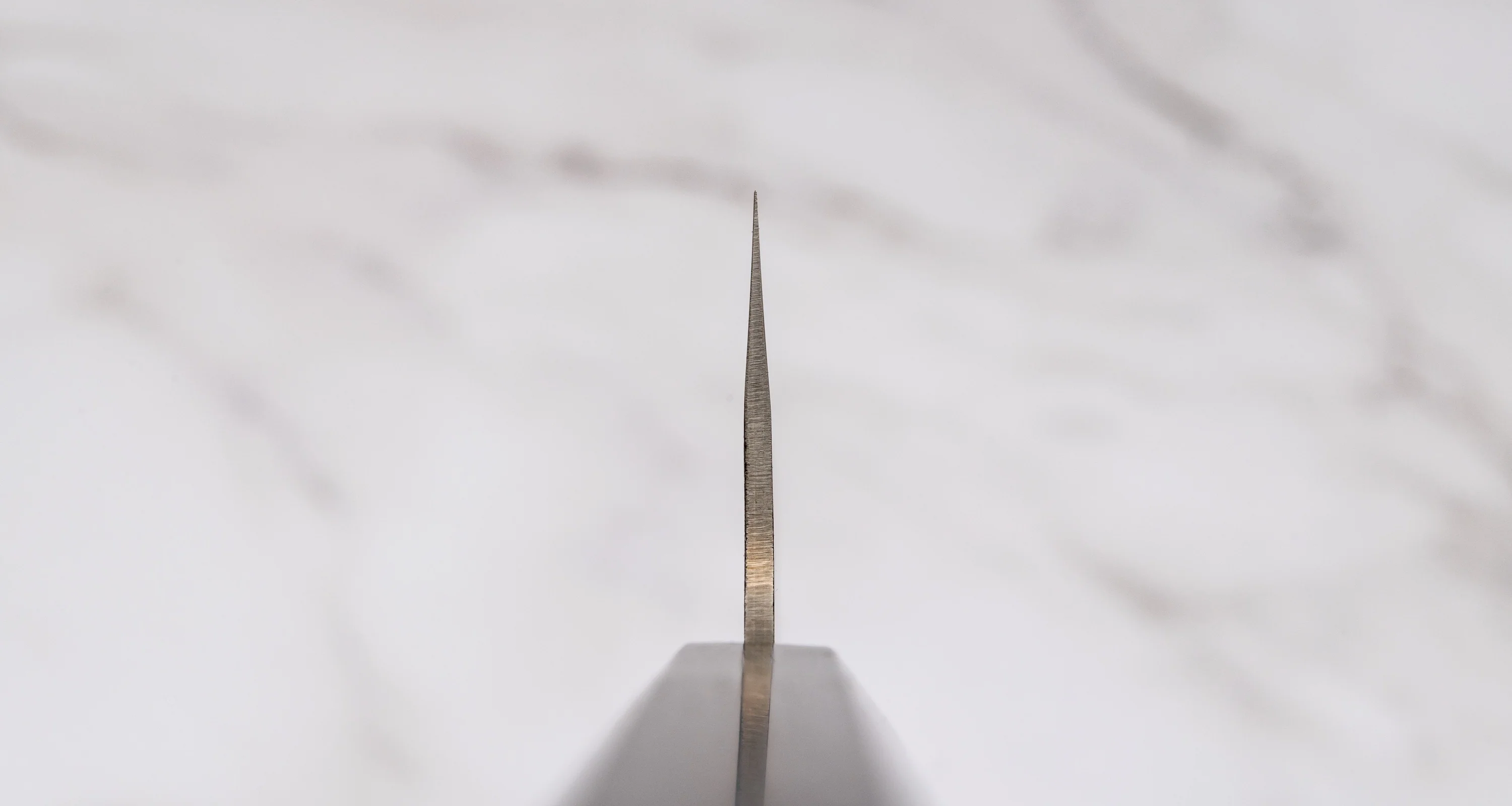
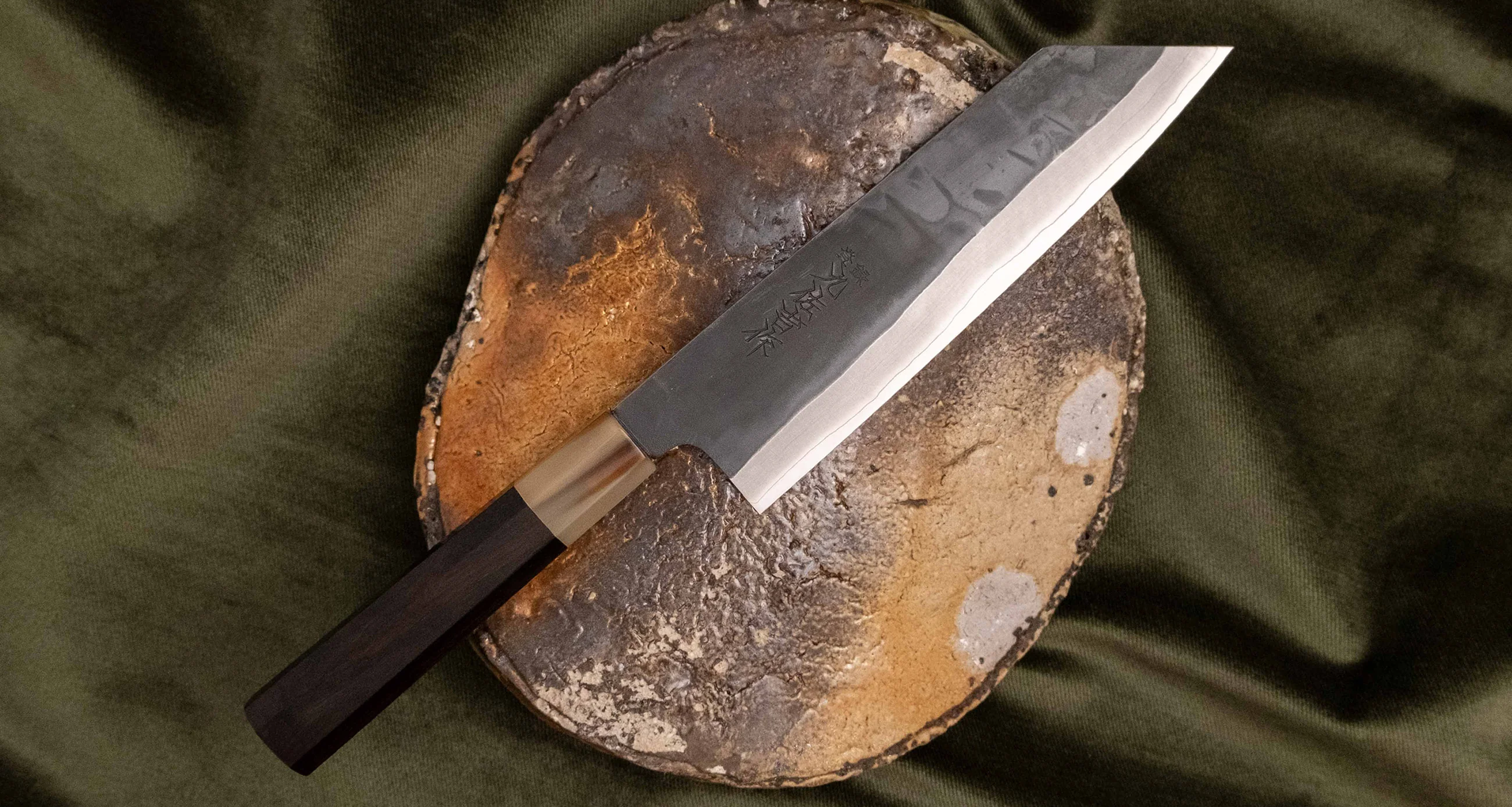
With its typical functionality, Bunka design is intended for versatile use in Western cuisine. It has a flexible profile that is wide enough at the handle, a gently designed belly of the blade suitable for making either long or short cuts, a flat back side of the blade, and a thin tip for precise work with food.
- Versatile use: meat, fish and vegetables.
- Wide blade at the handle allows for comfortable (and lengthy) work with either right or left hand.
- The gentle belly is suited to either long or short cuts.
- The heel of the blade is straight and intended for chopping.
- The blade tapers off towards the tip and lends itself perfectly to precise work with food.
STEEL:
The heart of the knife is made of ZDP-189 steel, which we selected because systematic testing has proven its superior qualities and long-lasting sharpness.
- Fine – and extremely long-lasting – sharpness.
- Very hard powder steel with a hardness of 65-67 HRC.
- Simple maintenance and sharpening.
The steel contains as much as 3% Carbon (C), which is one of the main elements contributing strength and typically found in amounts of up to only 1% in other types of solid steel, while the Chromium (Cr) content, which prevents corrosion, amounts to nearly 20%. It also features 0.60% Tungsten (W), which considerably increases the abrasion resistance of steel, 1.4% Molybdenum (Mo), which helps to preserve the strength and power of steel under variable temperatures, and 0.10% Vanadium (V), the key element in increasing steel strength.
LAMINATION:
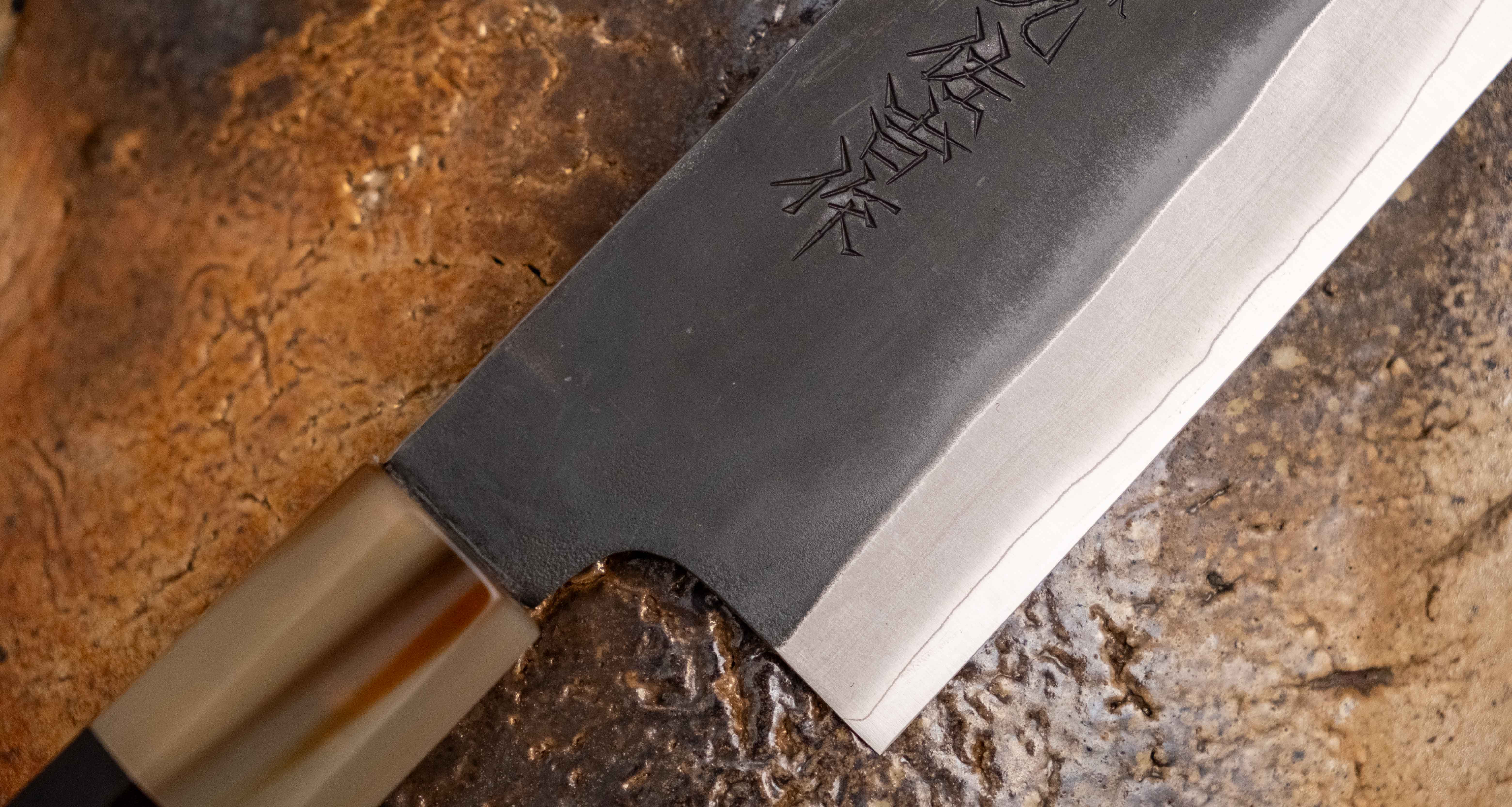
Osamu-san chose a warikomi (also called “split and insert”) method. A glowing hot piece of iron is split and a piece of steel is inserted. The new material is now forged into one piece composed of a very hard steel core in a jacket of two external layers of softer, stainless steel. This creates a highly durable kitchen knife with a slightly more pliable core. The main advantage of these knives is that they are thin, sharp and retain their edge very well.
GEOMETRY:
It has a double bevel (symmetrical) blade.
BLADE FINISH:
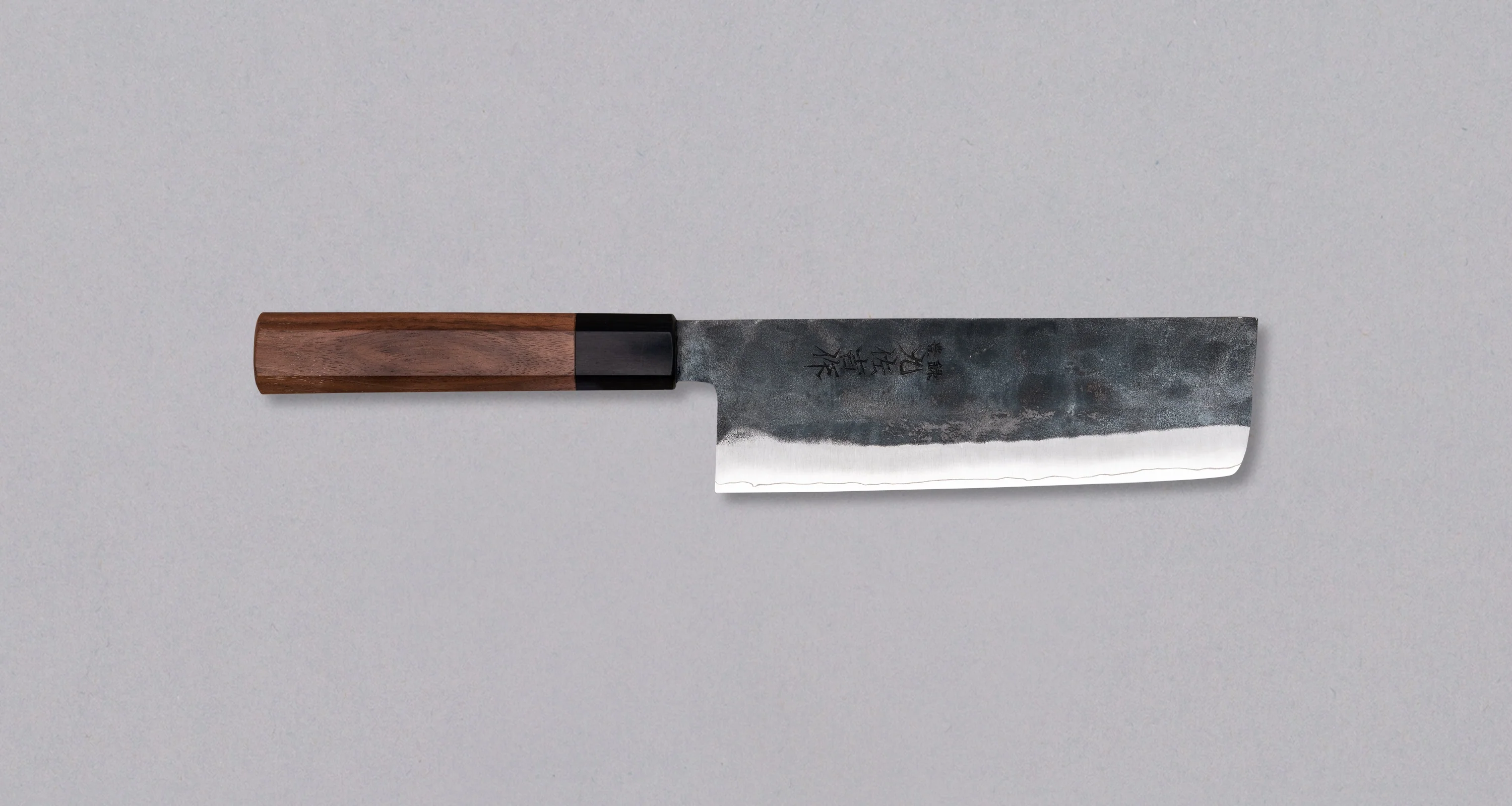
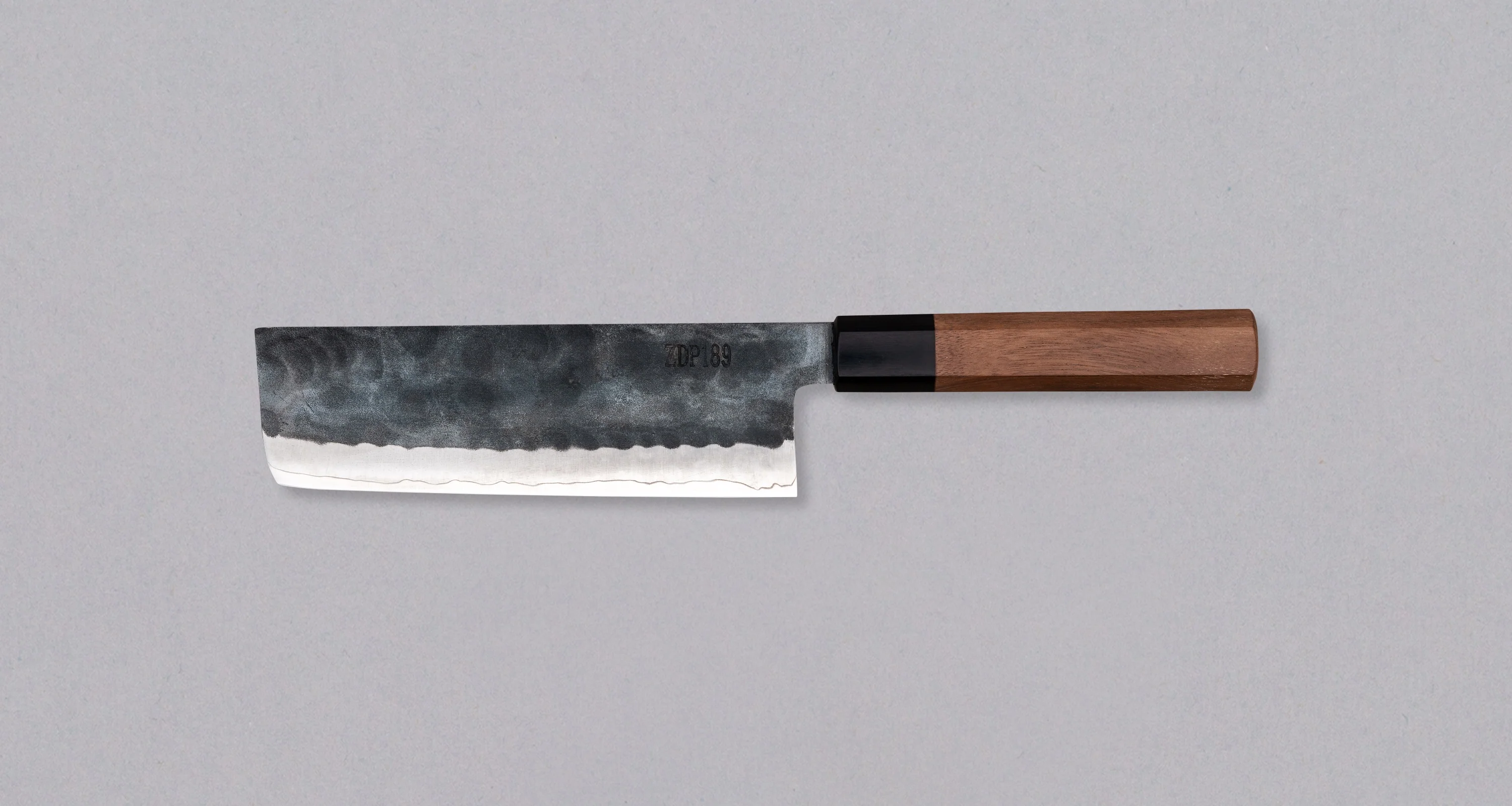
The blade has a dark finish which is the reason why this look is also called kuro-uchi - the word “kuro” means black. This look is traditional and robust, with an unprocessed top part of the blade that has already developed a dark patina.
HANDLE:
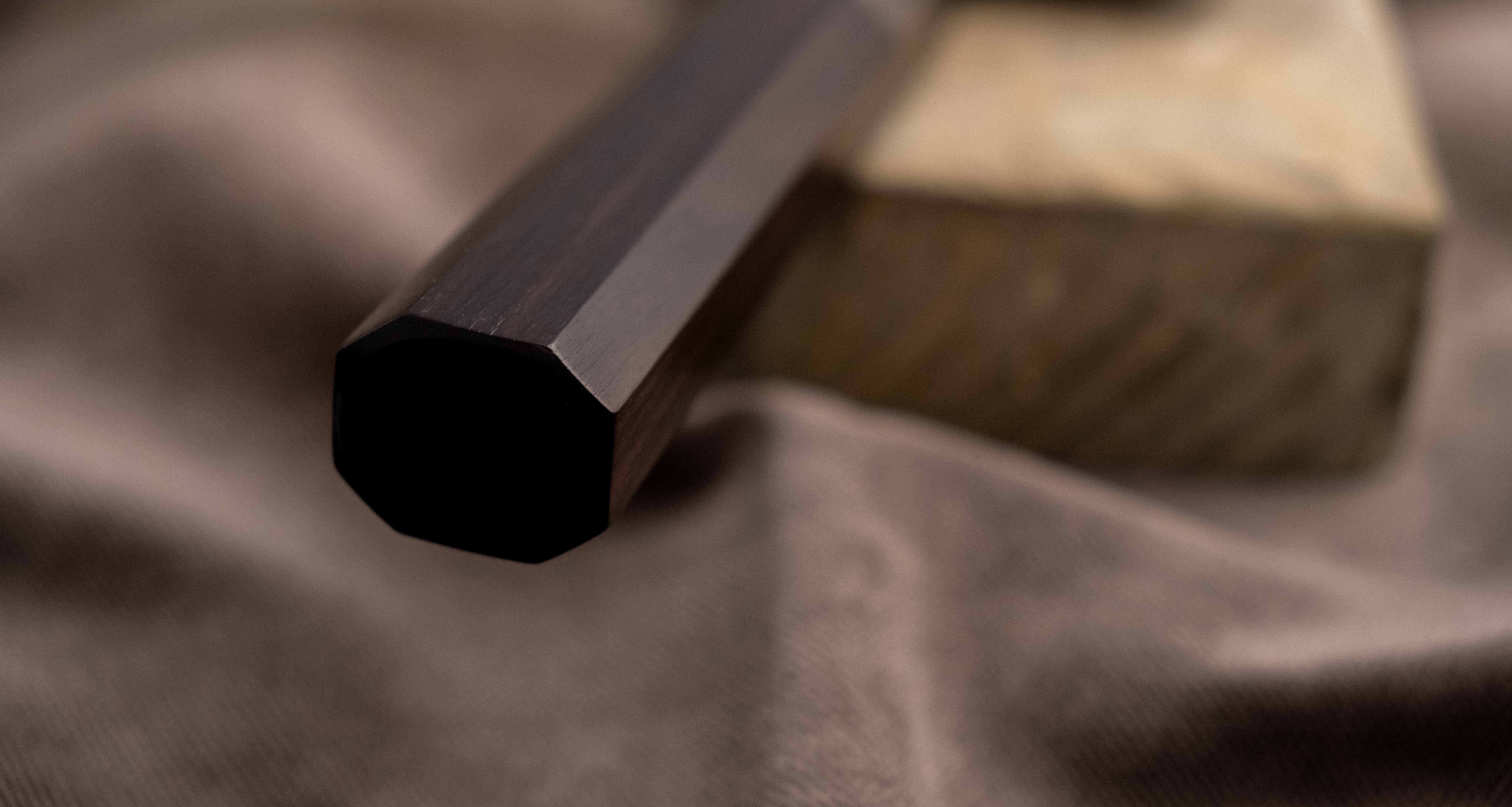
Bunka features a traditional octagonal Japanese handle made from ebony wood, paired with a blonde buffalo horn ferrule. Designed for both left- and right-handed users, it offers a balanced and comfortable grip. Ebony is renowned for its exceptional hardness and density, which makes it one of the most durable and resistant woods. It is polished to a high gloss, creating a luxurious and elegant appearance and smooth feel that fits into the hand seamlessly. The octagon shape of the handle provides a comfortable and secure grip, allowing for precise control during use.
ABOUT THE BLACKSMITH:
The knife is manufactured at the smithy of Yoshida Hamono in Japan, a family company with an age-long tradition in manufacturing state-of-the-art tools and Japanese swords, i.e., katanas, by hand. Yoshida Hamono has a great deal of experience forging ZDP-189 steel in the traditional manner.
More Images

ZDP-189 Bunka Black Ebony Blond Buffalo 190mm (7.5")
"Fifteen years ago, ZDP-189 was practically a myth—the Holy Grail of knife steels," our founder Luka recalls. "I shared my dream of forging it with master Osamu San of Yoshida Hamono. One day he called: 'Luka, let’s give it a try.' We created a raw, black bunka. Don't let the rough look fool you. This blade is hand-forged, ice-hardened for smooth, effortless cutting, and built to withstand years of hard daily work. Even today, those very first bunkas still come back to us for sharpening after a decade of hard, everyday work in professional kitchens.
BLADE SHAPE:
With its typical functionality, Bunka design is intended for versatile use in Western cuisine. It has a flexible profile that is wide enough at the handle, a gently designed belly of the blade suitable for making either long or short cuts, a flat back side of the blade, and a thin tip for precise work with food.
- Versatile use: meat, fish and vegetables.
- Wide blade at the handle allows for comfortable (and lengthy) work with either right or left hand.
- The gentle belly is suited to either long or short cuts.
- The heel of the blade is straight and intended for chopping.
- The blade tapers off towards the tip and lends itself perfectly to precise work with food.
STEEL:
The heart of the knife is made of ZDP-189 steel, which we selected because systematic testing has proven its superior qualities and long-lasting sharpness.
- Fine – and extremely long-lasting – sharpness.
- Very hard powder steel with a hardness of 65-67 HRC.
- Simple maintenance and sharpening.
The steel contains as much as 3% Carbon (C), which is one of the main elements contributing strength and typically found in amounts of up to only 1% in other types of solid steel, while the Chromium (Cr) content, which prevents corrosion, amounts to nearly 20%. It also features 0.60% Tungsten (W), which considerably increases the abrasion resistance of steel, 1.4% Molybdenum (Mo), which helps to preserve the strength and power of steel under variable temperatures, and 0.10% Vanadium (V), the key element in increasing steel strength.
LAMINATION:
Osamu-san chose a warikomi (also called “split and insert”) method. A glowing hot piece of iron is split and a piece of steel is inserted. The new material is now forged into one piece composed of a very hard steel core in a jacket of two external layers of softer, stainless steel. This creates a highly durable kitchen knife with a slightly more pliable core. The main advantage of these knives is that they are thin, sharp and retain their edge very well.
GEOMETRY:
It has a double bevel (symmetrical) blade.
BLADE FINISH:
The blade has a dark finish which is the reason why this look is also called kuro-uchi - the word “kuro” means black. This look is traditional and robust, with an unprocessed top part of the blade that has already developed a dark patina.
HANDLE:
Bunka features a traditional octagonal Japanese handle made from ebony wood, paired with a blonde buffalo horn ferrule. Designed for both left- and right-handed users, it offers a balanced and comfortable grip. Ebony is renowned for its exceptional hardness and density, which makes it one of the most durable and resistant woods. It is polished to a high gloss, creating a luxurious and elegant appearance and smooth feel that fits into the hand seamlessly. The octagon shape of the handle provides a comfortable and secure grip, allowing for precise control during use.
ABOUT THE BLACKSMITH:
The knife is manufactured at the smithy of Yoshida Hamono in Japan, a family company with an age-long tradition in manufacturing state-of-the-art tools and Japanese swords, i.e., katanas, by hand. Yoshida Hamono has a great deal of experience forging ZDP-189 steel in the traditional manner.
Product Information
Product Information
Shipping & Returns
Shipping & Returns
Description
"Fifteen years ago, ZDP-189 was practically a myth—the Holy Grail of knife steels," our founder Luka recalls. "I shared my dream of forging it with master Osamu San of Yoshida Hamono. One day he called: 'Luka, let’s give it a try.' We created a raw, black bunka. Don't let the rough look fool you. This blade is hand-forged, ice-hardened for smooth, effortless cutting, and built to withstand years of hard daily work. Even today, those very first bunkas still come back to us for sharpening after a decade of hard, everyday work in professional kitchens.
BLADE SHAPE:
With its typical functionality, Bunka design is intended for versatile use in Western cuisine. It has a flexible profile that is wide enough at the handle, a gently designed belly of the blade suitable for making either long or short cuts, a flat back side of the blade, and a thin tip for precise work with food.
- Versatile use: meat, fish and vegetables.
- Wide blade at the handle allows for comfortable (and lengthy) work with either right or left hand.
- The gentle belly is suited to either long or short cuts.
- The heel of the blade is straight and intended for chopping.
- The blade tapers off towards the tip and lends itself perfectly to precise work with food.
STEEL:
The heart of the knife is made of ZDP-189 steel, which we selected because systematic testing has proven its superior qualities and long-lasting sharpness.
- Fine – and extremely long-lasting – sharpness.
- Very hard powder steel with a hardness of 65-67 HRC.
- Simple maintenance and sharpening.
The steel contains as much as 3% Carbon (C), which is one of the main elements contributing strength and typically found in amounts of up to only 1% in other types of solid steel, while the Chromium (Cr) content, which prevents corrosion, amounts to nearly 20%. It also features 0.60% Tungsten (W), which considerably increases the abrasion resistance of steel, 1.4% Molybdenum (Mo), which helps to preserve the strength and power of steel under variable temperatures, and 0.10% Vanadium (V), the key element in increasing steel strength.
LAMINATION:
Osamu-san chose a warikomi (also called “split and insert”) method. A glowing hot piece of iron is split and a piece of steel is inserted. The new material is now forged into one piece composed of a very hard steel core in a jacket of two external layers of softer, stainless steel. This creates a highly durable kitchen knife with a slightly more pliable core. The main advantage of these knives is that they are thin, sharp and retain their edge very well.
GEOMETRY:
It has a double bevel (symmetrical) blade.
BLADE FINISH:
The blade has a dark finish which is the reason why this look is also called kuro-uchi - the word “kuro” means black. This look is traditional and robust, with an unprocessed top part of the blade that has already developed a dark patina.
HANDLE:
Bunka features a traditional octagonal Japanese handle made from ebony wood, paired with a blonde buffalo horn ferrule. Designed for both left- and right-handed users, it offers a balanced and comfortable grip. Ebony is renowned for its exceptional hardness and density, which makes it one of the most durable and resistant woods. It is polished to a high gloss, creating a luxurious and elegant appearance and smooth feel that fits into the hand seamlessly. The octagon shape of the handle provides a comfortable and secure grip, allowing for precise control during use.
ABOUT THE BLACKSMITH:
The knife is manufactured at the smithy of Yoshida Hamono in Japan, a family company with an age-long tradition in manufacturing state-of-the-art tools and Japanese swords, i.e., katanas, by hand. Yoshida Hamono has a great deal of experience forging ZDP-189 steel in the traditional manner.